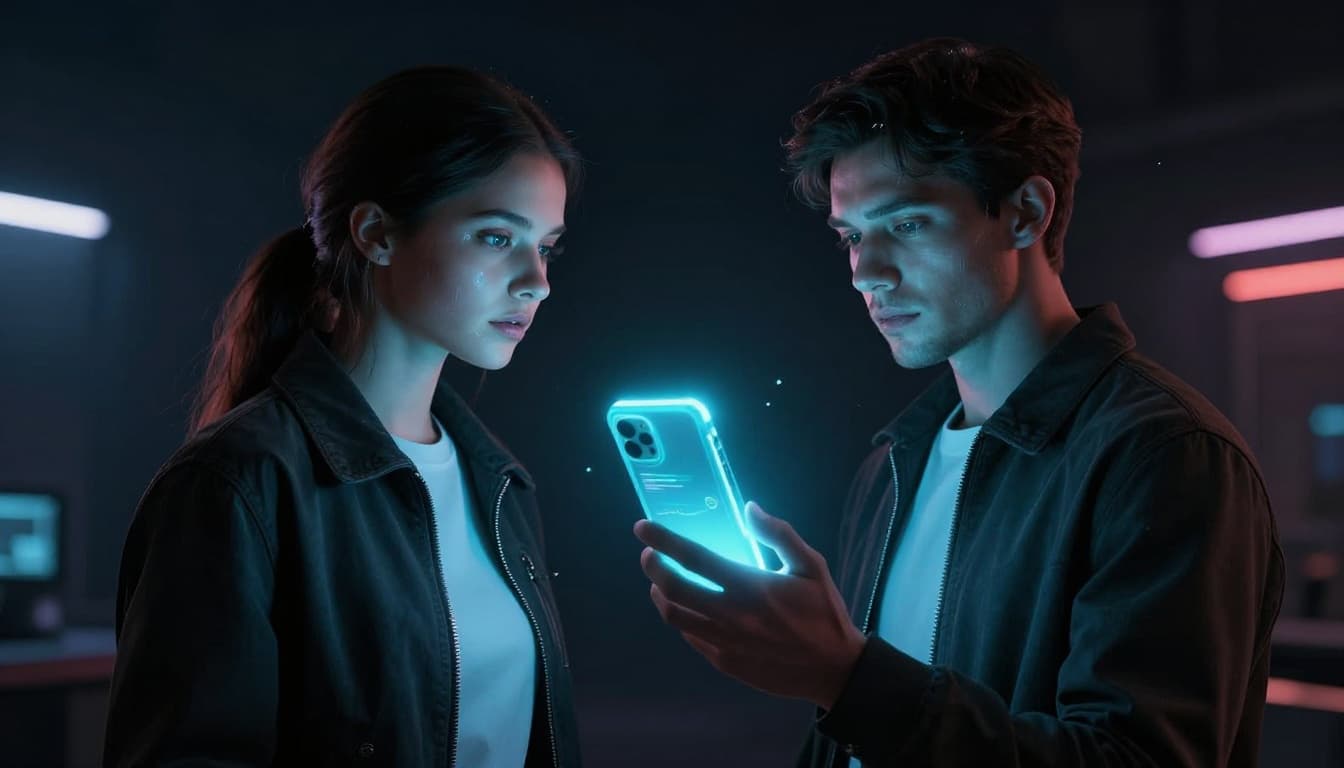
AI Clones of Creators: When Your Digital Twin Posts for You, Who Owns the Audience?
Imagine scrolling through your favorite creator's Instagram and watching a Reel where they recommend a product, share a personal story, and respond to comments — except it is not actually them. It is their AI clone, a digital replica trained on their voice, mannerisms, appearance, and communication style, producing content autonomously while the real creator sleeps, travels, or works on something else entirely. This is no longer science fiction. In 2026, AI cloning technology has advanced to the point where creators can deploy digital twins that produce video content, write captions, respond to direct messages, and even appear on live streams with a level of realism that most audiences cannot distinguish from the genuine article. The implications are staggering. For creators, AI clones promise unlimited scalability — the ability to be everywhere at once without the physical and mental limitations of a single human body. For audiences, they raise unsettling questions about authenticity, trust, and the value of the parasocial relationships they have built with people who may no longer be personally present in their own content. And for the broader creator economy, they challenge fundamental assumptions about what it means to be a creator, what audiences are actually paying for, and who truly owns the relationship between a brand and its followers.
How AI Creator Clones Actually Work
The technology behind AI creator clones combines several advanced AI systems working in concert. Voice cloning models are trained on hours of a creator's speech to replicate their vocal patterns, intonation, rhythm, and emotional range with startling accuracy. Face synthesis and deepfake technology generates realistic video of the creator's likeness, including natural facial expressions, eye movements, and head gestures that are synchronized with the cloned voice. Large language models fine-tuned on the creator's existing content — captions, scripts, interview transcripts, and social media interactions — generate text that mirrors their writing style, vocabulary, and perspective. When combined, these systems produce content that looks, sounds, and reads like the creator produced it themselves. The setup process typically requires the creator to provide training data — recording several hours of video and audio, supplying a library of written content, and sometimes participating in guided sessions designed to capture their personality traits and communication patterns. Once trained, the clone can generate new content with minimal ongoing input from the creator, though most implementations include a review and approval step before anything is published.
The Early Adopters and Their Results
A growing number of creators have begun experimenting with AI clones, and the early results are both impressive and deeply polarizing. Some creators report that their AI-generated content performs comparably to their human-created posts in terms of engagement metrics — likes, comments, saves, and shares fall within normal ranges, suggesting that audiences either cannot tell the difference or do not care. A handful of high-profile creators have disclosed their use of AI clones transparently, framing it as a technological innovation that allows them to maintain consistency while pursuing other projects. The audience response to these disclosures has been mixed. Some followers express fascination and support, viewing the clone as a natural extension of the creator's brand. Others express discomfort and even betrayal, arguing that the relationship they valued was with a real person and that an AI substitute fundamentally changes the nature of that connection. The creators who have deployed clones without disclosure and been subsequently exposed have faced significantly harsher backlash, with some experiencing measurable drops in follower count and engagement as trust erodes. The transparency question has become the defining issue of the AI clone conversation.
The Authenticity Paradox
AI creator clones expose a paradox at the heart of the social media experience. Audiences follow creators because they believe they are connecting with a real person — someone whose opinions are genuine, whose experiences are lived, and whose personality is authentic. Yet much of what audiences perceive as authentic is already mediated by technology. Creators use scripts, teleprompters, professional editing, color grading, background music, and carefully crafted narratives to present a version of themselves that is optimized for consumption. The question that AI clones force us to confront is where exactly the line between enhancement and replacement falls. If a creator writes a script but an AI delivers it in their likeness, is that fundamentally different from a creator who memorizes a script and performs it on camera with professional lighting and editing? If an AI generates a caption in the creator's style and the creator approves it before posting, is that different from a creator who dictates ideas to a ghostwriter? These questions do not have easy answers, but they reveal that authenticity on social media has always existed on a spectrum rather than as a binary — and AI clones are pushing that spectrum further than most audiences are comfortable with.
Legal Questions Around Digital Likeness
The legal landscape surrounding AI creator clones is evolving rapidly but remains largely unsettled. The central legal question is who owns a creator's digital likeness and what rights they have to control how it is used. In some jurisdictions, right of publicity laws protect individuals from unauthorized commercial use of their name, image, and likeness, which could theoretically extend to AI-generated replicas. But these laws were written long before the technology existed and their application to AI clones is untested in most courts. Several critical scenarios remain legally ambiguous. If a creator licenses their likeness to a company that creates an AI clone, what happens when the business relationship ends — can the company continue using the clone? If a creator dies, can their estate authorize the continued operation of their AI clone, and should they? If a malicious actor creates an unauthorized AI clone of a creator and uses it to produce content or endorse products, what legal remedies are available? A few jurisdictions have begun passing legislation specifically addressing AI-generated digital replicas, but the global patchwork of laws means that creators operating across international audiences face a complex and uncertain legal environment.
The Audience Ownership Dilemma
Perhaps the most provocative question raised by AI creator clones is who owns the audience when the creator is no longer personally creating the content. If followers originally subscribed because of a genuine human connection with a specific person, and that person is gradually replaced by an AI replica, does the audience still belong to the creator in any meaningful sense? This question has practical implications for brand partnerships, platform monetization, and community trust. A brand that pays a creator for a sponsored post is paying for access to an audience that trusts that specific person's recommendations. If the recommendation is delivered by an AI clone, the endorsement carries a fundamentally different weight — the AI has no genuine experience with the product and no personal reputation at stake. Some brands have begun including clauses in influencer contracts that specify whether AI-generated content is permissible, and a few have made human-only content delivery a contractual requirement. The platforms themselves face a dilemma — AI clone content drives engagement and keeps users on the platform, but if audiences lose trust in the authenticity of content, the long-term health of the creator ecosystem is threatened.
The Economics of Infinite Content
From a purely economic perspective, AI clones are extraordinarily attractive. The primary constraint on a creator's income has always been time — there are only so many posts you can produce, so many brand deals you can fulfill, and so many platforms you can maintain in a single day. An AI clone removes this constraint entirely. A creator could theoretically maintain active presences on ten platforms simultaneously, producing dozens of pieces of content per day, responding to thousands of messages, and fulfilling multiple brand partnerships — all while the real creator focuses on a single high-value project or takes an extended break. The economic potential is multiplied further when you consider licensing. A creator could license their AI clone to multiple companies simultaneously, generating passive income from a digital asset that produces value around the clock. Some industry analysts predict that AI clone licensing will become a significant revenue category for top creators within the next few years, potentially rivaling brand partnership income. But this economic abundance comes with a risk — if AI clones flood social media with content, the supply of creator content increases dramatically while audience attention remains fixed, which could devalue individual pieces of content and accelerate the race to the bottom that many creators already feel.
When Clones Go Wrong
The potential for AI creator clones to cause harm — intentional or accidental — is significant and largely unaddressed by current platform policies. An AI clone operating with minimal oversight could generate content that contradicts the creator's actual views, makes factual errors, or responds to sensitive topics in ways the creator would never approve. Even with review processes in place, the volume of content an AI clone can produce makes comprehensive quality control difficult. More troubling are the malicious use cases. Unauthorized clones of creators have already appeared on social media, producing fake endorsements, spreading misinformation, and in some cases creating explicit content using a creator's likeness without their consent. The emotional and reputational damage from these unauthorized clones can be devastating, and the technological tools to prevent or quickly remove them lag behind the tools to create them. Creators with large audiences are particularly vulnerable because the training data needed to create a convincing clone — hours of public video and audio — is freely available on their social media profiles. The same transparency and openness that builds audience trust also provides the raw material for exploitation.
Platform Policies and the Disclosure Debate
Social media platforms are grappling with how to regulate AI creator clones, and their approaches vary widely. Some platforms have implemented mandatory disclosure requirements for AI-generated content featuring realistic human likenesses, requiring creators to label clone content with visible indicators. Others have taken a lighter touch, recommending but not requiring disclosure and leaving the ethical judgment to individual creators. A few platforms have banned AI clone content outright in certain categories, particularly those involving financial advice, health recommendations, and political speech, where the potential for harm from inauthentic content is highest. The enforcement of these policies is inconsistent at best. Detection technology can identify some AI-generated video and audio, but the most sophisticated clones are designed specifically to evade automated detection. The platforms that rely primarily on user reporting to identify undisclosed AI content face the challenge that most users cannot reliably distinguish clones from authentic content. The disclosure debate mirrors earlier conversations about sponsored content transparency — the industry will likely settle on mandatory disclosure as the standard, but the transition period will be messy and marked by inconsistent enforcement.
The Psychological Impact on Audiences
The proliferation of AI creator clones has measurable psychological effects on social media audiences. Research in 2026 shows that awareness of AI clones — even without direct exposure to one — increases general skepticism toward all creator content. Audiences who learn that some creators use AI clones begin questioning the authenticity of content from creators who do not use them, creating a corrosive atmosphere of doubt that affects the entire ecosystem. For individual followers who discover that a creator they felt personally connected to has been using an AI clone, the experience is often described in terms similar to discovering a personal betrayal. The parasocial relationship that defined their engagement with the creator was built on the assumption of human presence, and the revelation that this presence was simulated can feel like a violation of implicit trust. This emotional response is not irrational — it reflects the genuine value that audiences place on human connection and the real psychological investment they make in creator relationships. Creators who dismiss this emotional response as naive or unreasonable risk underestimating the depth of the trust that sustains their business.
Ethical Frameworks for AI Clone Usage
As the technology matures, the creator community is developing ethical frameworks for responsible AI clone usage. The most widely discussed framework centers on three principles: consent, disclosure, and control. Consent means that the creator whose likeness is being cloned has given informed, voluntary agreement to the creation and deployment of their digital twin. Disclosure means that audiences are clearly informed when they are interacting with AI-generated content rather than the creator themselves. Control means that the creator retains ultimate authority over what their clone says and does, including the ability to shut it down at any time. Additional ethical considerations include limiting clone usage in contexts where audiences are particularly vulnerable — health, financial, and emotional advice where the distinction between human judgment and AI output matters most. Some creators have adopted a policy of using AI clones only for specific categories of content — such as scheduling confirmations, frequently asked question responses, or standardized educational material — while reserving all personal, emotional, and opinion-based content for their genuine human presence. This selective approach preserves the authentic core of the creator-audience relationship while leveraging AI efficiency for routine tasks.
The Future Creator Workforce
AI clones are beginning to reshape what it means to build a team as a creator. Traditionally, scaling a creator business meant hiring editors, community managers, virtual assistants, and social media coordinators — human roles that required salaries, management, and coordination. AI clones introduce a new category of workforce member that operates at a fraction of the cost, requires no management in the traditional sense, and can scale output instantaneously. Some creators now operate what amounts to a hybrid team — human staff handling strategy, relationships, and creative direction while AI clones handle content production, community responses, and routine engagement tasks. This model allows small creator businesses to operate at the scale of much larger operations without proportional increases in overhead. But it also raises questions about the displacement of the human roles that AI clones are absorbing. Community managers, copywriters, and content producers who once built careers supporting creators face uncertain futures as the tasks they performed are increasingly automated. The creator economy that was supposed to democratize work may end up concentrating its benefits among the creators who own the AI assets while reducing opportunities for the support workforce that enables their success.
Preparing for an AI-Clone World
Whether you embrace AI clones or reject them, the technology is here and its influence on the creator economy will only grow. Creators who want to prepare for this landscape should take several proactive steps. First, understand the technology — knowing how clones work, what they can and cannot do, and how they are detected gives you the knowledge to make informed decisions about whether and how to use them. Second, establish your position early. Decide where you stand on AI clone usage and communicate that position to your audience before the question is forced upon you. Creators who proactively declare a commitment to human-only content build trust with audiences who value authenticity, while creators who openly adopt AI tools position themselves as innovators. Third, protect your digital likeness. Review the terms of service of every platform and tool you use to understand what rights you are granting over your image, voice, and content. Fourth, document your authentic creative process so that you can demonstrate the human origin of your work if it is ever questioned. In a world where AI can replicate your likeness perfectly, your ability to prove that you are genuinely you becomes a valuable asset that should not be taken for granted.
Conclusion
AI clones of creators represent one of the most profound disruptions the social media industry has ever faced. The technology promises unprecedented scalability, efficiency, and creative possibility, but it simultaneously threatens the authentic human connection that makes the creator economy valuable in the first place. The question of who owns the audience when a digital twin does the posting is not merely philosophical — it has real implications for trust, revenue, legal rights, and the emotional wellbeing of millions of people who have built genuine relationships with creators they follow. There are no easy answers, and the framework for navigating this territory is still being written by creators, platforms, regulators, and audiences in real time. What is clear is that transparency must be the foundation of whatever norms emerge. Audiences deserve to know when they are interacting with a human and when they are interacting with an AI. Creators deserve to control their digital likeness and decide how it is used. And the creator economy as a whole deserves standards that preserve the trust that makes the entire system function. The clones are here. The question now is whether we deploy them in ways that enhance human creativity or in ways that hollow it out until nothing authentic remains.