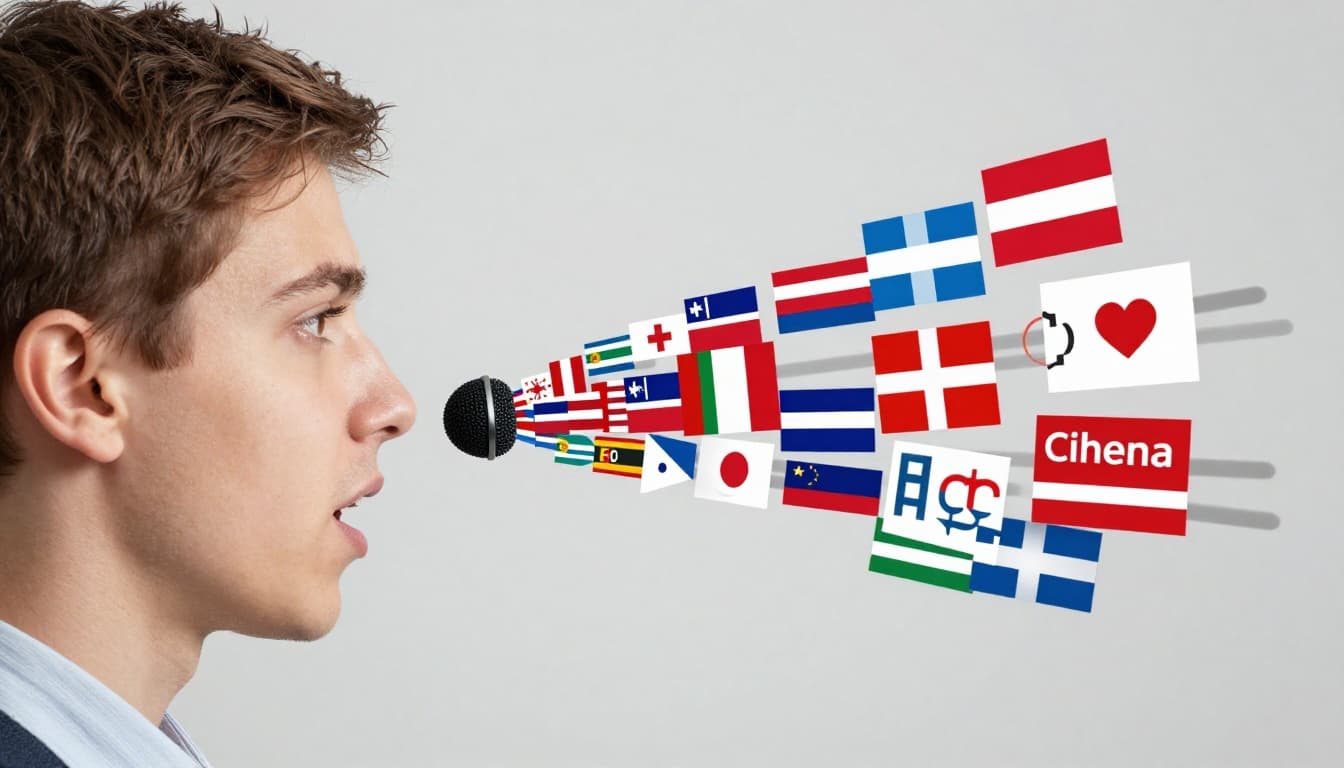
AI Voice Cloning: How Creators Are Dubbing Their Content Into 30 Languages Overnight
Imagine publishing a YouTube video in English on Monday and having the same video — with your own voice, your own intonation, your own personality — available in Spanish, Portuguese, Hindi, Japanese, German, French, and two dozen other languages by Tuesday morning. Two years ago, this would have required a team of translators, voice actors, recording studios, and weeks of post-production. In 2026, a single creator can accomplish this overnight using AI voice cloning technology. The tools have reached a level of quality that would have seemed like science fiction just a few years ago, producing dubbed audio that sounds remarkably natural and preserves the emotional character of the original speaker. For creators, this technology represents perhaps the single largest untapped growth opportunity available today — the ability to reach billions of non-English-speaking viewers without learning a single new language. But the technology also raises important ethical questions about identity, consent, and the potential for misuse that every creator should understand.
How AI Voice Cloning Works
AI voice cloning technology works by analyzing a sample of someone's speech — typically a few minutes to an hour of audio — and building a mathematical model of that person's vocal characteristics. This model captures not just the pitch and timbre of the voice but also speaking patterns, pronunciation habits, breathing rhythms, and emotional dynamics. Once the voice model is created, it can synthesize new speech in the cloned voice from any text input. The most advanced systems go further, combining voice cloning with neural machine translation and speech synthesis to create dubbed audio that matches the original speaker's delivery while speaking an entirely different language. The technology handles the lip-sync challenge by adjusting the pacing and rhythm of the translated speech to approximately match the timing of the original video. Some tools also use video processing to modify the speaker's lip movements to match the new language, creating an eerily natural-looking result. The quality varies significantly between tools and languages, but for the major world languages, the best systems produce results that are difficult to distinguish from native speakers.
ElevenLabs: The Industry Leader
ElevenLabs has established itself as the dominant player in AI voice cloning, and for good reason. The platform's voice quality is consistently the best in the industry, with cloned voices that capture subtle vocal characteristics like breathiness, vocal fry, and emotional range. ElevenLabs offers a dubbing feature that handles the entire pipeline — translation, voice synthesis in the cloned voice, and timing adjustment — in a single workflow. The platform supports 29 languages with high quality and continues to add more. For creators, the workflow is straightforward: upload your video or audio, select your target languages, and let the system process the dubbing. The results are typically ready within minutes for short content and a few hours for longer videos. ElevenLabs also offers a Projects feature for longer-form content like podcasts and audiobooks, where you can edit the translated script before synthesis, ensuring accuracy. Pricing is based on character usage, with plans ranging from a free tier suitable for experimentation to professional plans that support high-volume production. The voice clone itself can be created from as little as one minute of sample audio, though higher-quality clones result from longer and cleaner samples.
HeyGen: Video Translation with Lip Sync
HeyGen takes AI dubbing one step further by not only cloning your voice in another language but also modifying the video to match. The platform's Video Translate feature analyzes your facial movements and adjusts your lip movements to sync with the translated audio, creating a result where it genuinely appears as though you are speaking the foreign language. This technology is particularly impressive for talking-head content — vlogs, tutorials, course content, and any video where the speaker's face is prominently visible. The uncanny effect of watching yourself speak fluent Japanese or Portuguese for the first time is something creators consistently describe as surreal. HeyGen supports multiple speakers in a single video, identifying and cloning each voice separately. The platform also offers AI avatar creation, where you can generate a digital version of yourself that presents content without requiring you to be on camera. While the lip-sync technology is not yet perfect — close examination can reveal subtle artifacts — at normal viewing speed on a mobile device, the results are convincing enough for most content purposes.
Speechify and Rask AI: Alternative Options
The AI dubbing landscape extends beyond the two market leaders. Speechify, originally known as a text-to-speech tool, has expanded into voice cloning and dubbing with a focus on ease of use and integration with content creation workflows. Speechify's voice cloning is quick to set up and produces good results for narration-style content, though it may not capture vocal nuances as precisely as ElevenLabs for highly expressive speech. Rask AI specializes in video translation and has built its entire platform around the dubbing use case. Rask AI's strength is its end-to-end workflow for video creators — upload a video, select languages, and receive dubbed versions with translated subtitles and voice cloning all handled automatically. The platform supports over 130 languages for translation and offers voice cloning in the major languages. Rask AI also provides a speaker detection feature that identifies multiple speakers in a video and applies appropriate voice clones to each. For creators who want the simplest possible workflow from original video to multilingual output, Rask AI is worth evaluating alongside the larger platforms.
Voice Cloning Tool Comparison
| Feature | ElevenLabs | HeyGen | Speechify | Rask AI |
|---|---|---|---|---|
| Voice Quality | Excellent | Very Good | Good | Very Good |
| Languages Supported | 29+ | 40+ | 20+ | 130+ (translation), fewer for cloning |
| Lip Sync Video | No (audio only) | Yes | No | Limited |
| Voice Clone Setup | 1 minute of audio | Video upload | Short sample | Video upload |
| Best For | Highest quality audio dubbing | Talking-head video translation | Simple narration dubbing | End-to-end video translation |
| Multi-Speaker Support | Yes | Yes | Limited | Yes |
| Starting Price | Free tier, paid from $5/month | From $24/month | From $12/month | From $45/month |
| API Access | Yes | Yes | Yes | Yes |
| Batch Processing | Yes | Yes | Limited | Yes |
| Subtitle Generation | No | Yes | No | Yes |
Multilingual Content Strategy for Creators
Having the technology to dub your content is only the first step. Building an effective multilingual content strategy requires thoughtful planning about which languages to target, how to distribute multilingual content, and how to engage with non-English-speaking audiences. Start by analyzing your existing audience analytics to identify where you already have international viewers. If ten percent of your YouTube audience is in Brazil, dubbing into Portuguese is an obvious first move. Beyond your existing audience, consider which language markets are growing fastest on the platforms you use. Spanish, Portuguese, Hindi, and Indonesian represent massive and rapidly growing digital content markets. The distribution approach matters too. Some creators publish dubbed versions on their main channel, while others create separate language-specific channels. Separate channels allow for localized community building and avoid confusing your primary audience, but they require more management. A practical middle ground is to start by publishing dubbed content on your main channel with language-specific playlists, and create dedicated channels once you see sufficient traction in specific languages.
Reaching Global Audiences: The Revenue Opportunity
The financial case for multilingual content is compelling. The English-speaking internet represents roughly 25 percent of global internet users, which means 75 percent of potential viewers are more comfortable consuming content in another language. By dubbing your content into even five or six major languages, you can theoretically access an audience four to five times larger than your current English-only reach. The advertising CPMs in non-English markets are generally lower than in English, but the volume increase more than compensates. Creators who have implemented multilingual strategies report total revenue increases of 40 to 150 percent, with some channels seeing even more dramatic growth. Beyond ad revenue, multilingual content opens doors to brand deals with international companies, affiliate partnerships with regional products, and audience growth that attracts enterprise-level sponsorships. The investment required — typically $50 to $200 per month in AI dubbing tool subscriptions — is trivial compared to the potential revenue increase, making multilingual content one of the highest-ROI strategies available to creators in 2026.
Quality Control and Human Review
AI dubbing is impressive but not infallible. Machine translation can produce awkward phrasing, cultural misunderstandings, or outright errors, particularly with idiomatic expressions, humor, and culturally specific references. Relying entirely on automated dubbing without any quality review risks alienating the very audience you are trying to reach. The best practice is to implement a quality control layer, either by learning enough of the target language to spot obvious errors, hiring native speaker reviewers on platforms like Fiverr or Upwork to check your dubbed content, or building relationships with bilingual community members who can flag issues. For your highest-performing content, investing in human review is worthwhile. For lower-stakes content like daily vlogs or casual clips, the automated output is usually acceptable. The translation quality varies significantly by language pair — translations between closely related languages like English to Spanish or English to French tend to be more accurate than translations to structurally different languages like Japanese or Arabic. Prioritize quality control for the languages that represent your largest target audiences.
Ethical Concerns and Deepfake Risks
AI voice cloning technology is inherently dual-use — the same capability that allows creators to dub their content can also be used to create fraudulent audio that impersonates someone without their consent. This reality creates ethical responsibilities for every creator who uses voice cloning. At a minimum, be transparent with your audience about the use of AI dubbing. Many creators include a brief disclosure in their video descriptions or at the start of dubbed content, such as "This video has been dubbed using AI voice cloning technology." Beyond transparency, consider the broader implications of normalizing voice cloning. The technology has already been used for phone scams where criminals clone a family member's voice to request money, political disinformation campaigns using fake audio of public figures, and identity fraud. Platforms are developing detection tools and policies around synthetic media, but the technology is advancing faster than the safeguards. As a creator, using voice cloning responsibly — only on your own voice, with clear disclosure, and through reputable platforms — sets a positive example and helps establish norms that mitigate the technology's potential for harm.
Platform Policies on Synthetic Voices
Each major content platform has developed its own policies regarding AI-generated and synthetic voices, and staying compliant is essential to avoid content removal or channel penalties. YouTube requires creators to disclose when content contains realistic altered or synthetic material, using a label in YouTube Studio that flags the video for viewers. Failure to disclose can result in content removal and channel strikes. TikTok similarly requires disclosure of AI-generated content and has implemented automated detection tools that can identify synthetic audio. Instagram and Facebook mandate labeling of AI-generated content under Meta's broader AI transparency policies. The specific requirements and enforcement mechanisms vary and are updated frequently, so creators using AI dubbing should regularly review each platform's creator guidelines. A safe universal approach is to always disclose the use of AI voice cloning in your video description, use any platform-provided labeling tools, and never use the technology to misrepresent the content as natively recorded in the dubbed language. Transparency protects you legally and builds trust with your growing international audience.
Practical Setup Guide: Your First AI-Dubbed Video
Getting started with AI dubbing is simpler than most creators expect. Here is a step-by-step process using ElevenLabs, though the workflow is similar across platforms. First, prepare your voice clone by recording or uploading a clean audio sample of at least three to five minutes. Read diverse text — questions, statements, emotional passages — to give the model a comprehensive sample of your vocal range. Second, upload your video or audio file to the dubbing feature. Third, select your target languages. Start with one or two languages where you have existing audience traction. Fourth, review the output. Listen to the full dubbed version, checking for pronunciation issues, timing problems, and translation accuracy. Fifth, export the dubbed audio and either replace your video's audio track or upload as a separate version. Sixth, publish with proper disclosure and metadata. Include the language in the title, add translated descriptions and tags, and use platform labeling tools for synthetic content. Seventh, monitor performance and audience feedback. Your first dubbed video will not be perfect, but the data it generates will inform your multilingual strategy going forward. The entire process from upload to exported dubbed video typically takes 15 to 45 minutes for a ten-minute video.
Conclusion
AI voice cloning has fundamentally changed the economics of multilingual content creation. What once required professional translation services, native voice actors, and expensive studio time can now be accomplished by a single creator with a laptop and a monthly subscription. The technology is not perfect — quality control, ethical considerations, and platform compliance all require attention — but it is good enough that ignoring it means leaving a massive global audience untapped. For creators who have built successful English-language channels, AI dubbing represents the single most efficient growth lever available. For creators in non-English markets, the same tools can open doors to the lucrative English-speaking audience. The language barrier that has historically confined creators to their native market is dissolving, and the creators who move first to claim multilingual audiences will have a durable advantage over those who wait for the technology to become mainstream. Start with one language, one video, and one dubbing tool. Measure the results. Then scale. The world is listening — in every language.