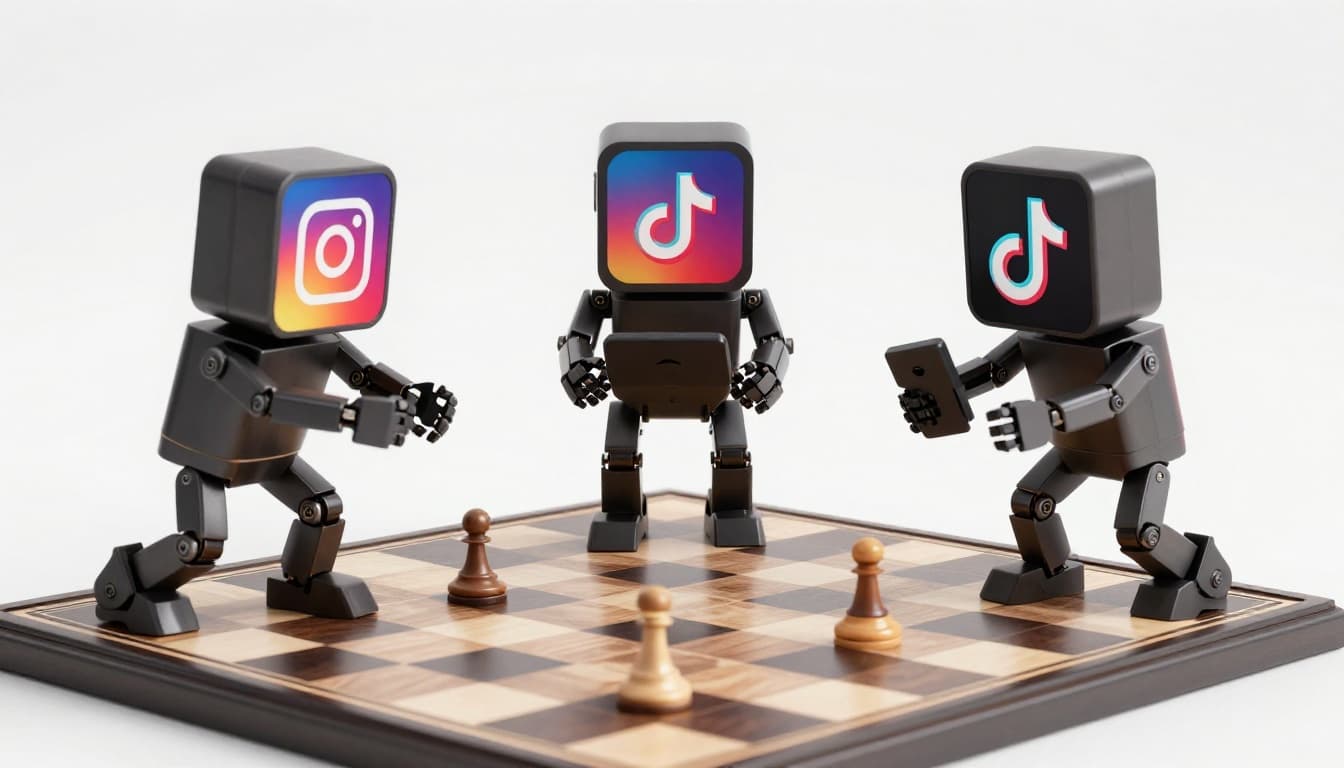
The Algorithm War: How Instagram, TikTok, and YouTube Compete for Your Attention in 2026
The three dominant video platforms of 2026 — Instagram, TikTok, and YouTube — are locked in an unprecedented battle for your attention. Each platform deploys sophisticated recommendation algorithms designed to keep you scrolling, watching, and engaging for as long as possible. For creators, understanding how these algorithms work is no longer optional — it is the single most important factor determining whether your content reaches ten people or ten million. The algorithms have evolved dramatically over the past few years, shifting from simple chronological feeds to complex machine learning systems that analyze hundreds of signals in real time. They decide what content gets surfaced, who sees it, and how far it travels. The platforms have also been aggressively copying each other's most successful features, creating a convergence that makes the competitive landscape more confusing than ever. Whether you are a creator trying to grow, a brand investing in social media, or simply a curious user wondering why you see what you see, understanding the algorithm war of 2026 is essential to navigating the modern content landscape.
How TikTok's Algorithm Works in 2026
TikTok's algorithm remains the gold standard for interest-based content distribution, and in 2026 it has only become more refined. The For You Page is still powered by a recommendation engine that evaluates every video based on hundreds of signals — watch time, completion rate, replays, shares, comments, and even how quickly someone scrolls past. What makes TikTok's algorithm fundamentally different from its competitors is its willingness to show content from accounts with zero followers to millions of users. The platform treats every video as an independent entity, giving it an initial test audience and then expanding distribution based on performance metrics. In 2026, TikTok has added deeper personalization layers that factor in time of day, device type, content freshness, and even audio trends. The algorithm now also weighs "meaningful engagement" more heavily, prioritizing comments that contain more than a few words and shares sent through direct messages over passive likes. Creators who understand these signals can engineer content that triggers the right algorithmic responses, effectively reverse-engineering distribution at scale.
How Instagram's Algorithm Works in 2026
Instagram in 2026 operates not one algorithm but several interconnected systems, each governing a different surface within the app. The main feed algorithm prioritizes content from accounts you interact with frequently, using signals like relationship history, post type preferences, timeliness, and engagement velocity. Reels has its own discovery-oriented algorithm that functions more like TikTok's, surfacing content from accounts you do not follow based on interest signals and engagement patterns. The Explore page uses yet another recommendation system optimized for topic-based discovery. Stories are ranked by recency and relationship closeness. What has changed most significantly in 2026 is Instagram's increased emphasis on send-to-friend metrics — the platform now treats DM shares as one of the strongest positive signals, even more valuable than likes or comments. Instagram has also introduced collaborative filtering at a deeper level, meaning the algorithm learns from the behavior of users with similar interest profiles to yours. For creators, this multi-algorithm structure means that a single content strategy will not work across all Instagram surfaces. You need to understand what each algorithm values and create content tailored to the distribution mechanics of each specific surface.
How YouTube's Algorithm Works in 2026
YouTube's recommendation algorithm has always been uniquely powerful because it controls the largest video library on the internet and keeps users on the platform for an average session length that dwarfs its competitors. In 2026, YouTube's algorithm is driven primarily by two metrics: click-through rate and audience retention. Click-through rate determines whether a video earns its initial distribution — if people see the thumbnail and title in their recommendations and actually click, the algorithm expands reach. Audience retention determines long-term performance — if viewers watch a significant portion of the video without dropping off, the algorithm continues pushing it to new audiences for days, weeks, or even months. Unlike TikTok and Instagram where content has a shelf life of hours to days, YouTube videos can continue generating views for years if the algorithm deems them perpetually relevant. YouTube has also invested heavily in its Shorts algorithm, which operates similarly to TikTok's recommendation engine. The platform now uses a sophisticated dual-track system where Shorts performance can boost long-form video distribution and vice versa. Creators who master both formats benefit from a compounding effect that neither TikTok nor Instagram can replicate, because YouTube uniquely rewards content with long-term evergreen value.
How the Platforms Copy Each Other
The feature convergence between Instagram, TikTok, and YouTube has reached a point where the platforms are nearly indistinguishable in their core offerings. Instagram launched Reels to compete with TikTok. YouTube launched Shorts for the same reason. TikTok responded by expanding video length limits to compete with YouTube. Instagram added broadcast channels to compete with community features. YouTube introduced a community tab and then enhanced it with polls and image posts. TikTok launched a photo mode to compete with Instagram carousels. This mimicry extends beyond features to algorithmic behavior. Instagram's Reels algorithm now behaves remarkably like TikTok's For You Page, testing content with small audiences before scaling distribution. TikTok has started giving more weight to follower relationships, moving closer to Instagram's feed logic. YouTube Shorts adopted the swipe-through format and interest-based distribution that TikTok pioneered. For creators, this convergence means that skills learned on one platform increasingly transfer to others, but it also means that differentiation becomes harder. The platforms that win the algorithm war will be those that find unique value propositions beyond feature parity — whether through monetization, audience quality, or content format innovation.
What Signals Each Algorithm Prioritizes
Understanding the specific ranking signals each platform weights most heavily is the key to optimizing your content strategy. The following table summarizes the primary signals for each platform's main recommendation algorithm in 2026:
| Signal | TikTok | Instagram Reels | YouTube |
|---|---|---|---|
| Watch time / retention | Very high | High | Very high |
| Completion rate | Very high | High | Moderate |
| Shares (DM sends) | High | Very high | Moderate |
| Comments | High | High | High |
| Likes | Moderate | Moderate | Moderate |
| Saves / Add to playlist | Moderate | High | High |
| Click-through rate | N/A (auto-play) | N/A (auto-play) | Very high |
| Follower relationship | Low | High (feed) / Low (Reels) | Moderate |
| Content freshness | High | High | Low (evergreen) |
| Session time generated | High | Moderate | Very high |
This table reveals important strategic differences. TikTok and YouTube both prize watch time above almost everything else, but they measure it differently — TikTok cares about completion rate on short videos while YouTube cares about sustained retention across longer content. Instagram's unique emphasis on shares and saves means that content designed to be sent to friends or bookmarked for later reference has an outsized algorithmic advantage. Creators who design content with these specific signals in mind will consistently outperform those who create without considering what the algorithm actually rewards.
The Impact on Creators and Content Strategy
The algorithm war has profound implications for how creators approach their work. The most successful creators in 2026 are not necessarily the most talented or the most creative — they are the ones who understand distribution mechanics deeply enough to ensure their content actually reaches an audience. This reality has spawned an entire industry of algorithm consultants, courses, and tools designed to help creators decode platform recommendations. The impact is not entirely positive. Algorithm-driven content creation can lead to homogenization, where every creator chases the same trends and formats because they know the algorithm rewards them. It can also create a relentless pressure to post constantly, because most algorithms favor accounts that publish frequently and consistently. Mental health challenges among creators have been well documented, and the algorithm war has intensified them by making success feel simultaneously more achievable and more precarious. A single video can change a creator's life overnight, but the algorithm that surfaced it offers no guarantees it will ever do so again. The healthiest approach is to understand algorithms well enough to make informed decisions while maintaining a creative identity that exists independent of any platform's recommendation system.
The Shift Toward Interest-Based Distribution
Perhaps the most significant algorithmic trend of 2026 is the complete shift from social-graph-based distribution to interest-based distribution. In the early days of social media, your feed was determined primarily by who you followed. Today, on every major platform, the majority of content you see comes from accounts you do not follow. TikTok pioneered this shift, proving that an algorithm could predict what you want to watch better than your own follow decisions. Instagram followed suit, and Meta has stated that more than half of all content shown in Instagram feeds now comes from unconnected accounts recommended by AI. YouTube has always blended subscriptions with recommendations, but the balance has tilted dramatically toward algorithmic suggestions. This shift has massive implications for creators. Building a follower base is no longer sufficient for guaranteed reach — you must continuously earn algorithmic distribution by creating content that performs well with new audiences. On the positive side, this means that any creator, regardless of existing audience size, can break through if they produce content the algorithm deems worthy of distribution. Interest-based distribution has democratized reach in ways that the old follower model never could, but it has also made organic growth less predictable and more dependent on algorithmic favor.
Strategies for Winning on Each Platform
Winning the algorithm game on each platform requires tailored strategies that align with what each system rewards. On TikTok, focus on the first one to two seconds of your video — the algorithm measures early drop-off rates, and losing viewers in the opening moment is fatal. Use trending audio, keep videos concise, and optimize for completion rate by delivering your hook immediately and your payoff quickly. On Instagram, design content specifically to be shared via DM — ask yourself whether your post is something someone would send to a friend. Carousel posts, relatable memes with depth, and save-worthy reference content all trigger the sharing signals that Instagram's algorithm prizes most highly. On YouTube, invest disproportionately in thumbnails and titles because click-through rate is the gatekeeper to all distribution. Structure your videos to maintain retention by using pattern interrupts, chapter markers, and storytelling frameworks that prevent viewers from clicking away. Across all three platforms, consistency matters enormously — algorithms reward creators who publish on a predictable schedule because reliable content producers keep users returning to the platform. The creators who thrive in 2026 are those who develop platform-specific strategies rather than taking a one-size-fits-all approach to content creation and distribution.
Conclusion
The algorithm war between Instagram, TikTok, and YouTube shows no signs of slowing down. Each platform continues to refine its recommendation systems, copy successful features from competitors, and shift toward interest-based distribution that prioritizes content quality over social connections. For creators, this environment is simultaneously more challenging and more opportunity-rich than ever before. Understanding how each algorithm works, what signals it prioritizes, and how to craft content that earns distribution is no longer a nice-to-have skill — it is the foundation of any successful content strategy. The creators who invest time in learning these systems will consistently outperform those who ignore them, regardless of raw talent or production quality. Stay informed, experiment constantly, analyze your performance data rigorously, and remember that algorithms are tools designed to connect great content with interested audiences. Make content worth recommending, understand the mechanics of recommendation, and the algorithms will work for you rather than against you.