The Attention Recession: Why Audiences Are Watching Less and What Creators Must Do to Adapt
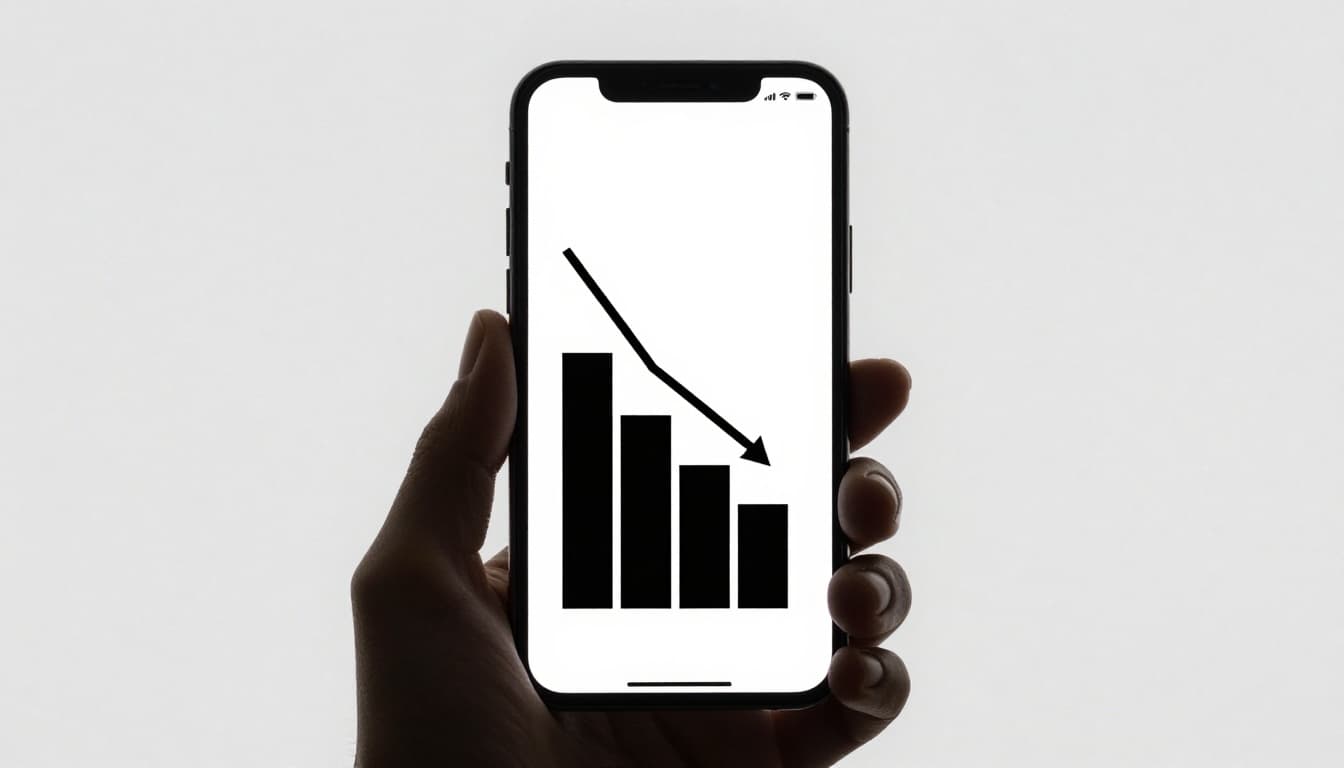
There is a quiet crisis unfolding across every major content platform, and most creators are only beginning to feel its effects. Average watch times are falling. Completion rates on videos are shrinking. Audiences scroll past thumbnails that would have earned clicks just a year ago. This is not a temporary dip or a seasonal fluctuation — it is a structural shift in how people consume media online. The attention recession has arrived, driven by an explosion of competing content, platform fragmentation, and a generation of viewers trained to abandon anything that does not immediately captivate them. For creators who depend on engagement metrics for their livelihood, understanding this shift is not optional. It is survival.
The Data Behind Declining Attention
The numbers paint a stark picture. Research from multiple analytics firms shows that average watch time on YouTube videos dropped by roughly fifteen percent between 2024 and early 2026, with the sharpest declines occurring in videos longer than eight minutes. TikTok completion rates for videos over sixty seconds have fallen steadily, even as the platform has pushed longer formats. Instagram Reels engagement peaked in late 2023 and has been on a gradual decline since, despite Meta's aggressive algorithmic promotion of short-form video. Podcasts, once considered immune to attention fatigue, are also seeing shorter average listen durations across platforms like Spotify and Apple Podcasts.
These trends are not isolated to a single demographic or platform. They reflect a broader behavioral change. Microsoft's widely cited research suggesting the average human attention span has dropped below that of a goldfish may be an oversimplification, but the underlying observation holds weight. People are not necessarily less capable of paying attention — they are simply choosing to allocate their attention more ruthlessly. When the next piece of content is always one swipe away, the bar for holding someone's focus rises dramatically. Creators who once succeeded with decent content now find that decent is no longer enough.
Why Content Overload Is the Root Cause
The single biggest driver of the attention recession is the sheer volume of content being produced. Every minute, approximately 500 hours of video are uploaded to YouTube alone. TikTok sees millions of new posts daily. Instagram, X, LinkedIn, Threads, podcasts, newsletters, and Substack articles all compete for the same finite pool of human attention. AI-generated content has only accelerated this flood, making it trivially easy for anyone to produce text, images, and even video at industrial scale. The supply of content has exploded, but the supply of attention has remained fixed.
This creates a devastating dynamic for individual creators. Even if your content quality has improved, the relative value of your work has declined because it must compete with exponentially more alternatives. Audiences are overwhelmed by choice, and the natural response to overwhelming choice is to disengage or skim. Viewers develop what psychologists call "content fatigue," a state where they continue scrolling and consuming but with diminishing engagement and retention. They watch but do not absorb. They click but do not stay. The result is inflated view counts paired with collapsing watch times — a metric illusion that masks real problems.
Platform Competition and Fragmented Audiences
Another major factor is the fragmentation of audience attention across platforms. In 2020, a creator could reasonably focus on one or two platforms and reach a significant portion of their target audience. By 2026, audiences are spread across YouTube, TikTok, Instagram, Threads, X, Bluesky, Discord, Twitch, Kick, Spotify, Apple Podcasts, newsletters, and emerging platforms that seem to launch monthly. Each platform has its own content format, algorithm, and culture. A viewer who spends twenty minutes on TikTok has twenty fewer minutes available for YouTube. A subscriber who reads your newsletter may skip your podcast episode that week.
This fragmentation forces creators into an impossible choice: go deep on one platform and risk missing audiences elsewhere, or spread thin across many platforms and produce diluted content everywhere. Most creators choose the latter, which ironically contributes to the very content overload that is driving the attention recession. The platforms themselves are also competing fiercely for user time, constantly tweaking their algorithms to maximize session duration. This means that even loyal followers may never see a creator's content because the algorithm has determined that something else will keep the user scrolling longer.
The Psychology of Shrinking Patience
Understanding why audiences are less patient requires looking at the psychology of dopamine-driven content consumption. Social media platforms are engineered to deliver rapid reward cycles — a funny clip, a shocking revelation, a satisfying visual — in the shortest possible time. Over years of exposure, users have been conditioned to expect immediate payoff from every piece of content they encounter. When a video takes fifteen seconds to establish context before delivering value, many viewers have already left. Their brains have been trained to seek the next hit of novelty rather than invest in a slower narrative.
This conditioning is especially pronounced among younger audiences. Gen Z and Gen Alpha viewers have grown up in an environment of infinite content choice, and their tolerance for anything that feels slow, repetitive, or predictable is remarkably low. But even older demographics are showing the same patterns. The behavior is not generational — it is environmental. Anyone who uses short-form platforms regularly begins to internalize the expectation of instant gratification. This creates a vicious cycle where creators make content shorter and more sensational to compete, which further trains audiences to expect rapid payoff, which pushes creators to compress their content even more.
How Creators Can Adapt: The Value Density Approach
The most effective response to the attention recession is not simply making content shorter, though brevity can help. The real solution is increasing value density — the amount of useful, entertaining, or emotionally resonant material packed into every second of content. A ten-minute video that delivers ten minutes of genuine insight will outperform a ten-minute video that delivers three minutes of value padded with filler. Audiences can sense filler instinctively, and in an attention-scarce environment, they will not tolerate it.
Practically, this means ruthlessly editing your content. Cut every unnecessary introduction, throat-clearing segment, and sponsor read that does not flow naturally. Front-load your most compelling point. Deliver your promise within the first few seconds, then use the remaining time to deepen and expand on it. Think of your content like a newspaper article written in the inverted pyramid style: the most important information comes first, and every subsequent section adds value but is not required for the core message. This approach respects your audience's time and signals that you understand the currency of the modern attention economy.
Better Hooks and the First Three Seconds
If value density is the strategy, then the hook is the tactic that makes it work. Research consistently shows that the first three seconds of any piece of content determine whether a viewer stays or leaves. On platforms like TikTok and Instagram Reels, the retention curve drops off a cliff within the opening moments. YouTube's own analytics reveal that videos losing more than thirty percent of their audience in the first thirty seconds rarely recover to perform well in recommendations.
Effective hooks share common characteristics. They create an open loop — a question, mystery, or promise that the viewer needs to see resolved. They use unexpected visuals or statements that break patterns. They speak directly to the viewer's pain point or desire. A hook like "I lost ten thousand followers in a week, and here is exactly what happened" is vastly more compelling than "Hey everyone, today I want to talk about follower counts." The difference is not in production quality or editing tricks. It is in understanding what makes a human brain pause its endless scroll and decide that this particular piece of content deserves its limited attention.
The Quality Over Quantity Shift
For years, the dominant creator strategy has been to post as frequently as possible. Daily uploads, multiple stories per day, three TikToks before lunch — the volume approach was rewarded by algorithms that favored consistency and recency. But in the attention recession, this strategy is showing diminishing returns. Audiences are not asking for more content from their favorite creators. They are asking for better content. The creators who are growing fastest in 2026 are often those who post less frequently but deliver exceptional quality with every upload.
This does not mean that consistency is irrelevant. It means that the definition of consistency is evolving. Rather than daily uploads of variable quality, the new standard is a reliable cadence of high-quality content — perhaps two or three times per week, or even weekly. The key metric is not how often you post but how often your content genuinely delivers value. A weekly video that earns five minutes of average watch time is algorithmically and commercially more valuable than daily videos that average ninety seconds of watch time each.
| Strategy | Old Approach | New Approach |
|---|---|---|
| Posting frequency | Daily or multiple times daily | 2-3 times per week with higher quality |
| Content length | As long as needed to fill ad breaks | As short as needed to deliver full value |
| Hook strategy | Casual intro, slow build | Immediate hook within first 3 seconds |
| Audience focus | Broad appeal, maximize reach | Niche depth, maximize retention |
| Success metric | Views and subscriber count | Watch time and completion rate |
Adapting Your Format and Platform Strategy
Creators who want to survive the attention recession should also reconsider their format and platform mix. Short-form vertical video remains the highest-performing format for discovery, but it is increasingly crowded. Newsletters and email lists are gaining value precisely because they bypass algorithmic gatekeeping and land directly in a subscriber's inbox. Podcasts continue to attract dedicated audiences willing to invest longer periods of attention, though even podcast creators should tighten their editing. Community-based platforms like Discord and private membership groups offer engagement that is insulated from the attention recession because members have opted in deliberately.
The smartest creators are building ecosystems rather than relying on a single platform. They use short-form video for discovery, email for retention, long-form content for depth, and community spaces for loyalty. Each format serves a different function in the attention funnel, and together they create resilience against the inevitable algorithm changes and attention shifts that no single platform strategy can withstand. Diversification is no longer a nice-to-have — it is an essential survival tactic.
Conclusion
The attention recession is not a temporary blip. It is the new reality of content creation in an era of infinite supply and finite demand. Audiences have more content available to them than at any point in human history, and they are responding by becoming more selective, more impatient, and more ruthless in how they allocate their time. Creators who cling to old strategies — posting daily filler content, ignoring hooks, padding videos to hit arbitrary length targets — will find their metrics eroding steadily. Those who embrace the shift by increasing value density, mastering the art of the hook, prioritizing quality over quantity, and building diversified platform strategies will not just survive the attention recession. They will use it as a competitive advantage, standing out in a sea of noise precisely because they respect the most valuable resource their audience has: their time.