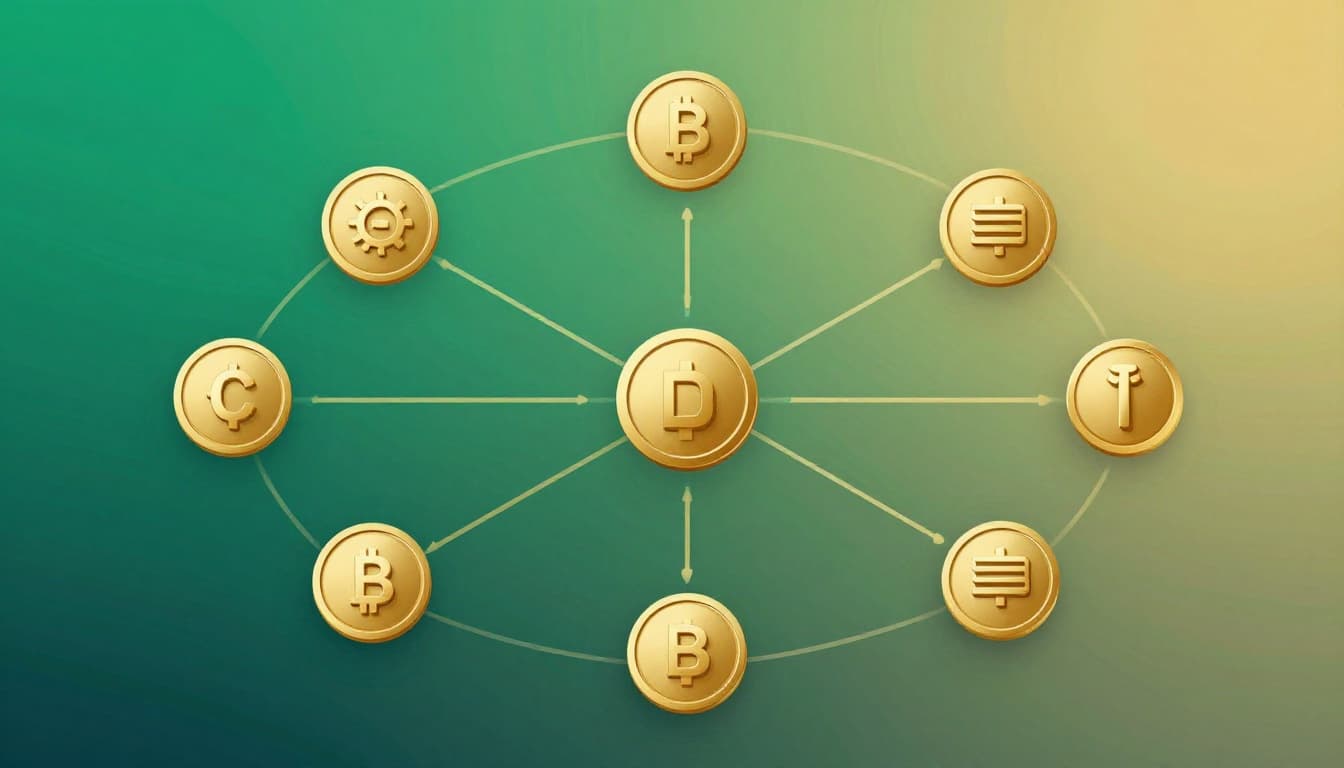
The Beginner's Guide to DeFi: Understanding Decentralized Finance Without the Jargon
If you have spent any time on social media, tech blogs, or financial news outlets over the past few years, you have almost certainly encountered the term DeFi. Short for decentralized finance, DeFi represents one of the most ambitious experiments in the history of money — an attempt to rebuild the entire financial system from the ground up using blockchain technology, without banks, brokers, or middlemen. Yet despite all the buzz, most people still find DeFi confusing, intimidating, and buried under layers of technical jargon that seem designed to keep newcomers out. This guide is different. Whether you are a content creator curious about new revenue streams, a social media user who keeps hearing about crypto, or simply someone who wants to understand what all the fuss is about, this article will walk you through everything you need to know about DeFi in plain, straightforward language.
What Is DeFi, Really?
At its simplest, DeFi is a collection of financial services — lending, borrowing, trading, saving, and insuring — that operate on blockchain networks instead of through traditional banks or financial institutions. Think of it this way: when you deposit money into a savings account at your local bank, the bank lends that money to other customers and pays you a small percentage as interest. DeFi does essentially the same thing, except there is no bank in the middle. Instead, software programs called smart contracts automatically handle the transactions, the rules, and the distribution of funds. Everything runs on code that anyone can inspect, and the entire system operates 24 hours a day, seven days a week, without holidays, without closing hours, and without requiring anyone's permission to participate. That openness and accessibility is what makes DeFi revolutionary.
How Traditional Finance Works (And Why DeFi Exists)
To understand why DeFi matters, it helps to understand the limitations of the traditional financial system. When you send money to a friend in another country through your bank, the transaction might take three to five business days and cost significant fees. When you apply for a loan, a bank reviews your credit score, your employment history, and your financial records before deciding whether you qualify. If you want to invest in stocks or bonds, you need a brokerage account that comes with its own set of requirements and fees. Every step involves a gatekeeper — an institution that decides who gets access and who does not. DeFi was born out of the belief that these gatekeepers are unnecessary. By replacing banks and brokers with transparent, automated software running on a blockchain, DeFi aims to create a financial system that is faster, cheaper, and accessible to anyone with an internet connection, regardless of their country, income level, or credit history.
The Building Blocks: Blockchain and Smart Contracts
DeFi runs primarily on blockchain networks, with Ethereum being the most widely used. A blockchain is essentially a digital ledger — a record of every transaction that has ever taken place on the network — that is stored across thousands of computers around the world. Because the ledger is distributed rather than held by a single company, no one entity can alter or manipulate the records. This makes the system highly resistant to fraud and censorship. Smart contracts are the engine that powers DeFi applications. A smart contract is a piece of code that automatically executes when certain conditions are met. For example, a lending smart contract might say: if a user deposits 1,000 dollars worth of cryptocurrency as collateral, they can borrow up to 700 dollars worth of another cryptocurrency. When the borrower repays the loan plus interest, the collateral is automatically returned. No paperwork, no approval process, no waiting period. The code handles everything.
The Main Categories of DeFi
DeFi is not a single product or platform. It is an entire ecosystem of different services, each addressing a specific financial need. Decentralized exchanges, often called DEXs, allow users to trade cryptocurrencies directly with each other without relying on a centralized company like Coinbase or Binance. Platforms like Uniswap and SushiSwap are among the most popular DEXs, processing billions of dollars in trades every month. Lending and borrowing protocols like Aave and Compound allow users to lend their crypto assets and earn interest, or borrow assets by providing collateral. Yield farming and liquidity mining let users earn rewards by providing liquidity to DeFi platforms, essentially depositing their funds into pools that other users can trade against. Stablecoins like USDC and DAI are cryptocurrencies pegged to the value of traditional currencies, providing a stable store of value within the volatile crypto ecosystem. Each of these categories works together to form a comprehensive financial system that mirrors — and in some cases improves upon — traditional banking.
DeFi in Everyday Language: A Practical Example
Let us walk through a real-world scenario to make DeFi tangible. Imagine you have some savings sitting in a traditional bank account earning 0.5 percent annual interest. You hear about a DeFi lending platform that offers 4 percent interest on stablecoin deposits. Here is what the process looks like. First, you purchase a stablecoin like USDC on a cryptocurrency exchange. Then, you connect a digital wallet — think of it as your personal crypto bank account — to a DeFi lending platform like Aave. You deposit your USDC into the platform, and the smart contract immediately begins calculating and distributing your interest. There is no minimum deposit, no lock-up period, and you can withdraw your funds at any time. The interest you earn comes from borrowers on the platform who are paying fees to borrow the funds you deposited. The entire process is transparent, and you can verify every transaction on the blockchain in real time.
The Risks You Need to Know About
DeFi offers exciting opportunities, but it is not without serious risks, and anyone considering participation needs to understand them clearly. Smart contract vulnerabilities are one of the biggest concerns. Because DeFi runs on code, any bug or exploit in that code can lead to significant financial losses. There have been multiple high-profile incidents where hackers exploited flaws in smart contracts and drained millions of dollars from DeFi platforms. Impermanent loss is another risk specific to liquidity providers, where the value of deposited assets can decrease compared to simply holding them. Market volatility in the crypto space can be extreme, with asset values swinging 20 or 30 percent in a single day. Regulatory uncertainty also looms large, as governments around the world are still figuring out how to classify and regulate DeFi services. And unlike traditional banks, there is no customer support hotline to call if something goes wrong. In DeFi, you are your own bank, which means you bear full responsibility for your funds.
Why DeFi Matters for Content Creators
You might be wondering what any of this has to do with content creation and social media. The answer is more than you might think. DeFi is increasingly intersecting with the creator economy in meaningful ways. Some creators are accepting cryptocurrency payments for sponsored content, merchandise, or digital products, and using DeFi platforms to earn yield on those earnings instead of letting them sit idle. Others are leveraging DeFi-powered tools to create tokenized communities, where fans can purchase tokens that grant access to exclusive content, voting rights on creative decisions, or a share in the creator's revenue. Platforms built on DeFi principles are also emerging as alternatives to traditional social media, offering creators more control over monetization and eliminating the middleman that takes a cut of every transaction. Understanding DeFi is becoming a competitive advantage for forward-thinking creators who want to diversify their income streams and stay ahead of the curve.
DeFi Wallets: Your Gateway to the Ecosystem
To interact with any DeFi application, you need a digital wallet. The most popular option is MetaMask, a browser extension and mobile app that serves as your identity and bank account in the DeFi world. Setting up a wallet is free and takes just a few minutes. When you create a wallet, you receive a seed phrase — a series of 12 or 24 random words that serve as the master key to your funds. This seed phrase is critically important. If you lose it, you lose access to your wallet permanently, and no one can recover it for you. If someone else obtains it, they can steal everything in your wallet. Beyond MetaMask, other popular wallet options include Trust Wallet, Coinbase Wallet, and Phantom for the Solana blockchain. Each wallet connects to different DeFi platforms and supports different blockchain networks, so choosing the right one depends on which part of the DeFi ecosystem you want to explore. The wallet is your starting point, your passport into a world of open financial services.
How to Get Started Safely
If you are curious about trying DeFi for the first time, the most important rule is to start small. Never invest money you cannot afford to lose, especially while you are still learning. Begin by setting up a wallet like MetaMask and purchasing a small amount of cryptocurrency from a reputable exchange. Then, explore a well-established DeFi platform like Aave or Uniswap by connecting your wallet and browsing the interface without making any transactions. Many platforms offer testnets — sandbox environments where you can practice using fake funds — which are an excellent way to learn without any financial risk. Educate yourself continuously by following trusted sources like Bankless, The Defiant, and DeFi Pulse, which provide news, tutorials, and analytics about the DeFi space. Join community forums on Discord and Reddit where experienced users are often willing to help newcomers. And always double-check the URL of any DeFi platform before connecting your wallet, as phishing sites that mimic legitimate platforms are one of the most common scams in the space.
The Regulatory Landscape in 2026
Governments and regulators around the world are paying increasing attention to DeFi, and the regulatory landscape is evolving quickly. In the United States, the Securities and Exchange Commission and the Commodity Futures Trading Commission have both signaled their intent to bring certain DeFi activities under existing regulatory frameworks. The European Union's Markets in Crypto-Assets regulation, known as MiCA, has established a comprehensive framework for crypto-asset service providers that is already influencing how DeFi platforms operate in Europe. Some countries, like Singapore and the United Arab Emirates, have adopted more welcoming stances, positioning themselves as hubs for blockchain innovation. Others, like China, have effectively banned most cryptocurrency activities. For everyday users and creators, this means that the DeFi landscape could look very different depending on where you live, and staying informed about local regulations is essential before participating in any DeFi activity.
The Future of DeFi
Despite the challenges, the trajectory of DeFi points firmly upward. Total value locked in DeFi protocols — a measure of how much money is deposited across the ecosystem — has grown from practically zero in 2019 to hundreds of billions of dollars today. Layer 2 solutions and alternative blockchains like Arbitrum, Optimism, and Solana are making DeFi transactions faster and cheaper, addressing one of the biggest barriers to mainstream adoption. Real-world asset tokenization — the process of putting traditional assets like real estate, bonds, and commodities on the blockchain — is bringing DeFi closer to the traditional financial system. Major financial institutions including JPMorgan, Goldman Sachs, and BlackRock have all launched blockchain and DeFi initiatives, signaling that even the establishment sees the potential of this technology. The question is no longer whether DeFi will become part of the mainstream financial system, but how quickly and in what form.
Conclusion
Decentralized finance is not just a buzzword or a passing trend. It is a fundamental reimagining of how money, lending, trading, and financial services can work in a digital age. While the jargon and complexity can be intimidating at first, the core concepts are surprisingly straightforward: replace middlemen with transparent code, make financial services accessible to everyone, and give individuals full control over their own assets. For content creators, DeFi offers new monetization opportunities, alternative revenue streams, and a chance to be at the forefront of a technological revolution that is still in its early chapters. For everyone else, understanding DeFi is increasingly becoming a form of financial literacy that will matter more and more in the years ahead. Start small, stay curious, stay cautious, and remember that the best time to learn about the future of finance is before it becomes the present.