How to Build a Personal Website That Converts Followers Into Clients and Customers
Every creator who is serious about building a sustainable business needs to confront an uncomfortable truth: you do not own your social media audience. Your Instagram followers, your TikTok viewers, your YouTube subscribers — they all exist on platforms controlled by corporations whose priorities do not necessarily align with yours. A single algorithm change, a policy update, or even an account suspension can sever your connection to the audience you spent years building. A personal website is the only digital asset that you fully own and control, and in 2026, it has become the most critical piece of infrastructure for any creator who wants to convert followers into clients, customers, and long-term revenue. Yet a surprising number of creators still operate without one, or with a neglected website that fails to capture the attention and trust of visitors. Building a website that actually converts is not about creating a beautiful digital brochure — it is about designing a strategic experience that guides visitors from initial curiosity to committed action. This guide covers everything you need to know to build a personal website that serves as the engine of your creator business.
Why Every Creator Needs Their Own Website
Social media platforms are rented land. You build on them at the pleasure of the platform owner, and your access can be revoked at any time for any reason. Beyond this existential risk, relying solely on social media creates practical limitations that a website solves. Social media profiles are constrained by platform design — you get one link in bio, a limited bio section, and no control over how your content is organized or presented. A website gives you unlimited space to tell your story, showcase your work, present your offerings, and guide visitors through a carefully designed journey that ends with a transaction. Websites also unlock revenue channels that are impossible or impractical on social media alone. You can sell digital products directly without platform fees, host a blog that drives organic search traffic, build an email list that you own permanently, and present yourself to potential brand partners and clients with a level of professionalism that a social media profile simply cannot match. Perhaps most importantly, a website establishes credibility. When a potential client or sponsor researches you, finding a polished, well-organized website signals that you are a serious professional rather than a hobbyist with a large following.
Choosing the Right Website Platform
The platform you use to build your website should match your technical skill level, your budget, and your specific needs. WordPress powers over forty percent of all websites on the internet and offers unmatched flexibility. With thousands of themes and plugins, you can build virtually anything — from a simple portfolio to a complex e-commerce store with membership areas and course hosting. The trade-off is complexity. WordPress requires more technical knowledge to set up and maintain than simpler alternatives, and self-hosted WordPress sites need reliable hosting, security management, and regular updates. Squarespace is the most popular choice among creators who want a beautiful website without touching code. Its templates are stunning, its editor is intuitive, and it includes built-in features for e-commerce, blogging, scheduling, and email marketing. The monthly cost is higher than self-hosted WordPress, but the time saved on setup and maintenance often justifies the investment. Framer has emerged as a favorite among design-conscious creators in 2026, offering a visual builder that produces websites with the polish of custom-designed sites. Carrd is the ideal choice for creators who need a simple, single-page website quickly and affordably — perfect as a starting point or a supplementary landing page.
| Platform | Best For | Monthly Cost | Technical Skill Needed | E-commerce | Blogging |
|---|---|---|---|---|---|
| WordPress | Full customization | $5 - $30 (hosting) | Moderate to High | Via plugins | Excellent |
| Squarespace | Beautiful design | $16 - $49 | Low | Built-in | Good |
| Framer | Modern, interactive sites | $5 - $20 | Low to Moderate | Limited | Good |
| Carrd | Simple landing pages | $0 - $19/year | Very Low | Limited | No |
| Shopify | Product-heavy stores | $29 - $79 | Low | Excellent | Basic |
Essential Pages Every Creator Website Needs
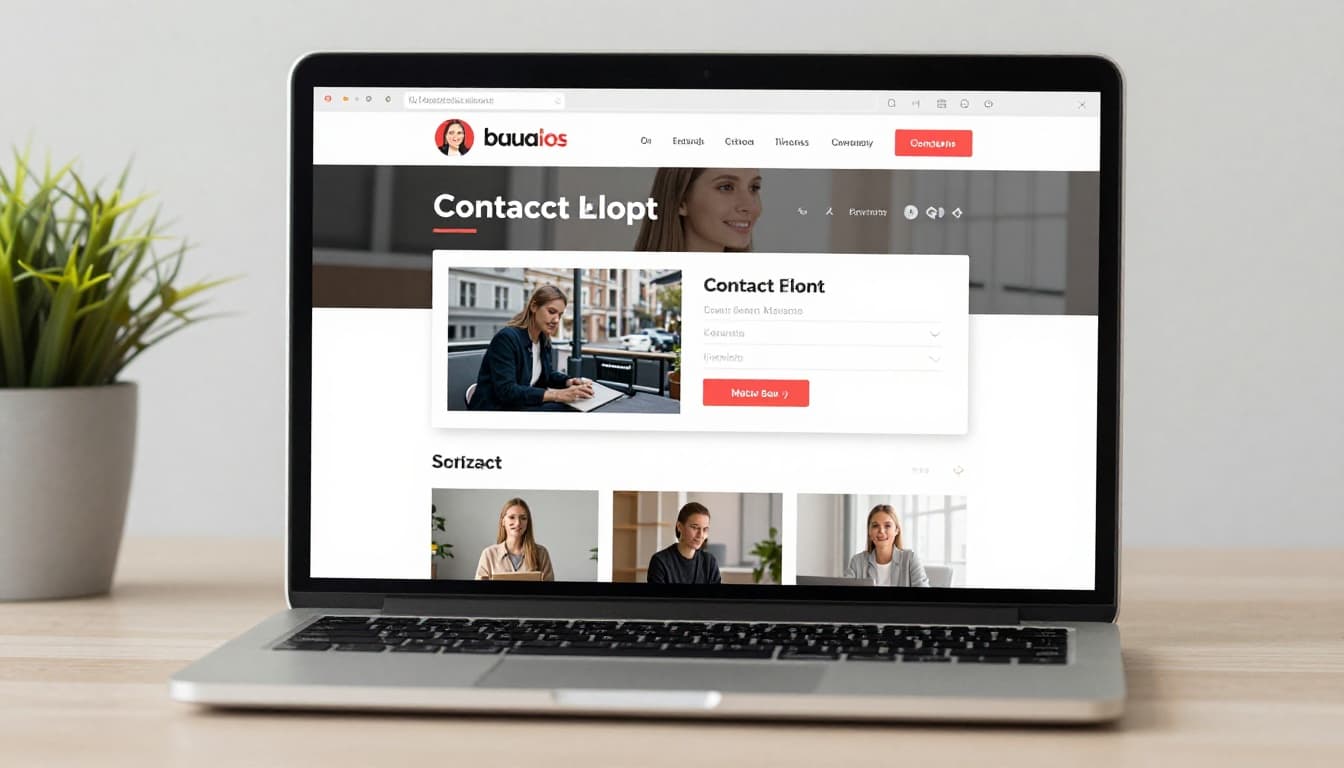
A high-converting creator website does not need dozens of pages — it needs the right pages, each designed with a clear purpose. Your homepage is the most important page because it receives the majority of your traffic and must immediately communicate who you are, what you offer, and why the visitor should care. Keep it focused and scannable, with a clear headline that states your value proposition, a brief description of your work, social proof such as follower counts or client logos, and a prominent call to action that guides visitors to their next step. Your about page is the second most visited page on most creator websites, and it should tell your story in a way that builds connection and trust. Resist the urge to write a formal biography — instead, share your journey, your values, and what drives your work in a conversational tone that reflects your personality. A services or products page should clearly present what you sell, with pricing information where appropriate, detailed descriptions, and easy purchase or booking functionality. A portfolio or work samples page showcases your best content and gives potential clients concrete evidence of your capabilities. Finally, a contact page with a simple form makes it easy for brands, clients, and collaborators to reach you.
SEO Basics That Drive Organic Traffic
Search engine optimization is the single most underutilized growth channel for creators. While most creators focus exclusively on social media algorithms, a properly optimized website can generate consistent, free traffic from Google searches indefinitely. SEO for creators does not require technical expertise — it requires understanding a few fundamental principles and applying them consistently. Start with keyword research. Identify the terms your target audience is searching for using free tools like Google's Keyword Planner or Ubersuggest. Focus on long-tail keywords — specific, multi-word phrases that have lower competition and higher intent. For example, "how to grow on Instagram as a photographer" is a better target than "Instagram growth" because it is specific enough to rank for and attracts visitors who are likely to be interested in your content. Create blog posts that thoroughly address these keywords, using the target phrase in your page title, URL, first paragraph, and subheadings. Ensure your website loads quickly, is mobile-responsive, and uses proper heading hierarchy. Over time, a consistent blogging practice built around keyword-targeted content can drive hundreds or thousands of monthly visitors to your website without any advertising spend.
Designing a Portfolio That Builds Trust
Your portfolio page is where potential clients and brand partners form their judgment about the quality of your work. A poorly organized or outdated portfolio can undermine the credibility you have built everywhere else. The key to an effective portfolio is curation over quantity. Display your ten to fifteen best pieces of work rather than every project you have ever completed. Organize them in a way that makes sense for your visitors — by category, by platform, by client type, or by service offered. Each portfolio item should include context beyond just the visual: describe the project goals, your role, the results achieved, and any measurable outcomes like engagement rates, conversion numbers, or audience growth. If you create content across multiple platforms, present your work in a format that is easy to consume on a website — embed videos, display images at high resolution, and include links to the live content where applicable. Update your portfolio regularly to ensure it reflects your current skill level and style. A portfolio filled with work from two years ago suggests that you have either stopped growing or stopped caring about your professional presentation, neither of which inspires confidence in potential clients.
Calls to Action That Actually Convert
A beautiful website without effective calls to action is like a store without a cash register — it may attract visitors, but it will not generate revenue. Every page on your website should have a clear, intentional call to action that guides the visitor toward your desired outcome. The most common mistake creators make is either having no CTA or having too many competing CTAs that confuse the visitor. Each page should have one primary call to action that stands out visually through contrasting color, size, and positioning. Your homepage CTA might direct visitors to book a consultation, browse your products, or join your email list, depending on your primary business goal. Product and service pages should have prominent purchase or booking buttons that appear both above the fold and at the bottom of the page. Blog posts should include CTAs that are contextually relevant to the content — a blog post about Instagram growth could end with a CTA for your Instagram course or coaching service. Use action-oriented language that communicates the benefit rather than the action: "Start Growing Your Audience" is more compelling than "Sign Up," and "Get Your Free Strategy Guide" is more compelling than "Download." Test different CTA placements, colors, and copy to identify what drives the highest conversion rate for your specific audience.
Building an Email List From Your Website
Your email list is the most valuable asset your website can generate because it gives you a direct, platform-independent communication channel with people who have explicitly expressed interest in your work. Every creator website should include at least one prominent email capture mechanism, and ideally several, each tailored to different pages and visitor intents. The most effective email capture strategy combines a free lead magnet — a valuable resource that visitors receive in exchange for their email address — with strategically placed opt-in forms throughout your website. Lead magnets that perform well for creators include templates, checklists, mini-courses, exclusive videos, resource libraries, and discount codes. Place opt-in forms in your website header, at the end of blog posts, in the sidebar, and as a timed pop-up that appears after a visitor has spent at least thirty seconds on a page. Use email marketing platforms like ConvertKit, Mailchimp, or Beehiiv to manage your list, create automated welcome sequences, and send regular newsletters that nurture your subscribers toward becoming paying customers. The creators who build the most resilient businesses are those who prioritize email list growth alongside social media growth, ensuring they always have a direct line to their audience regardless of platform changes.
Analytics Setup and Tracking What Matters
You cannot improve what you do not measure, and your website gives you access to far more detailed analytics than any social media platform. At minimum, install Google Analytics on your website to track visitor behavior, traffic sources, page performance, and conversion events. Set up goals or conversion tracking for your most important actions — email signups, product purchases, contact form submissions, and booking completions. Understanding where your visitors come from tells you which marketing channels are most effective. If you discover that sixty percent of your website traffic comes from Instagram but seventy percent of your product sales come from Google search, that insight should significantly influence your content and marketing strategy. Heatmap tools like Hotjar or Microsoft Clarity provide visual data showing exactly where visitors click, scroll, and spend time on your pages, revealing opportunities to improve your layout and CTA placement. Review your analytics at least monthly and look for patterns: which blog posts drive the most traffic, which pages have the highest bounce rates, which traffic sources generate the most conversions. These insights transform your website from a static brochure into a continuously optimizing conversion machine.
Mobile Optimization Is Not Optional
In 2026, over seventy percent of website visitors arrive on mobile devices, and for creators whose primary traffic comes from social media link-in-bio clicks, that number is often over eighty-five percent. If your website does not provide an excellent mobile experience, you are losing the majority of your potential conversions. Mobile optimization goes beyond simply having a responsive design that adjusts to smaller screens. Test your website on actual mobile devices — not just browser preview tools — and evaluate the complete experience. Are your text sizes readable without zooming? Do your buttons have enough padding to be easily tapped with a thumb? Does your page load in under three seconds on a mobile connection? Are your forms easy to complete on a touch keyboard? Is your navigation intuitive and accessible without requiring precise clicking? Images should be optimized for mobile loading speeds, and any feature that requires horizontal scrolling or pinch-zooming should be redesigned. Pay particular attention to your checkout and email signup flows on mobile, as these are the highest-value interactions and any friction at these points directly costs you revenue. Many website builders offer mobile-specific editing tools that let you customize the mobile experience separately from desktop, and investing time in this customization pays dividends in conversion rates.
Conclusion
Your personal website is the foundation of a creator business that you actually own. While social media platforms will continue to evolve, change their algorithms, and shift their priorities, your website remains under your control — a permanent home for your brand, your content, your products, and your audience relationships. Building a website that converts is not a one-time project but an ongoing process of refinement driven by data, testing, and a deep understanding of what your visitors need. Start with the essentials — a clear homepage, a compelling about page, a curated portfolio, a product or service page, and an email capture system. Choose a platform that matches your current skill level and upgrade as your needs grow. Optimize for mobile, implement basic SEO, install analytics, and review your performance regularly. The creators who build thriving businesses in 2026 and beyond will be those who recognized that social media is a powerful acquisition channel but your website is where the real conversion happens. Stop building exclusively on rented land and start investing in the digital property you own.