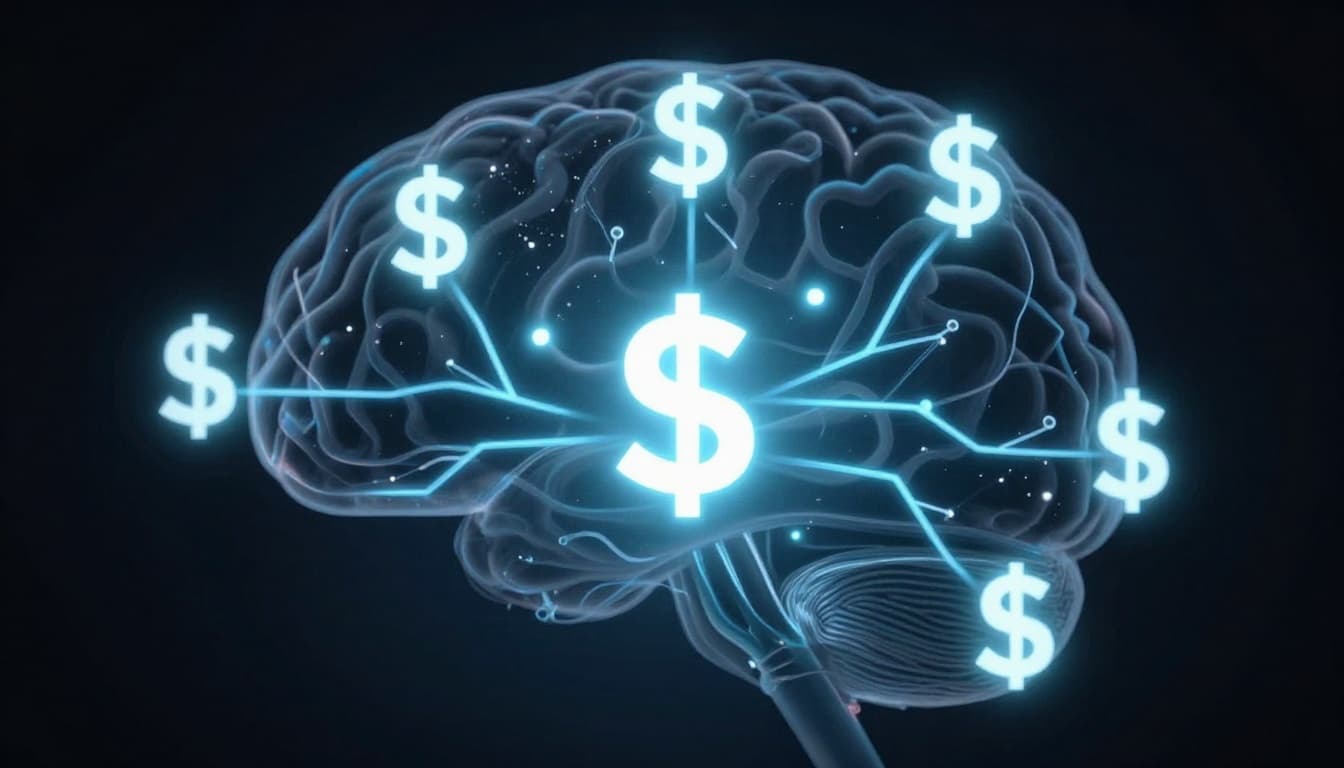
The Dopamine Economy: How Social Media Turned Human Emotions Into a Billion-Dollar Market
Every time you feel the urge to check your phone, every time your thumb instinctively opens Instagram before your conscious mind has decided to, every time you feel a small rush of pleasure when a notification appears on your lock screen — you are participating in the dopamine economy. This is not a metaphor. Social media platforms have been deliberately engineered to exploit the neurochemical reward systems in your brain, turning the most fundamental aspects of human psychology — the desire for validation, the fear of missing out, the craving for novelty, and the need for social connection — into a monetizable resource that generates hundreds of billions of dollars in annual revenue. The business model is elegant in its simplicity and devastating in its effectiveness. Capture human attention by triggering dopamine responses, hold that attention for as long as possible, and sell access to those captured eyeballs to advertisers. Every design choice, every algorithm update, every new feature is evaluated against a single criterion: does it increase the time users spend on the platform? The result is an economy built not on the production of goods or the delivery of services but on the systematic harvesting of human emotional responses. Understanding how this economy works is the first step toward deciding how much of your emotional life you are willing to trade for the privilege of scrolling.
The Neuroscience Behind the Scroll
Dopamine is a neurotransmitter that plays a central role in your brain's reward and motivation system. Contrary to popular belief, dopamine is not primarily about pleasure — it is about anticipation. Your brain releases dopamine not when you receive a reward but when you expect one might be coming. This distinction is crucial to understanding why social media is so addictive. Every time you pull down to refresh your feed, your brain releases a small burst of dopamine in anticipation of what might appear — a new like, an interesting post, a message from someone you care about. The unpredictability of the reward is what makes it so compelling. Behavioral psychologists call this a variable ratio reinforcement schedule — the same mechanism that makes slot machines the most addictive form of gambling. Sometimes you refresh and find something exciting. Sometimes you find nothing interesting at all. This inconsistency keeps you coming back because your brain is perpetually optimistic that the next refresh might deliver the hit. Social media platforms did not accidentally stumble upon this dynamic. They studied it, tested it, refined it through thousands of A/B experiments, and built their entire user experience around maximizing the frequency and intensity of these dopamine-driven engagement loops.
The Architecture of Addiction
The addictive properties of social media are not bugs — they are features, designed with precision by teams of engineers, psychologists, and data scientists whose explicit goal is to maximize user engagement. The infinite scroll eliminates natural stopping points that would otherwise prompt you to put your phone down. Pull-to-refresh mimics the physical action of a slot machine lever, triggering the same anticipatory dopamine response. Notification badges use the color red because research shows it creates the strongest sense of urgency and is hardest to ignore. Like counts and follower numbers gamify social interaction, transforming genuine human connection into a points system that triggers competitive and comparative instincts. Autoplay on videos removes the friction of deciding to watch the next piece of content, keeping you in a passive consumption state that can last for hours. Read receipts on messages create social pressure to respond immediately. Stories that disappear after 24 hours exploit fear of missing out. Each of these features was tested against alternatives, measured for its impact on engagement metrics, and deployed because it succeeded in keeping users on the platform longer. The cumulative effect is an experience so carefully optimized for compulsive use that resisting it requires conscious effort that most people simply do not have the bandwidth to sustain.
How Emotions Became Currency
In the dopamine economy, your emotional responses are not side effects of using social media — they are the product being harvested. Every like you give, every comment you leave, every video you watch to completion, and every post you angrily share generates data that platforms use to refine their understanding of what triggers your emotional engagement. Outrage keeps you scrolling longer than calm agreement, so the algorithm surfaces more provocative content. Envy drives more return visits than contentment, so the algorithm shows you aspirational content calibrated to make you feel just inadequate enough to keep seeking validation. Anxiety about missing important updates keeps you checking the app compulsively, so notification systems are designed to create a persistent sense that something important might be waiting. The emotional data generated by billions of users is aggregated, analyzed, and used to build predictive models that anticipate your psychological state and serve content optimized to exploit it. Advertisers then pay premium rates to reach you during these emotionally heightened states because decades of marketing research shows that emotional arousal — positive or negative — increases the effectiveness of advertising. Your feelings are not just being observed. They are being manufactured, measured, and sold.
The Attention Marketplace
The fundamental transaction in the dopamine economy is the exchange of human attention for access to a free platform. Users pay with their time and emotional engagement. Platforms sell that aggregated attention to advertisers. The scale of this marketplace is staggering. In 2026, global social media advertising revenue exceeds 300 billion dollars annually, generated by the collective attention of over four billion active users. The average social media user spends approximately two and a half hours per day on platforms, which translates to roughly 38 full days per year — more than a month of waking life devoted entirely to scrolling, watching, liking, and sharing. When you divide the advertising revenue by the number of users and the hours they spend, each hour of your attention is worth a quantifiable dollar amount to the platforms. This is not an abstract economic concept. It is a literal marketplace where your attention is the commodity, platforms are the brokers, and advertisers are the buyers. The fact that this transaction is invisible to most users — hidden behind the illusion of a free service — does not make it any less real. Understanding that your attention has a market price is the first step toward deciding whether the price you are receiving in return — entertainment, connection, information — is a fair trade.
The Engagement-Outrage Pipeline
One of the most troubling dynamics in the dopamine economy is the systematic amplification of content that provokes strong negative emotional responses. Platform algorithms have consistently discovered that outrage, conflict, and moral indignation generate significantly higher engagement than positive or neutral content. Angry comments are longer, more frequent, and more likely to spark reply threads. Outraged shares spread content further and faster than appreciative ones. Controversial posts keep users on the platform longer as they read through heated comment sections and feel compelled to add their own perspective. The algorithm does not have an opinion about whether outrage is good or bad for society — it simply observes that outrage keeps users engaged and optimizes accordingly. The result is an information environment where the most extreme, divisive, and emotionally provocative content receives the widest distribution, while measured, nuanced, and constructive content is systematically deprioritized because it generates weaker engagement signals. This dynamic has consequences that extend far beyond social media — it shapes political discourse, erodes social trust, and contributes to the polarization that characterizes public life in 2026. The dopamine economy does not just harvest emotions — it selectively cultivates the emotions that are most profitable, regardless of their social cost.
The Creator's Role in the Dopamine Machine
Content creators occupy a complicated position within the dopamine economy. On one hand, they are participants in the system — their income depends on generating the engagement that platforms monetize through advertising. On the other hand, they are also being exploited by it — their creative labor produces the content that keeps users on the platform, yet they capture only a fraction of the advertising revenue their work generates. The platform's algorithmic incentives push creators toward content strategies that maximize dopamine responses in their audiences — clickbait hooks, emotional manipulation, manufactured controversy, and outrage-driven takes. Creators who resist these incentives and prioritize genuine value often find their content deprioritized by algorithms that reward engagement intensity over content quality. This creates a constant tension between integrity and visibility. The creators who generate the most engagement are not always the ones providing the most value, and the creators providing the most value are not always the ones the algorithm rewards. Navigating this tension requires conscious choices about what kind of content you are willing to create and what emotional responses you are willing to provoke in your audience for the sake of growth.
The Mental Health Toll on Users
The mental health consequences of the dopamine economy are well-documented and deeply concerning. Longitudinal studies consistently link heavy social media use to increased rates of anxiety, depression, loneliness, sleep disruption, and diminished self-esteem, particularly among adolescents and young adults. The mechanisms are multiple and reinforcing. Constant exposure to curated highlight reels triggers social comparison that erodes satisfaction with your own life. The intermittent reinforcement of likes and comments creates anxiety when engagement is low and a hollow, fleeting satisfaction when it is high. The compulsive checking behavior that dopamine-driven design encourages fragments attention, reduces the capacity for deep focus, and creates a persistent background state of distraction that interferes with work, relationships, and rest. The fear of missing out drives users to maintain a constant connection to the platform even when they consciously recognize that the content is not improving their mood or their life. Perhaps most insidiously, the dopamine economy teaches users to evaluate their own worth through quantitative metrics — follower counts, like totals, and view numbers — that reduce the complexity of human identity to a leaderboard position.
The Mental Health Toll on Creators
If the dopamine economy is hard on users, it is devastating for creators. Every aspect of a creator's professional identity is quantified, displayed publicly, and compared to peers in real time. A post that underperforms is not just a creative disappointment — it is a public failure visible to their entire audience and industry. The algorithm's unpredictability means that content quality has an unreliable relationship with performance, which creates a persistent sense of helplessness and anxiety. Creators describe checking their analytics compulsively, losing sleep over engagement fluctuations, and experiencing their self-worth rising and falling with their metrics. The pressure to produce content that triggers strong emotional responses — content that feeds the dopamine machine — conflicts with many creators' desire to produce thoughtful, authentic, and genuinely helpful work. Burnout rates among full-time creators remain alarmingly high, with the majority reporting symptoms of chronic stress, emotional exhaustion, and creative depletion. The dopamine economy extracts value from creators not just in the form of content but in the form of psychological wellbeing, and the platforms that profit from this extraction have been slow to implement meaningful protections for the people whose labor sustains their business.
Children and the Dopamine Economy
The most vulnerable participants in the dopamine economy are children and adolescents, whose developing brains are particularly susceptible to the dopamine-driven engagement loops that platforms have engineered. The prefrontal cortex — the brain region responsible for impulse control, long-term decision-making, and evaluating consequences — is not fully developed until the mid-twenties. This means that young users are neurologically less equipped to resist the compulsive pull of social media design than adults, yet they are exposed to the same addictive mechanisms. The consequences are visible in rising rates of teen anxiety, depression, body image disorders, sleep deprivation, and attention difficulties that correlate strongly with social media usage. Several governments have responded with age restrictions and platform design regulations aimed at protecting minors, but enforcement remains challenging and the effectiveness of these measures is debated. The broader question — whether it is ethically acceptable to build products that deliberately exploit neurochemical vulnerabilities in developing brains for commercial profit — remains one of the most urgent and unresolved issues in technology policy.
The Pushback: Digital Wellness Movements
A growing countermovement is challenging the dominance of the dopamine economy and advocating for a fundamentally different relationship with social media. Digital wellness advocates, former platform employees turned whistleblowers, and health professionals are raising public awareness about the manipulative design practices that drive compulsive usage. Practical interventions are gaining mainstream adoption — screen time tracking apps, grayscale mode that reduces the visual appeal of phone screens, notification management systems, and designated phone-free times and spaces. Some creators have built their entire brands around mindful social media use, teaching their audiences how to engage with platforms intentionally rather than compulsively. A new generation of social media platforms is emerging with business models that do not depend on maximizing engagement at the expense of user wellbeing — subscription-funded platforms that have no advertising incentive to manipulate user behavior, chronological feeds that eliminate algorithmic amplification of provocative content, and design choices that include natural stopping points rather than infinite scrolls. Whether these alternatives can achieve meaningful scale against the entrenched dominance of the dopamine-driven incumbents remains an open question, but the demand for healthier digital experiences is real and growing.
What Creators Can Do Differently
Creators who recognize their role in the dopamine economy have the power to make choices that prioritize audience wellbeing over engagement metrics. This starts with honest self-reflection about the emotional impact of your content. Ask yourself whether the engagement your content generates comes from genuine value — education, inspiration, entertainment, connection — or from manufactured emotional triggers — outrage, insecurity, fear, envy. Choose topics and angles that leave your audience better informed and more empowered rather than more anxious and more addicted. Be transparent about the reality behind curated content — share the unfiltered struggles alongside the polished highlights so your audience is not trapped in a comparison loop. Resist the temptation to use manipulative hooks and clickbait tactics that prioritize clicks over substance. Encourage your audience to engage with your content mindfully rather than compulsively. Some creators have begun including reminders to take breaks, setting healthy boundaries around availability, and explicitly discouraging the kind of parasocial obsession that platforms incentivize. These choices may cost you some engagement in the short term, but they build the kind of genuine, trust-based audience loyalty that sustains a career over the long term.
Reclaiming Your Attention as a User
If you are a social media user who wants to reclaim your attention from the dopamine economy, the first step is awareness. Recognize that the compulsive urge to check your phone is not a personal failing — it is the intended outcome of a multi-billion-dollar design effort specifically engineered to create that urge. Once you understand that the game is rigged, you can start making conscious choices about how you play it. Audit your screen time honestly and decide how much of your daily attention you are willing to allocate to social media. Disable non-essential notifications so that the platform cannot interrupt your day to pull you back in. Curate your feed aggressively — unfollow accounts that consistently make you feel worse about yourself and seek out content that genuinely enriches your life. Set physical boundaries by keeping your phone out of your bedroom, designating phone-free meals, and establishing daily windows when social media is off-limits. Practice the pause — when you feel the impulse to open an app, wait ten seconds and ask yourself whether you are making a conscious choice or responding to a compulsion. These are small acts of resistance against a system designed to make resistance feel unnecessary. They will not dismantle the dopamine economy, but they will reclaim a meaningful portion of your attention and emotional energy for the things that actually matter to you.
Conclusion
The dopamine economy is not a conspiracy theory or an exaggeration — it is the openly documented business model that powers the most profitable companies in the history of technology. Social media platforms have turned human emotions into a commodity, engineered their products to harvest those emotions as efficiently as possible, and built a global advertising marketplace worth hundreds of billions of dollars on the back of captured human attention. The consequences — compulsive usage, deteriorating mental health, eroded social trust, and the systematic amplification of humanity's worst impulses — are not unintended side effects. They are the predictable and well-understood costs of a system that prioritizes engagement above all else. None of this means you must abandon social media entirely. These platforms offer genuine value — connection, creativity, education, opportunity, and community — that is worth preserving. But engaging with them thoughtfully requires understanding what they are designed to do to your brain and making deliberate choices about how much of your emotional life you are willing to offer in exchange. Your attention is finite. Your emotional energy is precious. And in the dopamine economy, both are being extracted at industrial scale. The least you can do is know the price you are paying. The most you can do is decide that some things are not for sale.