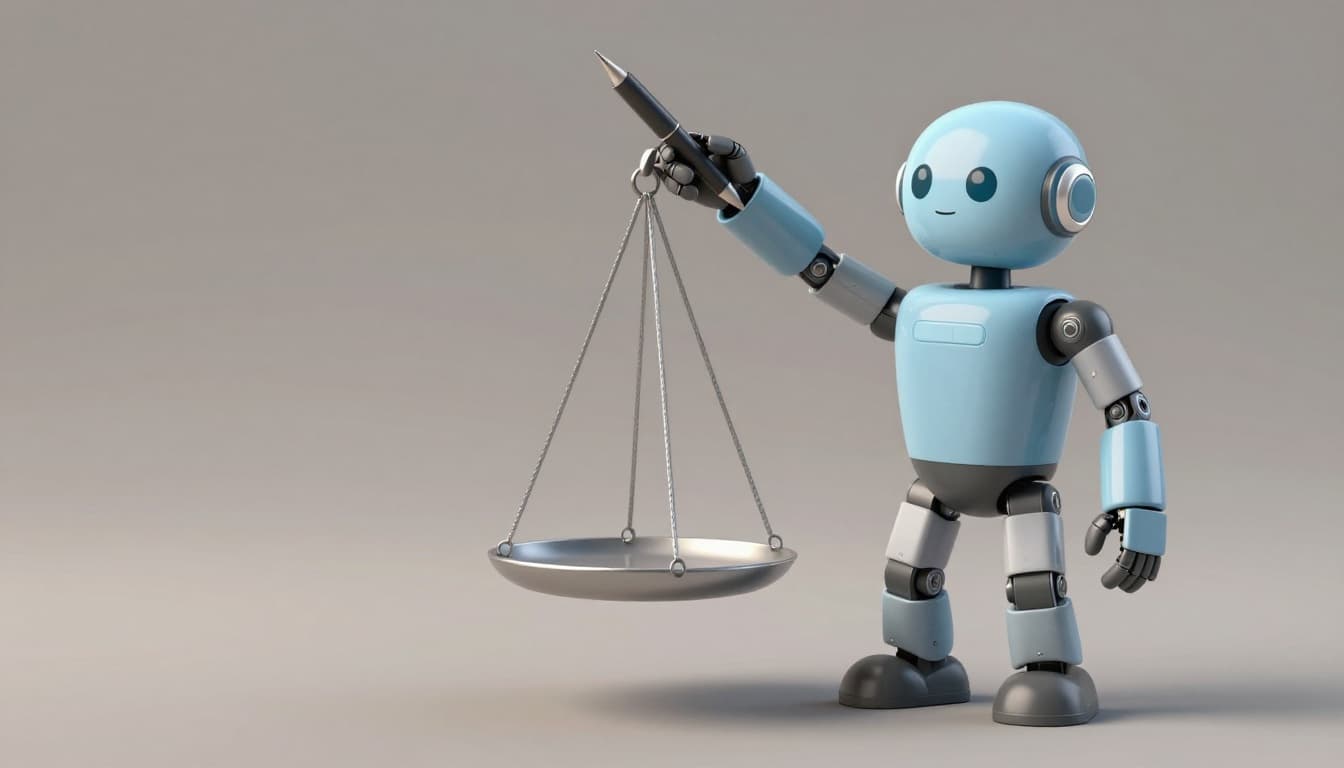
The Ethics of AI in Content Creation: Where to Draw the Line Between Assistance and Deception
We have collectively passed the point where AI in content creation is a novelty or a debate — it is an embedded reality. The question is no longer whether creators should use AI but how they should use it, and more importantly, what they owe their audiences in terms of transparency. A YouTuber uses ChatGPT to outline a script but writes every word of the final draft themselves. A blogger runs their finished article through an AI editor for grammar and tone improvements. A graphic designer generates background images with MidJourney and composites them with hand-drawn illustrations. An influencer has an AI write their entire caption from scratch and posts it without a single edit. Each of these represents a different point on the spectrum from AI-assisted to AI-generated content, and the ethical implications shift dramatically as you move along that line. This article is not here to tell you that using AI is wrong. It is here to help you think clearly about where assistance ends and deception begins, and to give you a framework for making those decisions in your own creative practice.
The Spectrum: From Tool to Author
Understanding AI ethics in content creation requires recognizing that there is no binary between "used AI" and "did not use AI." Instead, there is a wide spectrum with meaningfully different ethical implications at each point. At one end, you have AI as a passive tool — spell check, grammar correction, auto-captioning, background noise removal. Almost nobody considers these uses ethically problematic because the AI is performing a mechanical function that does not affect the creative substance of the work. Moving along the spectrum, you reach AI as a brainstorming partner — generating topic ideas, suggesting outlines, providing research summaries that the creator then synthesizes and transforms into original content. This is where most working creators currently sit, using AI to accelerate the unglamorous parts of the creative process while retaining full creative control over the final output. Further along, you reach AI as a co-author — the creator provides direction and edits the output, but the AI generates significant portions of the actual prose, script, or design. At the far end sits AI as the sole author, where the creator provides a prompt and publishes the output with minimal or no human modification. The ethical tension increases at each step, and the question of disclosure becomes more urgent as AI's contribution to the finished product grows.
Audience Expectations and the Trust Contract
Every creator has an implicit trust contract with their audience. When someone subscribes to a writer's newsletter, follows a photographer on Instagram, or watches a YouTuber's videos, they are entering into an unspoken agreement about what they expect to receive. The terms of this contract vary by medium and genre — nobody expects a news outlet to hand-draw its infographics, but audiences do expect that a personal essay reflects the actual thoughts and experiences of the person whose name is on it. AI disrupts this trust contract because it introduces ambiguity about authorship without the audience's knowledge or consent. When a creator known for their distinctive writing voice starts publishing AI-generated content that sounds different but carries their name, the audience may feel something is off without being able to identify why. When they eventually learn that the content was AI-generated, the feeling of betrayal can be significant — not because AI is inherently bad, but because the audience believed they were consuming something that came from a human mind they had developed a relationship with. The trust contract is not about the quality of the content. AI can produce content that is objectively as good as human-written content. The issue is about authenticity and the expectations that audiences bring to the relationship.
Platform Policies: An Evolving Landscape
Major platforms are actively developing policies around AI-generated content, though the landscape remains inconsistent and rapidly evolving. YouTube now requires creators to disclose when realistic AI-generated content is included in their videos, particularly when it involves synthetic voices, faces, or events that could mislead viewers. Instagram and Facebook have implemented labels for AI-generated images, though enforcement relies heavily on self-reporting. Amazon's Kindle Direct Publishing requires authors to disclose AI-generated content, and some categories explicitly restrict it. Google's search algorithm, while not penalizing AI content outright, evaluates content based on experience, expertise, authoritativeness, and trustworthiness — qualities that are harder for fully AI-generated content to demonstrate. The trend across platforms is moving toward mandatory disclosure rather than prohibition. Platforms recognize that banning AI content entirely is neither practical nor enforceable, but they also recognize that audiences deserve to know when they are consuming content that was generated by a machine rather than created by a human. Creators who get ahead of this trend by voluntarily disclosing their AI use are positioning themselves for a future where disclosure is not optional but required.
The Legal Landscape
Beyond platform policies, the legal framework around AI-generated content is developing in ways that creators need to monitor. Copyright law in most jurisdictions requires human authorship for copyright protection, which means fully AI-generated content may not be copyrightable — a significant consideration for creators who monetize their work through licensing or syndication. The US Copyright Office has issued guidance stating that AI-generated elements of a work cannot receive copyright protection, though human-authored elements within the same work can. The European Union's AI Act includes transparency requirements for AI-generated content, and similar legislation is being developed in other jurisdictions. Advertising regulations in many countries require that sponsored content and endorsements be truthful and not misleading, which could extend to AI-generated testimonials, reviews, or product descriptions that imply personal experience the AI obviously cannot have. For creators, the practical takeaway is that the legal environment is tightening, and practices that are currently tolerated may become legally problematic in the near future. Consulting with a legal professional about your specific use of AI in monetized content is increasingly advisable rather than a luxury reserved for large creators.
Case Studies: When Disclosure Goes Wrong
Several high-profile incidents have illustrated the reputational risks of failing to disclose AI use in content creation. In 2023, a prominent travel blogger was exposed for using AI-generated images of destinations they had never actually visited, presenting them as personal travel photography. The backlash was severe — subscribers felt deceived not because the images were low quality but because the entire value proposition of the creator's brand was authentic travel experiences, and AI images undermined that foundation completely. In the publishing world, multiple authors have faced criticism for submitting AI-generated manuscripts to literary magazines without disclosure, leading several publications to temporarily close their submission portals. A marketing agency faced legal action from a client after delivering a content strategy built on AI-generated market research that contained fabricated statistics — a known risk with language models that can generate plausible-sounding but entirely fictional data points. These cases share a common lesson: the damage from undisclosed AI use is not proportional to the quality of the AI output. Even when the AI-generated content is good, the revelation that it was not human-created can destroy trust that took years to build. The risk is asymmetric — the time saved by not disclosing is minimal, while the potential downside is catastrophic.
Building Trust Through Transparency
The creators who are navigating AI ethics most successfully are those who have made transparency a core part of their brand identity. Rather than hiding their AI use and hoping nobody notices, they openly discuss how they use AI tools, what role AI plays in their creative process, and where they draw the line on AI involvement. This approach works for several reasons. First, it demonstrates confidence — a creator who is transparent about using AI for research and outlining while writing the final draft themselves is implicitly saying "my creative judgment and voice are the valuable parts, and I am secure enough to admit that AI helps with the scaffolding." Second, transparency converts a potential scandal into a non-event. If a creator has already told their audience that they use MidJourney for thumbnail backgrounds, there is no "gotcha" moment to be had. Third, audiences are more sophisticated about AI than many creators assume. Most people understand that AI tools are part of modern creative workflows, and they appreciate honesty more than they demand purity. A simple disclosure like "this article was researched with AI assistance and written by me" or "thumbnails created with MidJourney" costs nothing and builds significant goodwill.
The Authenticity Paradox
AI in content creation creates a fascinating philosophical paradox around authenticity. Consider a creator who spends three hours writing a blog post from scratch, producing 1,200 words of decent but imperfect prose that genuinely reflects their thinking. Now consider another creator who spends 30 minutes prompting an AI to generate a polished 1,200-word article, then spends another 30 minutes editing it to match their voice. The second article might actually be better — more structured, better researched, more clearly written. But which one is more "authentic"? The first creator invested more time and effort, and every sentence came from their own mind. The second creator exercised editorial judgment and direction, but the raw material was machine-generated. The paradox deepens when you consider that many forms of content creation have always involved invisible collaboration. Bestselling authors work with editors who sometimes rewrite entire chapters. YouTubers have scriptwriters, editors, and producers who shape the final product. Podcasters have researchers and show-runners who prepare their talking points. None of these collaborations are considered deceptive because human collaboration is understood and accepted. The question AI raises is whether machine collaboration deserves the same acceptance, and the answer likely depends on the degree of machine involvement and the audience's expectations.
A Framework for Ethical AI Use
Rather than offering rigid rules that cannot account for every situation, here is a practical framework for making ethical decisions about AI in your content creation. First, apply the transparency test: if your audience knew exactly how you used AI in creating this piece of content, would they feel deceived? If the answer is yes, either change your process or add disclosure. Second, apply the value test: is the value your audience derives from this content based on assumptions about human authorship? A personal essay about overcoming depression carries its value from the human experience behind it — having AI write it fundamentally changes what the audience is receiving. A listicle of the best project management tools does not derive its value from personal suffering, so AI assistance is less ethically fraught. Third, apply the expertise test: are you presenting AI-generated information as if it comes from your own expertise or experience? If you have an AI write a guide on investing but present it as your own financial wisdom, you are potentially misleading people about the source of advice they might act on. Fourth, apply the disclosure proportion test: the more AI contributed to the final product, the more explicit your disclosure should be. Using AI for spell check needs no disclosure. Using AI to generate the entire piece demands clear disclosure.
The Future of AI Disclosure Norms
The norms around AI disclosure in content creation are still being established, and the choices creators make today will shape the standards of tomorrow. There is a real possibility that within a few years, AI disclosure will be as standardized as sponsored content disclosure — a required label or statement that audiences expect and platforms enforce. Forward-thinking creators are already developing their own disclosure practices before they are mandated. Some add a small note at the end of their articles: "AI tools were used in the research and editing of this piece." Others include AI credits alongside their other production credits. Some podcast hosts mention at the start of an episode when AI was used for research or show note preparation. The exact format matters less than the principle: give your audience enough information to make informed judgments about the content they are consuming. The creators who establish honest, consistent disclosure practices now will have a competitive advantage when mandatory disclosure arrives, because they will have already built the audience trust and workflow habits that newcomers will scramble to develop under regulatory pressure.
Conclusion
The ethics of AI in content creation are not black and white, and anyone offering simple answers to these questions is oversimplifying a genuinely complex landscape. The spectrum from AI-as-spell-check to AI-as-sole-author covers an enormous range of creative practices, and the ethical obligations shift meaningfully at different points along that spectrum. What remains constant is the principle that audiences deserve honesty about what they are consuming and who — or what — created it. The framework is straightforward even when its application is nuanced: be transparent about your AI use, ensure your disclosure is proportional to AI's contribution, protect the elements of your content that derive value from human authenticity, and stay ahead of platform policies and legal requirements that are tightening steadily. AI is a powerful creative tool that can make good creators better and efficient creators more prolific. Using it ethically is not a burden — it is the price of maintaining the audience trust that makes your creative work valuable in the first place. The creators who figure out this balance will thrive. The ones who prioritize convenience over transparency will eventually face a reckoning that no AI tool can help them navigate.