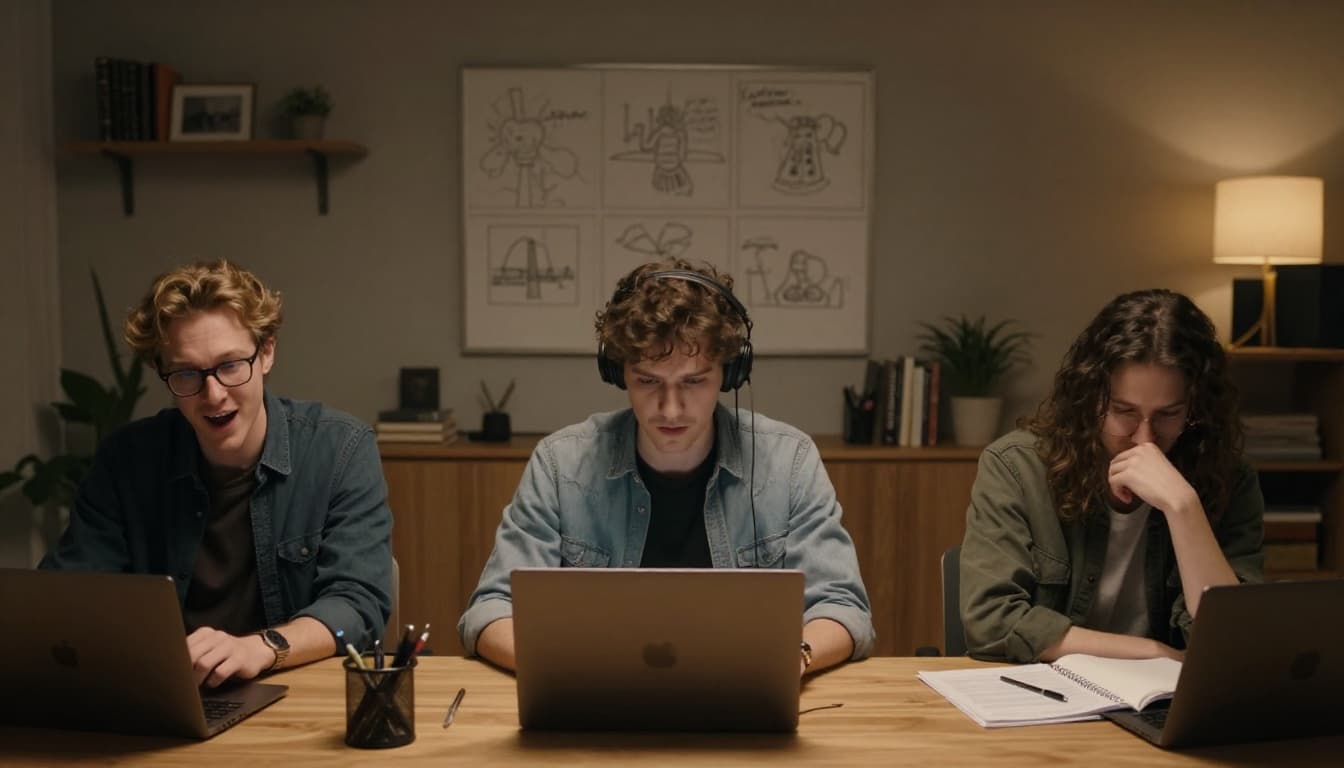
From Hobby to Hustle to Burnout: The Three Stages Every Creator Goes Through
Almost every creator who has turned their passion into a career can trace their journey through the same three phases. It starts with pure, unfiltered excitement — creating for the joy of it, sharing work with no expectation of return. Then the realization hits that this could actually become something more, and the hustle phase begins in earnest. Late nights, constant content, aggressive growth strategies, and the relentless pursuit of monetization take over. And then, often without warning, the energy that once felt limitless simply runs out. The passion that started everything begins to feel like a burden, and the work that used to be play becomes a grind that drains rather than fulfills. These three stages — hobby, hustle, and burnout — are not just common among creators. They are nearly universal, and understanding them is the first step toward navigating them without losing yourself in the process.
Stage One: The Hobby Phase
The hobby phase is the golden era of creation. There is no algorithm to please, no audience expectations to manage, no metrics to obsess over, and no financial pressure to perform. You create because something inside you demands expression — a camera in your hand feels right, words flow naturally onto the page, ideas for videos or designs arrive faster than you can execute them. The hobby phase is characterized by intrinsic motivation at its purest. Every new follower feels miraculous, every comment is a genuine thrill, and the process of creating is its own reward, completely detached from any external outcome.
During this phase, experimentation comes naturally because there are no stakes. You try different formats, topics, and styles without worrying about what performs best. You post at random times without consulting analytics dashboards. You engage with your tiny but growing community out of genuine connection rather than strategic necessity. The hobby phase produces some of a creator's most authentic, distinctive work precisely because it is unconstrained by commercial considerations. It is also the phase that builds the creative foundation and develops the voice that will eventually attract a larger audience. The irony is that this pressure-free authenticity is often exactly what triggers the transition to stage two, because audiences respond powerfully to genuine passion, and that response introduces possibilities that change the entire dynamic.
When Hobby Becomes Something More
The transition from hobby to hustle rarely happens in a single moment. It is a gradual shift that occurs as external validation begins to influence creative decisions. Maybe your content goes unexpectedly viral, and suddenly strangers are asking when your next video drops. Perhaps a brand reaches out with a sponsorship inquiry, and for the first time, you see actual dollar signs attached to your creative output. Or maybe you simply look at your growing follower count and do the math, realizing that if you could just reach a certain threshold, you could replace your day job income and create full-time.
This transitional period is both exciting and dangerous. Exciting because the dream of turning your passion into a livelihood suddenly feels tangible. Dangerous because the shift from creating for joy to creating for growth and revenue fundamentally changes your relationship with your work. Decisions that were once purely creative become partly commercial. You start thinking about what the algorithm rewards rather than what you want to make. You begin comparing your growth to other creators at similar stages. The internal compass that guided your creative choices begins competing with external metrics for your attention. None of this is inherently wrong — professionalization is a natural and often necessary evolution — but the shift deserves conscious awareness because the choices you make during this transition determine whether the hustle phase empowers or consumes you.
Stage Two: The Hustle Phase
The hustle phase is where dreams are built and bodies are broken. It is the period of maximum effort, maximum output, and maximum growth, driven by the conviction that success is just around the corner if you can only push a little harder, post a little more consistently, network a little more aggressively, and optimize a little more precisely. The hustle phase is intoxicating because results are often visible — followers grow, revenue appears, opportunities multiply, and the gap between where you are and where you want to be seems to narrow with every productive week. The creator economy celebrates this phase relentlessly, holding up hustle culture as the price of admission to the creative middle class.
During the hustle phase, your daily life transforms. Mornings start with analytics checks. Content calendars stretch weeks ahead. Batch filming sessions consume entire weekends. You learn about SEO, email funnels, affiliate programs, and sponsorship negotiation. Networking becomes strategic rather than organic. You say yes to nearly everything — collaborations, speaking opportunities, brand deals, new platforms — because each one represents potential growth. Your creative work improves technically as you invest in better equipment, editing skills, and production values. But something subtle begins to shift beneath the surface. The spontaneity that characterized the hobby phase gives way to optimization. The joy of creating gradually becomes entangled with the anxiety of performing, and the line between productive discipline and unsustainable overwork grows increasingly blurred.
The Warning Signs You Are Pushing Too Hard
The hustle phase does not announce its expiration date. There is no alarm that goes off when you have crossed from healthy ambition into self-destructive overwork. Instead, there are warning signs that accumulate gradually, each one easy to dismiss individually but collectively painting a clear picture of an unsustainable trajectory. Recognizing these signals early is essential because catching the slide before it becomes a freefall is far easier than recovering from full-blown burnout.
The warning signs typically include dreading the creation process that once excited you, feeling anxious when you take a day off, measuring your self-worth by your latest metrics, neglecting relationships, exercise, and sleep to create more content, experiencing physical symptoms like chronic headaches, insomnia, or digestive problems, and feeling resentful toward your audience for their expectations. If you find yourself creating content not because you want to but because you feel you must — not out of professional commitment but out of fear that stopping even briefly will cause everything to collapse — you are likely approaching the threshold of burnout. The hustle phase's greatest deception is convincing you that the discomfort is simply the cost of success, that everyone feels this way, and that slowing down is weakness. It is not. Slowing down is strategic, and the creators who last decades in this industry are the ones who learn this lesson before they are forced to.
Stage Three: The Burnout Phase
Burnout is not tiredness. Tiredness resolves with rest. Burnout is a fundamental depletion of the emotional, creative, and physical resources that make your work possible. It manifests as a profound disconnection from the work you once loved, a cynicism toward your audience and industry, and a persistent sense that nothing you create is good enough or matters enough to justify the cost of producing it. The World Health Organization recognizes burnout as an occupational phenomenon characterized by exhaustion, mental distance from one's work, and reduced professional efficacy — and creators experience all three in acute, often devastating ways.
The burnout phase feels different from ordinary creative blocks or bad weeks. It is not a temporary dip in motivation that resolves with a vacation or a good night's sleep. It is a pervasive state that colors everything. Content that used to take hours now takes days because every decision feels agonizing. Your camera sits untouched. Your drafts folder fills with abandoned ideas. The thought of filming, writing, or posting triggers anxiety rather than excitement. Some creators describe it as feeling hollow — still going through the motions externally while feeling completely empty internally. Others experience it as an overwhelming desire to walk away from everything they have built, despite knowing how much time and effort they invested. The tragedy of creator burnout is that it often strikes hardest in the people who cared the most about their work, because their deep investment is precisely what made the unsustainable pace possible in the first place.
Navigating Each Stage Wisely
Understanding that these three stages exist gives you a powerful advantage: the ability to navigate each one intentionally rather than being carried through them unconsciously. The hobby phase should be protected and extended as long as possible. Resist the urge to monetize prematurely. Let your creative voice develop without commercial pressure. Build a body of work and a small community that reflects your authentic interests before introducing business considerations. The creativity and authenticity you develop during this phase will be the foundation of everything that follows, and rushing past it shortchanges your future self.
The hustle phase should be approached with deliberate boundaries. Set working hours and honor them. Define what "enough" means before you start each week — enough content, enough outreach, enough revenue. Without a predetermined finish line, the hustle expands to fill every available hour. Build systems and processes that create efficiency rather than relying on brute force effort. Outsource or automate tasks that drain your energy without requiring your creative input. And most importantly, maintain non-negotiable commitments outside your creator work — relationships, physical activity, hobbies that have nothing to do with your brand — because these are not distractions from your success but essential supports that make sustained creative output possible.
Finding Sustainable Balance
The solution to the hobby-hustle-burnout cycle is not avoiding the hustle phase entirely — some period of intense effort is genuinely necessary to build a creator business. The solution is designing a sustainable operating model that allows you to work hard without destroying yourself, to pursue growth without sacrificing well-being, and to run your creator business as a marathon rather than a sprint. Sustainable balance looks different for every creator, but several principles apply universally across niches, platforms, and career stages.
The first principle is rhythmic working: alternating periods of higher intensity with deliberate recovery rather than maintaining maximum effort indefinitely. Professional athletes train this way, cycling between hard training blocks and active rest periods, and creators should adopt the same approach. Launch a course or push a growth campaign hard for four to six weeks, then scale back to maintenance mode for two to three weeks. The second principle is revenue diversification, because financial stress is the primary driver of unsustainable work patterns. When your income depends entirely on constant content production, you cannot afford to slow down. When passive revenue from digital products, courses, and affiliates supplements active income, taking breaks becomes financially possible. The third principle is creative autonomy — maintaining at least some content that exists purely for your own enjoyment, free from optimization pressure, even when the majority of your output is commercially driven.
Returning to Joy
If you have already reached the burnout phase, the path back to creative joy is neither quick nor linear, but it is absolutely possible. The first step is granting yourself genuine permission to stop — not a strategic pause designed to optimize your comeback, but an actual, guilt-free break where you do not create, do not check metrics, and do not think about your content calendar. Your audience will still be there when you return, and the ones who leave were not your people anyway. Burnout recovery requires space, and that space cannot be manufactured while you are still performing.
During your recovery period, reconnect with the version of yourself that existed before the metrics, the revenue goals, and the audience expectations. What did you create before anyone was watching? What topics fascinate you purely for their own sake? What creative formats have you always wanted to try but never pursued because they did not fit your brand? Explore these questions without any intention of publishing what you produce. Create a painting, write a journal entry, film a video you never intend to upload, or simply consume other people's creative work as a viewer rather than a competitor. The goal is to rekindle intrinsic motivation by removing every external incentive and reconnecting with the simple pleasure of making something that did not exist before. When the desire to share returns — and it will — you will recognize it as genuine passion rather than habitual obligation, and you can re-enter the creator world on terms that protect the joy that makes all of it worthwhile.
Conclusion
The journey from hobby to hustle to burnout is not inevitable, but it is common enough that pretending it will not happen to you is dangerous. Awareness is your most powerful tool. Recognize the hobby phase as something precious to be protected, not a preliminary stage to be rushed through. Approach the hustle phase with intentional boundaries and sustainable practices rather than unlimited, undifferentiated effort. And if burnout arrives despite your best precautions, treat it not as failure but as important information about what needs to change. The creators who build lasting, fulfilling careers are not the ones who avoid these stages — they are the ones who learn from each phase, adjust their approach accordingly, and ultimately find a rhythm that honors both their ambition and their humanity. Your creative work matters, but so do you. Building a career that serves both is not just possible — it is the only version of success worth pursuing.