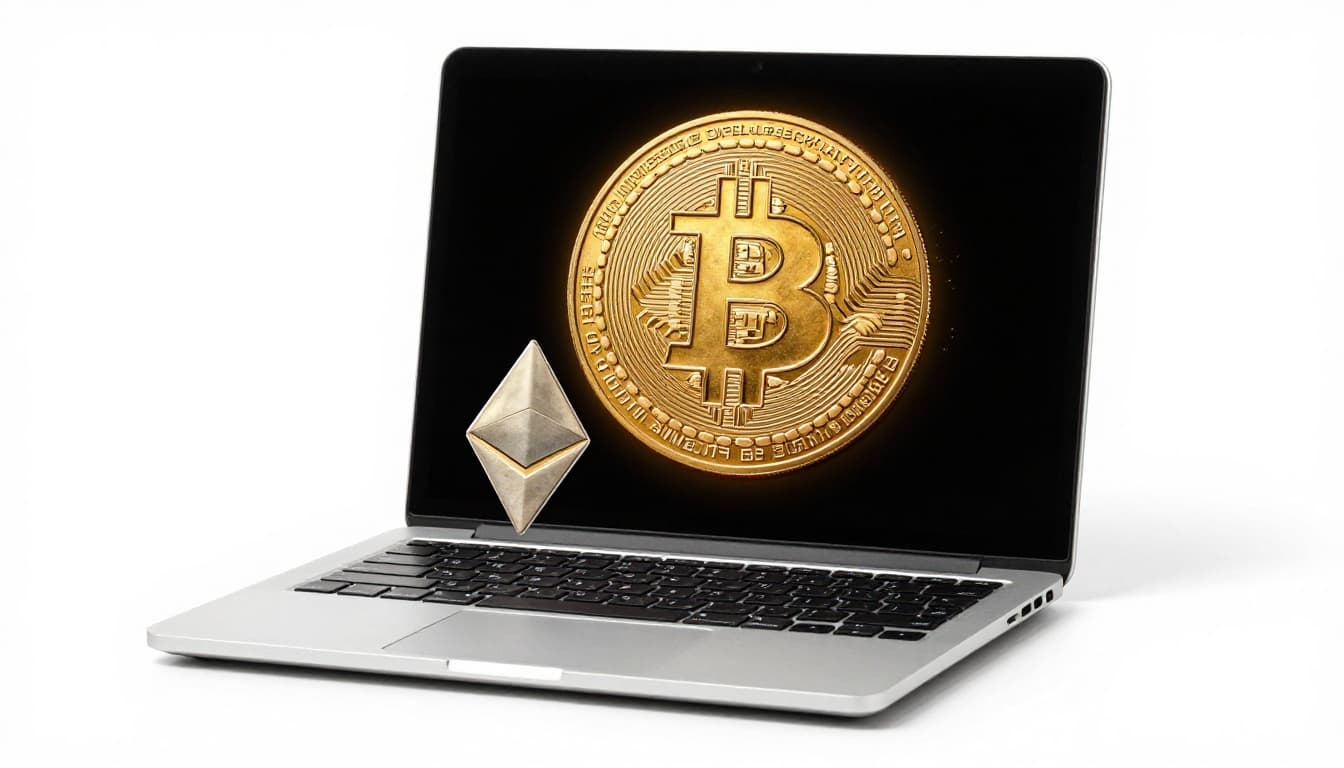
How to Accept Crypto Payments as a Creator: A Practical Setup Guide
Cryptocurrency has moved well beyond the speculative frenzy of its early years and into a phase of genuine practical utility. In 2026, millions of consumers hold crypto assets and are actively looking for ways to spend them — on products, services, subscriptions, and the work of creators they support. For content creators, accepting cryptocurrency payments opens a door to a growing segment of your audience that prefers to transact in digital currencies, while simultaneously diversifying your payment infrastructure beyond traditional processors that charge fees, impose delays, and maintain the power to freeze your account. Whether you sell digital products, offer coaching or consulting services, run a membership community, or simply want to accept tips and donations from your audience, setting up crypto payments is more straightforward than most creators assume. This guide walks you through the practical steps of accepting crypto as a creator — from choosing a payment processor to handling tax obligations — so you can make an informed decision about whether crypto payments belong in your business.
Why Accept Crypto as a Creator
The case for accepting cryptocurrency payments rests on several practical advantages that go beyond ideological enthusiasm for decentralized finance. First, crypto payments are borderless. A supporter in Nigeria, Japan, or Brazil can pay you instantly without the currency conversion fees, international wire transfer charges, or payment processing restrictions that make traditional cross-border transactions expensive and slow. For creators with global audiences, this is a meaningful benefit. Second, crypto transactions typically settle faster than traditional payment methods — most blockchain transactions confirm within minutes, compared to the two-to-five business day settlement windows for credit card payments and PayPal transfers. Third, transaction fees for crypto payments are often lower than the 2.9 to 3.5 percent charged by traditional payment processors, particularly for larger transactions. Fourth, accepting crypto signals to your audience that you are forward-thinking and aligned with the values of the Web3 community, which can strengthen your brand positioning with tech-savvy followers. Finally, crypto payments cannot be charged back — unlike credit card payments, where buyers can dispute transactions and reverse charges, crypto transactions are final once confirmed on the blockchain. This eliminates chargeback fraud, which costs merchants billions of dollars annually and disproportionately affects small businesses and independent creators.
Choosing a Crypto Payment Processor
Unless you want to manage wallet addresses and manually verify transactions yourself, you will want to use a crypto payment processor — a service that handles the technical complexity of receiving, processing, and optionally converting cryptocurrency payments on your behalf. The major options each offer different features, fee structures, and levels of control:
| Processor | Supported Cryptos | Transaction Fees | Auto-Convert to Fiat | Self-Hosted Option | Best For |
|---|---|---|---|---|---|
| BTCPay Server | Bitcoin, Lightning Network, + altcoins via plugins | 0% (self-hosted) | Via exchange integration | Yes (fully self-hosted) | Privacy-focused creators, zero-fee processing |
| Coinbase Commerce | BTC, ETH, USDC, DAI, LTC, DOGE, + more | 1% | Yes (to Coinbase account) | No (cloud-hosted) | Beginners, mainstream crypto acceptance |
| BitPay | BTC, ETH, XRP, DOGE, LTC, USDC, + 15 more | 1% | Yes (bank deposit) | No (cloud-hosted) | Established businesses, invoicing |
| NOWPayments | 300+ cryptocurrencies | 0.5% | Yes (via ChangeNOW) | No (cloud-hosted) | Accepting a wide variety of altcoins |
| Request Finance | ETH, ERC-20 tokens, stablecoins | Variable | Via integrations | No (cloud-hosted) | Invoicing and B2B payments |
BTCPay Server stands out as the most creator-friendly option for those willing to handle a modest amount of technical setup. It is completely open-source, charges zero transaction fees, and can be self-hosted on your own server, giving you full control over your payment infrastructure without any intermediary. The tradeoff is that it requires technical knowledge to deploy and maintain. Coinbase Commerce offers the easiest setup experience — you can be accepting payments within 15 minutes — but charges a one percent fee and relies on Coinbase's infrastructure. BitPay is well-established and offers features like invoicing and direct bank settlement that appeal to creators running more structured businesses. NOWPayments supports the widest range of cryptocurrencies, making it the best choice if your audience holds a diverse range of digital assets. For most creators just getting started, Coinbase Commerce or NOWPayments provides the best balance of simplicity, features, and cost.
Setting Up a Crypto Wallet
Before you can accept crypto payments, you need a wallet — a digital tool that stores the cryptographic keys allowing you to receive, hold, and send cryptocurrency. There are two main categories of wallets, and understanding the difference is important for security. Software wallets (also called hot wallets) are applications installed on your phone or computer. Popular options include MetaMask for Ethereum and ERC-20 tokens, BlueWallet for Bitcoin, and Trust Wallet for multi-currency support. These wallets are free, easy to set up, and convenient for day-to-day transactions. However, because they are connected to the internet, they are more vulnerable to hacking than the alternative. Hardware wallets (also called cold wallets) are physical devices — like the Ledger Nano X or Trezor Model T — that store your cryptographic keys offline. They connect to your computer only when you need to sign a transaction, making them significantly more secure against remote attacks. For creators who expect to hold meaningful amounts of cryptocurrency rather than immediately converting to fiat, a hardware wallet is a worthwhile investment at 70 to 200 dollars. The practical setup recommendation for most creators is to use a software wallet for receiving payments and small balances, and periodically transfer larger amounts to a hardware wallet for long-term storage. This approach balances convenience with security and does not require you to connect a physical device every time a payment comes in.
Integrating Crypto Payments With Your Website or Store
The integration process depends on your website platform and the payment processor you choose. For creators using Shopify, both Coinbase Commerce and BitPay offer official Shopify apps that add cryptocurrency as a payment option at checkout alongside credit cards and PayPal. The setup takes approximately 10 to 15 minutes and requires no coding. NOWPayments also offers a Shopify plugin, and BTCPay Server has a community-maintained Shopify integration. For WordPress and WooCommerce users, all four major processors offer plugins that integrate directly with the WooCommerce checkout flow. BTCPay Server's WooCommerce plugin is particularly well-documented and actively maintained. For creators who sell through platforms like Gumroad, Patreon, or Ko-fi, direct platform integrations are more limited. The workaround is to create a dedicated payment page using your processor's hosted checkout feature — Coinbase Commerce and NOWPayments both provide embeddable payment buttons and hosted payment pages that you can link from your bio, email signatures, or content descriptions. For creators who want to accept crypto tips or donations without a formal storefront, a simple approach is to display your wallet address or a QR code on your website or in your content descriptions, though using a payment processor is preferable because it provides transaction tracking, payment notifications, and optional automatic conversion.
Invoicing in Crypto
For creators who provide services — consulting, coaching, freelance content creation, brand strategy — invoicing in cryptocurrency is increasingly practical. BitPay and Request Finance both offer invoicing features specifically designed for crypto payments. You create an invoice specifying the amount in either fiat (which is automatically converted to the crypto equivalent at the current exchange rate) or directly in cryptocurrency, send it to your client, and receive notification when the payment is confirmed on the blockchain. Request Finance is particularly suited for creators who work with Web3 brands and DAOs (decentralized autonomous organizations), as it supports on-chain invoicing that integrates with corporate treasury management tools. For simpler invoicing needs, Coinbase Commerce allows you to generate payment links with custom amounts and descriptions that function as lightweight invoices. When invoicing in crypto, it is important to specify whether the amount is denominated in fiat or crypto. If you invoice for 1,000 dollars, the crypto amount will fluctuate until the moment of payment. If you invoice for a specific amount of Bitcoin or Ethereum, you bear the exchange rate risk. Most creators who invoice in crypto prefer to denominate in fiat with automatic conversion at the time of payment, which provides pricing stability while still offering clients the convenience of paying in their preferred cryptocurrency.
Converting Crypto to Fiat Currency
Unless you are committed to holding cryptocurrency long-term, you will likely want to convert at least some of your crypto income to traditional currency for covering business expenses, paying taxes, and personal use. Most payment processors offer automatic conversion — when a customer pays in Bitcoin, the processor immediately converts it to dollars, euros, or your local currency and deposits it to your bank account. This eliminates exchange rate risk entirely, meaning you receive the exact fiat amount you charged regardless of what Bitcoin does after the transaction. If you prefer to hold some crypto and convert selectively, you can receive payments to your own wallet and use an exchange like Coinbase, Kraken, or Gemini to sell when you choose. This approach gives you more control but exposes you to price volatility — the Bitcoin you received as payment today could be worth more or less tomorrow. A middle-ground approach that many creators adopt is to auto-convert a portion of incoming crypto to fiat for operational expenses while holding the remainder as a long-term investment. Some payment processors, including Coinbase Commerce, allow you to configure this split automatically. The right approach depends on your risk tolerance, your cash flow needs, and your views on the long-term value of cryptocurrency.
Tax Reporting for Crypto Income
Tax obligations for cryptocurrency income are real, specific, and should not be ignored. In the United States, the IRS treats cryptocurrency as property, which means that receiving crypto as payment for goods or services is a taxable event — you owe income tax on the fair market value of the crypto at the time you received it, just as you would if you had received cash. If you later sell or convert that crypto to fiat, any gain or loss relative to the value at the time you received it is a capital gain or loss. Other jurisdictions have their own rules, but the general principle is similar: crypto income is taxable, and you are responsible for tracking and reporting it. Crypto tax software tools like Koinly, CoinTracker, and CoinLedger can connect to your wallets and exchange accounts, automatically categorize transactions, calculate gains and losses, and generate tax reports compatible with standard tax filing software. For creators who receive crypto payments regularly, investing in one of these tools — typically 49 to 199 dollars per year depending on transaction volume — is far cheaper than the accounting fees for manual crypto tax preparation. If your crypto income is significant, consulting with a tax professional who specializes in cryptocurrency is strongly recommended. The regulatory landscape is still evolving, and getting professional guidance ensures you are compliant with current requirements while taking advantage of any available deductions or strategies.
Which Cryptocurrencies Should You Accept
Not all cryptocurrencies are equally practical for payments. The most commonly accepted cryptocurrencies for creator payments include Bitcoin (BTC), which has the largest user base and broadest recognition; Ethereum (ETH), which is widely held and supports smart contract functionality; and stablecoins like USDC (USD Coin) and USDT (Tether), which are pegged to the US dollar and eliminate exchange rate volatility entirely. For most creators, accepting Bitcoin, Ethereum, and at least one major stablecoin covers the vast majority of potential payers. Stablecoins deserve particular attention because they solve the volatility problem that makes many creators hesitant about crypto. When someone pays you 100 USDC, you receive the equivalent of 100 US dollars, and that value does not fluctuate. This makes stablecoins practical for everyday commerce in a way that volatile assets like Bitcoin and Ethereum are not. If you are concerned about crypto price swings but want to offer the payment option, accepting only stablecoins is a perfectly valid approach. Broader altcoin acceptance — Dogecoin, Litecoin, Solana, and others — can be offered through processors like NOWPayments that support hundreds of cryptocurrencies, but the practical demand from your audience for these coins is likely small unless you operate specifically within the crypto or Web3 community.
Real Examples of Creators Using Crypto Payments
Crypto payments for creators are not purely theoretical — a growing number of creators have integrated them into their businesses with tangible results. Digital artists and NFT creators were among the earliest adopters, with many accepting ETH directly for commissions and custom work alongside their NFT sales. Educational creators in the finance and crypto space frequently accept Bitcoin and stablecoins for course purchases, often offering a discount for crypto payments to encourage adoption. A freelance video editor who works primarily with Web3 companies shared that approximately 30 percent of his client payments now arrive in USDC, which he receives directly to his wallet and converts monthly. A podcaster who covers blockchain technology added a Bitcoin Lightning Network tip jar to her website and reports receiving between 200 and 500 dollars per month in listener contributions — small individual amounts that add up meaningfully over time. A digital product creator who sells Notion templates and Lightroom presets added Coinbase Commerce as a checkout option and found that crypto transactions account for roughly 8 percent of total sales, with a notably higher average order value than traditional payment methods. These examples illustrate that crypto payments are not a replacement for traditional payment methods but a valuable supplement that reaches an audience segment willing and eager to spend their digital assets with creators they support.
Security Best Practices
Accepting crypto payments introduces security considerations that creators should take seriously. Never share your private keys or seed phrase with anyone — these are the master passwords to your wallet, and anyone who has them has full control over your funds. Store your seed phrase offline, written on paper or stamped on metal, in a secure location. Enable two-factor authentication on every exchange account and payment processor account you use. Use a dedicated email address for your crypto accounts, separate from your personal and business email, to reduce the risk of phishing attacks. Be cautious of unsolicited messages from people claiming to represent payment processors or exchanges — legitimate companies will never ask for your private keys or seed phrase. If you hold significant amounts of crypto, a hardware wallet is not optional, it is essential. Regularly update the firmware on your hardware wallet and the software on any devices you use to manage crypto. Consider setting up a multi-signature wallet for larger holdings, which requires multiple approvals to authorize a transaction, providing an additional layer of security against unauthorized access. These precautions may seem excessive, but cryptocurrency transactions are irreversible — if funds are stolen, there is no bank or credit card company to call for a reversal.
Conclusion
Accepting cryptocurrency payments as a creator in 2026 is a practical, accessible step that can diversify your income, reduce payment processing friction for global audiences, and position your brand at the intersection of content creation and the digital economy. The setup process is straightforward — choose a payment processor that matches your technical comfort level, set up a wallet, integrate with your existing website or storefront, and communicate the option to your audience. The tax and accounting obligations are manageable with the right software tools, and the security practices required are sensible precautions that protect your financial assets. Crypto payments will not replace credit cards and PayPal for most creators, but they provide a valuable additional payment rail that serves a specific and growing segment of your audience. Start with a simple integration — a Coinbase Commerce checkout button or a NOWPayments widget — accept Bitcoin, Ethereum, and a stablecoin like USDC, and evaluate the results over a few months. The barrier to entry has never been lower, the tools have never been more mature, and the audience of crypto-holding consumers has never been larger. If your goal is to make it as easy as possible for people to pay you, adding crypto to your payment options is a logical next step.