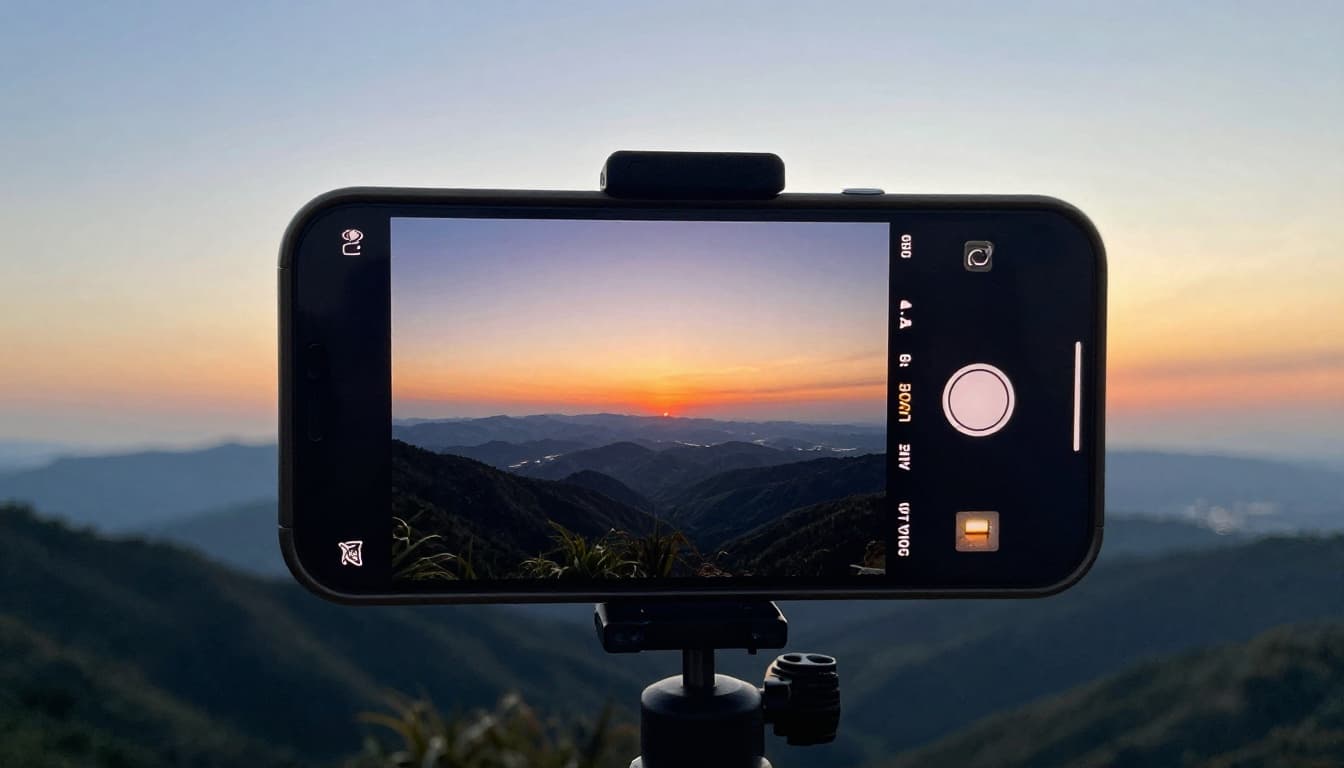
Mobile Photography in 2026: How Smartphone Cameras Are Replacing Professional Equipment
There was a time when professional photography required thousands of dollars in equipment, years of technical training, and a bag full of lenses for every conceivable scenario. That era is rapidly coming to an end. In 2026, the cameras built into flagship smartphones have reached a level of quality that would have been unthinkable even five years ago. The iPhone 17 Pro and Samsung Galaxy S26 Ultra are producing images that rival what entry-level and even mid-range mirrorless cameras could deliver just a few generations back. Computational photography, on-device AI processing, and advanced sensor technology have converged to create a situation where the best camera truly is the one in your pocket. For content creators, freelance photographers, and anyone who earns a living through visual media, understanding what your smartphone camera can and cannot do in 2026 is no longer optional — it is essential to staying competitive in an industry that moves at the speed of silicon.
The Hardware Leap: iPhone 17 Pro and Samsung Galaxy S26 Ultra
The flagship smartphones of 2026 have made hardware jumps that read more like generational leaps than annual updates. The iPhone 17 Pro features a 48-megapixel main sensor with a physically larger pixel size that captures dramatically more light than its predecessors, paired with a dedicated telephoto lens offering true optical zoom up to 10x. Apple's custom image signal processor works in tandem with the A19 Bionic chip to process every frame through a pipeline that would have required a dedicated desktop workstation just a decade ago. On the Android side, the Samsung Galaxy S26 Ultra pushes a 200-megapixel sensor with pixel-binning technology that combines multiple pixels into one for superior low-light performance, alongside a quad-lens array that covers everything from ultrawide to periscope telephoto. Both devices now feature variable aperture mechanisms that give photographers a degree of depth-of-field control that was once exclusive to interchangeable lens systems. The gap between these pocket-sized cameras and traditional professional bodies is narrowing with every product cycle.
Computational Photography: The Real Game Changer
Raw hardware specifications only tell part of the story. The true revolution in mobile photography is computational — the ability of software to process, enhance, and sometimes fundamentally transform images in ways that traditional cameras simply cannot. When you press the shutter button on a modern smartphone, the device is not capturing a single exposure. It is capturing multiple frames at different exposure levels, analyzing them with machine learning models, and compositing them into a single image that preserves detail in both the brightest highlights and the deepest shadows. This technique, known as multi-frame HDR, produces results with dynamic range that exceeds what many full-frame cameras can achieve in a single shot. Computational photography also powers features like portrait mode, where neural networks identify and separate subjects from backgrounds to apply realistic depth blur, and scene detection, where the camera recognizes what you are photographing and automatically adjusts color science and processing to optimize the result. These are not gimmicks — they are fundamental shifts in how images are created.
ProRAW and Professional Workflows
For creators who need maximum control over their images, Apple's ProRAW and Samsung's Expert RAW formats have matured into genuinely professional tools. ProRAW captures a DNG file that preserves the computational processing — the multi-frame fusion, the noise reduction, the Smart HDR — while still giving you the full latitude of a raw file in post-production. This means you get the benefits of computational photography without being locked into a baked-in JPEG that cannot be adjusted after the fact. Samsung's Expert RAW offers a similar workflow, with the added ability to capture 16-bit raw files and integrate directly with Adobe Lightroom for seamless editing. In 2026, professional photographers who shoot events, street photography, and documentary work are increasingly using ProRAW as their primary capture format, editing directly on their devices or transferring files to desktop applications. The quality ceiling is high enough that most clients cannot distinguish between a well-processed ProRAW image and one captured on a dedicated camera body costing five times as much.
Night Mode and Low-Light Advances
Night photography was once the domain of cameras with large sensors, fast lenses, and high-ISO capabilities. Smartphones with their tiny sensors and fixed apertures were practically useless after sunset. That reality has been completely overturned. Night mode in 2026 smartphones uses long-exposure computational stacking — the phone captures dozens of short exposures over several seconds, aligns them to compensate for hand movement, and merges them into a single bright, sharp, noise-free image. The results are genuinely remarkable. Street scenes at night that would appear as murky, noisy messes on older smartphones now render with clean shadows, accurate colors, and sharp detail. The iPhone 17 Pro's night mode can produce usable images in conditions where the human eye can barely see, thanks to sensor improvements and a neural engine that has been specifically trained on millions of low-light scenarios. For creators who shoot evening events, nightlife content, or atmospheric cityscapes, these capabilities eliminate the need to carry a separate camera for after-dark work.
AI Photo Editing On-Device
Beyond capture, the AI capabilities built into modern smartphones are transforming the editing process itself. On-device AI can now remove unwanted objects from photos with a single tap, adjust lighting that appears to change the direction and quality of the light source in the image, and even generate realistic backgrounds or extend the edges of a photograph. Apple's Clean Up tool and Google's Magic Editor have both reached a level of sophistication where the edits are virtually undetectable. Samsung's Galaxy AI suite goes further, offering generative fill capabilities that can add elements to a scene or seamlessly replace skies. What makes these tools particularly powerful for creators is that they run entirely on-device, requiring no internet connection and no cloud processing. This means edits happen in seconds rather than minutes, and your original files never leave your phone. For creators who need to post quickly — shooting content at events, capturing breaking moments, or simply maintaining a consistent posting schedule — the ability to shoot, edit, and publish professional-quality images without touching a computer is transformative.
When You Still Need a Real Camera
Despite the extraordinary progress in mobile photography, there are still situations where a dedicated camera remains the superior tool. Commercial product photography that requires precise control over lighting, tethered shooting, and medium-format resolution still benefits enormously from professional equipment. Wildlife and sports photography demand autofocus systems, burst rates, and telephoto reach that smartphones cannot match. Studio portrait work with controlled flash setups, large modifiers, and specific lens rendering characteristics remains the domain of mirrorless and DSLR systems. Large-format printing above 24x36 inches still reveals the resolution and detail advantages of dedicated camera sensors. Additionally, professional video production — particularly work requiring interchangeable cinema lenses, external recording, and log color profiles — still favors traditional camera systems. The key distinction is that these use cases represent the high end of professional work, not the everyday photography that most content creators engage in. For the majority of creators producing social media content, blog imagery, or even client deliverables for small businesses, a 2026 smartphone is more than sufficient.
Accessories That Elevate Mobile Photography
The right accessories can push smartphone photography even further into professional territory. External lens attachments from companies like Moment and Sandmarc offer wider fields of view, macro capabilities, and anamorphic cinematic effects that expand the creative possibilities of your phone's built-in lenses. Compact smartphone gimbals like the DJI OM 7 provide stabilization for video and enable smooth motion effects for photo sequences. Portable LED panels — many of them small enough to fit in a jacket pocket — give creators control over lighting that can dramatically improve portrait and product shots. Bluetooth remote shutters eliminate the need to touch the phone during long exposures or self-portraits. And high-quality phone cases with built-in mounting systems, such as those from Peak Design, make it easy to attach your phone to tripods, car mounts, and chest harnesses for action photography. None of these accessories are expensive — most cost between 20 and 150 dollars — but they can meaningfully close the remaining gap between smartphone and dedicated camera output.
The Best Mobile Editing Apps for Creators
The editing app you choose matters as much as the camera itself. Here is a comparison of the most popular options available in 2026:
| App | Strengths | Best For | Price |
|---|---|---|---|
| Adobe Lightroom Mobile | Professional color grading, presets, RAW support, cloud sync | Serious photographers who want desktop-quality editing | Free with limits, $9.99/mo for full |
| Snapseed | Precise selective editing, healing tool, HDR Scape | Quick detailed edits without a subscription | Free |
| VSCO | Film-inspired presets, community, consistent aesthetic | Creators who prioritize a cohesive visual style | Free with limits, $29.99/year for full |
| Darkroom | Native Apple integration, batch editing, video support | iPhone users wanting a premium native experience | Free with limits, $49.99/year for full |
| Pixelmator Pro | AI-powered adjustments, ML Enhance, RAW support | Users who want one-tap intelligent improvements | $4.99 one-time |
Adobe Lightroom Mobile remains the gold standard for professional editing on a phone, offering the same color grading tools, tone curves, and preset system available on desktop. Snapseed, which is completely free, excels at selective adjustments — you can brighten a face, sharpen eyes, or soften a background with finger-drawn masks. VSCO continues to dominate among creators who prioritize aesthetic consistency, offering film simulation presets that have become visual shorthand for entire genres of content. The choice ultimately depends on your workflow, but every creator should have at least one dedicated editing app that they know inside and out.
Tips for Creator-Quality Photos From Your Phone
Knowing the technical capabilities matters, but technique is what separates mediocre smartphone photos from truly compelling images. First, always clean your lens before shooting — smartphone lenses accumulate fingerprints and pocket lint that create a hazy, low-contrast look. Second, use the rule of thirds grid overlay and place your subject at the intersection points rather than dead center. Third, shoot during golden hour whenever possible, as the warm, directional light during the first and last hours of sunlight flatters virtually every subject and scene. Fourth, tap to focus and lock exposure on your subject before composing your shot, so the camera does not shift its settings when you reframe. Fifth, avoid digital zoom whenever possible and instead move physically closer to your subject, as even the best computational zoom degrades image quality. Sixth, shoot in ProRAW or your phone's highest quality format, even if the files are larger, because the editing latitude you gain is worth the storage cost. Finally, study composition — leading lines, framing, symmetry, negative space — because no amount of computational photography can substitute for a well-composed photograph.
The Future of Mobile Photography
The trajectory of smartphone camera technology suggests that the gap between mobile and professional equipment will continue to shrink. Under-display camera sensors will eventually eliminate the need for notches and punch-holes, giving phones a cleaner aesthetic. Variable aperture systems will become more sophisticated, offering wider ranges of depth-of-field control. AI models will continue to improve, enabling real-time style transfer, automatic composition suggestions, and even predictive capture that takes the shot before you press the button. Industry analysts predict that by 2028, the majority of commercial photography for web and social media use will be captured on smartphones, with dedicated cameras reserved primarily for specialized professional applications. For creators who embrace this shift, the implications are profound: the barrier to producing professional visual content has never been lower, and the ability to create stunning images is quite literally in everyone's hands.
Conclusion
Mobile photography in 2026 has crossed a threshold that seemed impossible just a few years ago. The combination of advanced sensor hardware, computational photography, on-device AI editing, and a thriving ecosystem of accessories and apps means that a smartphone is no longer a compromise — it is a legitimate professional tool for the vast majority of content creation scenarios. Dedicated cameras still have their place in specialized professional work, but for the everyday demands of content creation, social media, blogging, and even client photography, the phone in your pocket is enough. The creators who recognize this shift and master mobile photography techniques will save money, move faster, and produce content with a consistency and volume that was previously impossible. The best camera is the one you always have with you, and in 2026, the one you always have with you happens to be extraordinary.