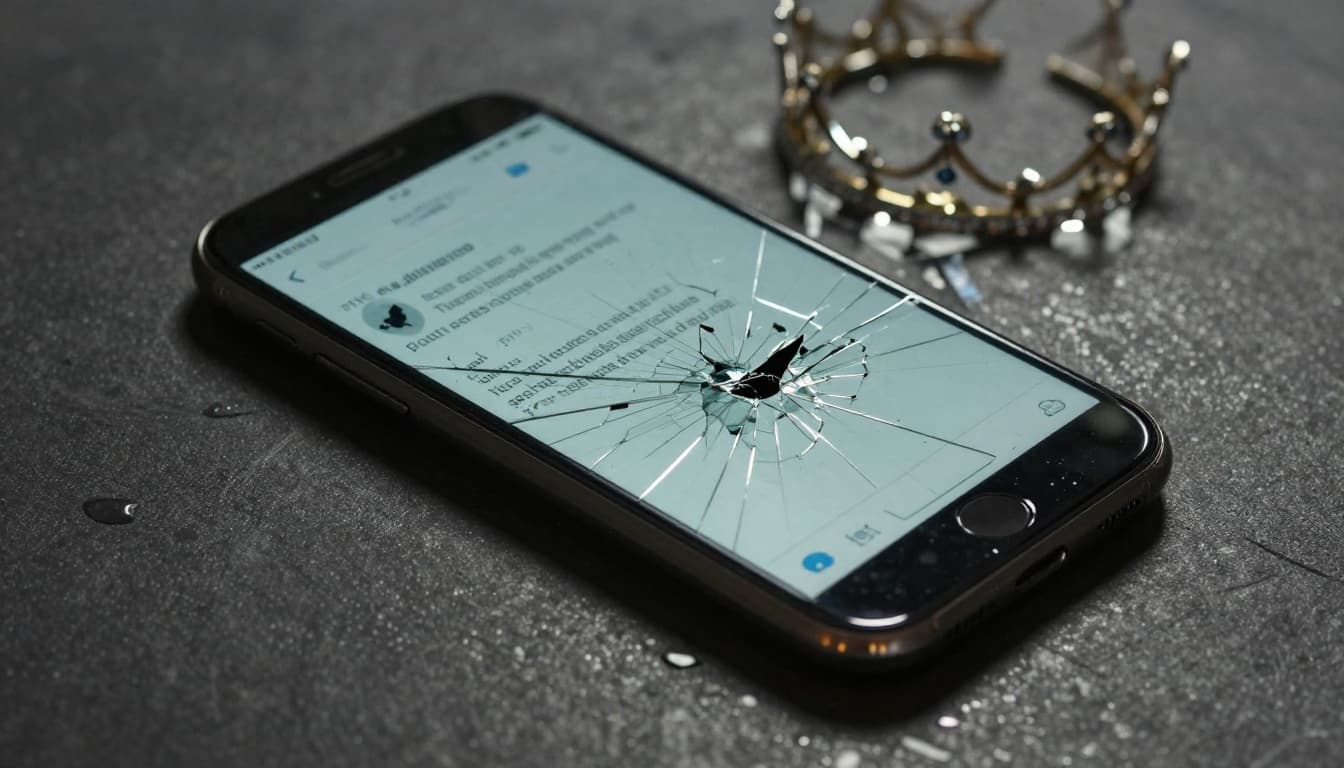
One Tweet Away From Ruin: How a Single Mistake Can Destroy Years of Personal Branding
It takes years to build a personal brand and seconds to destroy one. In 2026, the graveyard of ruined creator careers is filled with people who posted one careless tweet, one tone-deaf Instagram Story, one poorly considered TikTok take — and watched everything they had built collapse in a matter of hours. The speed and ferocity with which social media can turn on its own is one of the defining features of the digital age. A creator with a million followers and a thriving business can wake up to a viral screenshot of something they said, and by the time they finish their morning coffee, their sponsors have pulled out, their audience has turned hostile, and their name has become synonymous with whatever offense the internet has decided they committed. The frightening reality is that this can happen to anyone. It does not require malice or even genuine wrongdoing — a joke that lands wrong, a statement taken out of context, an opinion expressed without adequate nuance, or a resurfaced post from years ago can trigger the same devastating consequences as a genuinely harmful action. Understanding how reputational destruction works on social media, why it happens so fast, and what you can do to protect yourself is no longer optional knowledge for anyone whose livelihood depends on their public persona.
The Anatomy of a Social Media Downfall
Creator downfalls follow a remarkably consistent pattern regardless of the specific trigger. Phase one is the incident — the offending post, comment, or behavior surfaces, often through a screenshot shared by a smaller account that calls attention to it. Phase two is amplification — larger accounts and commentary creators pick up the screenshot and share it with their own audiences, adding their analysis and moral judgment. The content spreads exponentially as each reshare introduces it to a new network of people eager to weigh in. Phase three is the pile-on — thousands of strangers who may have never heard of the creator before flood their comments, direct messages, and reply threads with criticism ranging from measured disappointment to threats and harassment. Phase four is the institutional response — brand partners issue statements distancing themselves, platforms may restrict the account, media outlets publish articles, and professional collaborators quietly sever ties. Phase five is the aftermath — the creator either disappears entirely, attempts a public apology that is scrutinized with forensic intensity, or tries to wait out the storm in silence. The entire cycle from incident to institutional consequences can unfold in less than 48 hours, giving the creator virtually no time to understand what happened, consult with advisors, or craft a thoughtful response.
Why the Internet Shows No Mercy
The disproportionate severity of social media backlash relative to the original offense is a feature of how information spreads in networked environments. Several dynamics converge to create responses that far exceed what any individual participant intends. First, the algorithm amplifies controversy because outrage generates engagement — the more people react to a creator's mistake, the more the platform distributes the content about it, creating a feedback loop of escalating attention. Second, each person who comments or shares the story adds only a small incremental contribution, but when thousands of people each add their small contribution, the cumulative effect is overwhelming. No individual thinks they are destroying someone's career — they are just leaving one comment or sharing one post — but the aggregate is devastating. Third, social media flattens context. A screenshot divorced from the conversation it occurred in, the tone it was delivered in, and the relationship between the people involved strips away every mitigating factor and presents the worst possible interpretation as the definitive one. Fourth, there is a performative element to public criticism — calling out someone's mistake signals your own moral values to your audience, which creates an incentive to condemn that is independent of the severity of the offense.
The Permanence Problem
One of the cruelest aspects of social media mistakes is their permanence. In the pre-internet era, a poorly worded comment at a dinner party would be forgotten within days. A bad joke at a conference might generate some gossip but would fade from collective memory within weeks. Social media has eliminated the expiration date on human error. Everything you have ever posted, commented, liked, or shared exists in a permanent digital archive that can be retrieved, screenshotted, and weaponized at any time. Creators in 2026 are being held accountable for posts they made as teenagers — statements that reflected the immaturity, ignorance, or edginess of adolescence but that are now evaluated against adult professional standards. The person who wrote those posts may have grown, changed, and evolved fundamentally in the intervening years, but the internet does not grade on a curve of personal development. The post exists as a fixed artifact, permanently frozen in the moment it was created, and it can resurface at the worst possible time — during a product launch, a brand campaign, or a period of growing visibility when the creator is most vulnerable to reputational damage.
Categories of Career-Ending Mistakes
While every situation is unique, the mistakes that destroy personal brands tend to fall into recognizable categories. The first is the offensive statement — a joke, opinion, or comment that targets a marginalized group, makes light of serious issues, or reveals prejudices that the audience finds unacceptable. The second is hypocrisy — being caught behaving in ways that directly contradict the values or image the creator has publicly promoted. A wellness influencer caught promoting unhealthy practices privately, a financial guru discovered to be deeply in debt, or a relationship coach exposed for abusive behavior creates a credibility gap that audiences rarely forgive. The third is tone-deafness — making statements or creating content that demonstrates a shocking lack of awareness about current events, social issues, or the lived experiences of others. The fourth is dishonesty — being caught lying about credentials, fabricating stories, faking metrics, or deceiving audiences about sponsored content. The fifth is association — being publicly connected to individuals or organizations that the audience finds morally objectionable. Each category triggers a different flavor of backlash, but they all share a common outcome: the instant destruction of the trust that took years to build.
The Role of Screenshots and Receipts Culture
Screenshot culture has fundamentally changed the risk profile of every digital interaction. In 2026, the assumption that anything you type, post, say on video, or share in what you believe to be a private conversation can and will be captured and potentially publicized should be the baseline operating assumption for every creator. Direct messages that you thought were private can be screenshotted and shared without your knowledge or consent. Comments on other people's posts that you made casually and forgot about can be surfaced years later. Live stream moments that lasted seconds can be screen-recorded and replayed indefinitely. Even deleted posts are never truly gone — someone somewhere has likely captured them before they disappeared. The receipts culture — where audiences demand documentary evidence of claims and counter-claims — has created an environment where every digital interaction is potentially being recorded for future use. This is not paranoia. It is a rational assessment of the environment that creators operate in. The creator who types a frustrated direct message to a colleague, makes an off-color joke in a private group chat, or vents about a brand partner in what they believe is a confidential space is creating potential ammunition that could be deployed against them by anyone who captures it.
When Context Collapse Destroys Nuance
Context collapse is one of the most dangerous phenomena in social media communication. It occurs when content intended for one audience reaches a completely different audience that lacks the shared understanding, inside jokes, relationship history, or cultural context needed to interpret it correctly. A sarcastic comment understood as humor by your close followers becomes a sincere and offensive statement when screenshotted and shared with strangers. A nuanced take on a complex issue, written for an audience that understands your broader perspective and previous statements on the topic, becomes a reductive and harmful hot take when extracted and presented to people who have no context for your views. Creators are especially vulnerable to context collapse because their content reaches audiences of varying sizes and familiarity. Your core followers might understand your tone and give you the benefit of the doubt, but the millions of people who encounter a viral screenshot of your words have no relationship with you and no reason to interpret your statement charitably. Context collapse turns every public statement into a potential landmine because you cannot control who ultimately sees it or what interpretive framework they apply to it.
The Speed of Brand Abandonment
When a creator faces a public backlash, the response from brand partners is almost always swift and unforgiving. Brands operate on risk calculus — the potential damage to their reputation from association with a controversial creator almost always outweighs the value of the partnership. Most influencer contracts include morality clauses that give brands the right to terminate partnerships immediately if the creator engages in behavior that could bring the brand into disrepute, and these clauses are interpreted broadly. The speed of brand abandonment has accelerated as social media monitoring has become more sophisticated. Many brands use automated sentiment tracking tools that flag creator controversies within minutes of them going viral, triggering pre-established crisis protocols that typically default to immediate distancing. A creator who has built their income on brand partnerships can lose multiple revenue streams simultaneously in a single day, with no negotiation, no due process, and no opportunity to present their side of the story before the financial consequences are already irreversible. The brands are not necessarily making a moral judgment — they are making a business decision to protect their own reputation, and the creator's livelihood is an acceptable casualty of that calculation.
The Apology Paradox
When a creator's mistake goes viral, the immediate instinct is to apologize. The apology paradox is that in the current social media environment, apologies are almost as likely to make things worse as they are to make things better. A swift apology issued in the heat of the crisis may be criticized as performative, insincere, or insufficient. A delayed apology may be condemned as evidence that the creator only cared once the consequences became real. An apology that is too specific may be parsed for inadequacies — why did they apologize for this aspect but not that one? An apology that is too general may be dismissed as vague and evasive. Apologies that include any form of explanation or context are often attacked as excuse-making. Apologies that do not include a concrete plan of action are dismissed as empty words. The audience that demands an apology is rarely unified in what they want to hear, which means that any apology satisfies some critics while inflaming others. The result is that many creators and their advisors now view the public apology as a tactical decision with significant downside risk rather than an obvious first response, which creates the perverse dynamic where the people most skilled at crisis management are often the ones who stay silent the longest.
Protecting Your Brand Before the Crisis
The most effective reputation protection happens long before any crisis occurs. Building a resilient personal brand requires proactive measures that reduce both the likelihood of a damaging incident and the severity of the consequences if one occurs. First, conduct a thorough audit of your entire digital history — every platform, every post, every comment going back as far as you can access. Delete or archive anything that could be misinterpreted or that no longer reflects your values. Second, establish a clear and consistent set of values that your audience understands and that guides your content decisions. When your brand is built on a well-defined foundation, a single misstep is more likely to be interpreted as an aberration rather than a revelation of your true character. Third, build genuine relationships within your industry — with fellow creators, brand contacts, and media professionals — so that when a crisis occurs, you have allies who know you personally and can provide context that the general public lacks. Fourth, diversify your income so that losing brand partnerships does not mean losing your entire livelihood. A creator with multiple revenue streams can weather a sponsor pullback far more effectively than one who depends entirely on brand deals.
The Role of Legal Counsel in Crisis Management
As the stakes of social media missteps have grown, the role of legal counsel in creator crisis management has become increasingly important. Defamation, harassment, unauthorized use of private communications, and coordinated attacks that cross the line from criticism into targeted abuse all have legal dimensions that creators should understand before they find themselves in the middle of a crisis. Having a relationship with an attorney who understands social media law — ideally established before any crisis occurs — provides access to advice about what to say, what not to say, and what legal options are available when the response to a mistake becomes disproportionate or crosses into illegal territory. Some situations that initially appear to be simple public relations problems have significant legal components — particularly when false claims are being made about the creator, when private information is being shared without consent, or when the backlash involves threats or coordinated harassment. Legal counsel can also help creators understand the terms of their brand contracts, evaluate the legitimacy of partnership terminations, and protect their intellectual property during periods of vulnerability. The cost of establishing a legal relationship proactively is minimal compared to the cost of seeking emergency legal advice in the middle of a reputational crisis.
Rebuilding After the Fall
For creators who have experienced a significant reputational crisis, rebuilding is possible but requires patience, genuine reflection, and a strategic approach. The first and most important step is authentic accountability — not a scripted apology designed to minimize damage, but a genuine acknowledgment of what went wrong and what you have learned from it. Audiences can detect the difference between performative contrition and real growth, and only the latter creates a foundation for rebuilding trust. The second step is disappearing from the public eye long enough for the initial fury to subside. Attempting to return to normal content creation while the backlash is still active almost always reignites the controversy. A period of silence — typically weeks to months depending on the severity of the incident — allows the news cycle to move on and the emotional intensity to diminish. The third step is a gradual return focused on demonstrating changed behavior rather than declaring it. Actions rebuild trust far more effectively than words. If your mistake revealed a blind spot, show that you have educated yourself. If it revealed a pattern of behavior, show that you have changed that pattern. The creators who successfully rebuild after a crisis are those who treat it as a genuine inflection point rather than a temporary inconvenience to be managed.
Building a Culture of Grace Online
While this article has focused on how creators can protect themselves from reputational destruction, there is a broader conversation that the social media ecosystem desperately needs to have about proportionality, forgiveness, and the difference between accountability and cruelty. The current environment — where a single mistake can destroy a career, where context is systematically stripped from viral controversies, and where the punishment almost never fits the crime — is not healthy for creators or for the audiences who participate in the pile-on. Accountability matters. People who cause genuine harm should face genuine consequences. But the current system does not distinguish between a creator who made a thoughtless joke and a creator who engaged in sustained, intentional harm. It treats a moment of ignorance the same as a pattern of malice. It offers no mechanism for proportional response, no path to redemption that the collective will honor, and no accountability for the mob when its response proves to be based on misinformation or deliberate distortion. Building a healthier social media culture requires all participants — audiences, creators, brands, and platforms — to develop a shared commitment to proportionality, context, and the recognition that human beings are more than their worst moments.
Conclusion
The reality of building a personal brand in 2026 is that everything you say publicly lives forever, can be seen by anyone, and will be interpreted in the least charitable way possible by people who have no context for who you are or what you intended. This is not a reason to live in fear or to sanitize your personality into something so bland that no one could possibly object to it. It is a reason to be intentional — to think before you post, to understand the environment you are operating in, and to build a brand resilient enough to survive the inevitable moment when something goes wrong. Because something will go wrong. You will post something you regret, say something that lands poorly, or have an old statement resurface at the worst possible time. The question is not whether it will happen but whether you have built the foundation — the goodwill, the diversified income, the genuine relationships, the consistent track record of integrity — to weather it when it does. Your personal brand is your most valuable professional asset. Treat every public statement as something that could be read by the person most likely to misunderstand it, because on social media, that person will eventually find it. One tweet is all it takes. Make sure the thousands that came before it tell a story strong enough to survive the one that goes wrong.