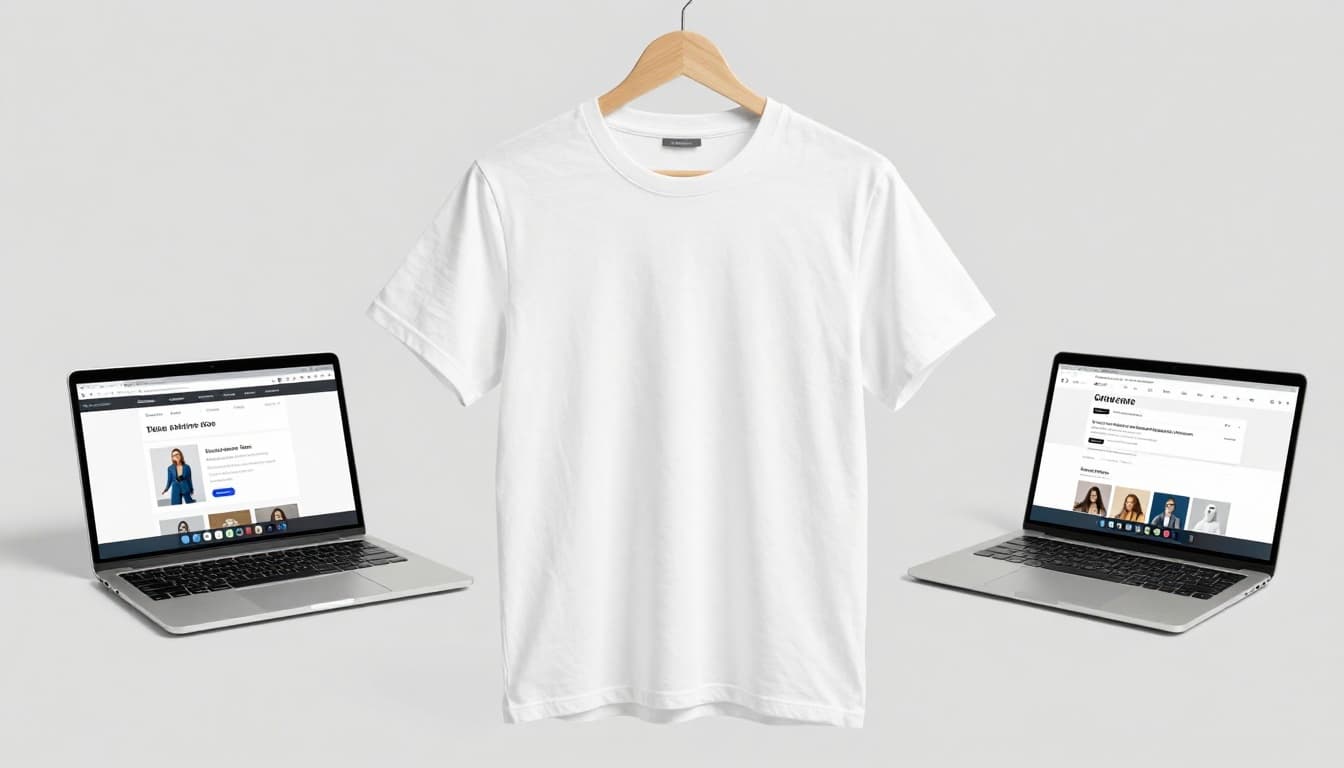
Print on Demand for Creators: How to Launch a Merch Line Without Inventory or Upfront Costs
Merchandise has always been one of the most tangible ways for creators to monetize their brand, but the traditional merch model — ordering thousands of units upfront, managing inventory storage, handling shipping logistics, and absorbing the financial risk of unsold products — has kept it out of reach for the vast majority of creators. Print on demand has demolished every one of these barriers. The print-on-demand model allows creators to design products, list them for sale, and only produce each item after a customer has already purchased it. There is no minimum order quantity, no warehouse full of boxes, no upfront capital investment, and no financial risk from overestimating demand. When a customer orders your custom t-shirt, hoodie, mug, phone case, or poster, the print-on-demand provider prints it, packages it, and ships it directly to the customer — often with your branding on the packaging — while you earn the difference between the retail price and the production cost without ever touching the product. In 2026, the print-on-demand industry has matured to the point where product quality rivals traditional bulk manufacturing, production times have shortened to two to five business days, and the range of customizable products extends far beyond basic t-shirts into premium apparel, home goods, accessories, and even custom packaging. For creators at any scale — from those with a thousand followers to those with millions — print on demand offers a realistic, low-risk path to building a merchandise line that strengthens brand identity and generates meaningful revenue. This guide covers everything you need to know to go from zero to your first product launch.
How Print on Demand Actually Works
The print-on-demand process is elegantly simple from the creator's perspective, though the logistics behind the scenes involve sophisticated manufacturing and fulfillment operations. The workflow begins when you create a design and upload it to a print-on-demand platform. You select which products will feature your design — t-shirts, hoodies, mugs, tote bags, phone cases, posters, or any of dozens of other options. You set retail prices for each product, which determines your profit margin as the difference between your price and the platform's base production cost. The products are then listed on your storefront, which can be a standalone website through the POD platform, an integration with your existing Shopify or Etsy store, or a direct link in your social media bios. When a customer places an order, the POD platform receives the order details automatically, prints or embroils your design onto the selected product using industrial-quality equipment, packages the finished product, and ships it directly to the customer. You receive the profit margin — typically deposited to your account within a few business days of order fulfillment. The entire production and fulfillment cycle happens without any involvement from you beyond the initial design upload and storefront setup. This hands-off fulfillment model means that selling one unit requires the same effort as selling one thousand units, making POD infinitely scalable without the operational complexity that traditional merchandise businesses demand. Your role is to create designs that resonate with your audience and to market your products through your content — the platform handles everything else.
Choosing the Right Print-on-Demand Platform
The POD landscape includes numerous platforms, each with distinct strengths, product catalogs, pricing structures, and integration capabilities. Selecting the right platform — or combination of platforms — is one of the most consequential decisions in your merch strategy. The following comparison table highlights the key differences among the most popular options:
| Platform | Product Range | Base Pricing | Shipping Speed | Best Integration | Standout Feature |
|---|---|---|---|---|---|
| Printful | 340+ products | Medium-high | 2-5 business days | Shopify, Etsy, WooCommerce | Premium quality, warehousing option |
| Printify | 900+ products | Low-medium | 2-7 business days | Shopify, Etsy, eBay | Multiple print providers, best pricing |
| Spring (TeeSpring) | 200+ products | Medium | 3-8 business days | YouTube, Twitch | Direct YouTube merch shelf integration |
| Merch by Amazon | Limited (apparel) | Low | 2-5 days (Prime) | Amazon marketplace | Access to Amazon's massive customer base |
| Redbubble | 70+ products | Medium | 3-8 business days | Standalone marketplace | Built-in marketplace traffic |
| Society6 | 80+ products | Medium-high | 3-10 business days | Standalone marketplace | Premium art-focused products |
| Gooten | 150+ products | Low-medium | 3-8 business days | Shopify, Etsy, BigCommerce | Competitive pricing, global fulfillment |
For most creators, the choice comes down to two primary paths. The marketplace approach — using platforms like Redbubble, Merch by Amazon, or Spring — provides built-in discoverability because these platforms attract their own shoppers, but offers less control over branding, customer relationships, and profit margins. The integration approach — using Printful or Printify connected to your own Shopify or Etsy store — requires you to drive all traffic yourself but offers complete control over branding, pricing, and the customer experience. Many successful creator merch operations use both paths simultaneously, capturing organic marketplace traffic while building a branded storefront that they own and control.
Designing Merchandise That Actually Sells
The most common mistake creators make with their first merch line is designing products that celebrate their brand without considering whether anyone would actually want to wear or use them. A t-shirt with your channel name and logo might appeal to your most dedicated fans, but it has zero appeal to anyone outside your audience and limited appeal even within it. The best-selling creator merchandise falls into three categories. Identity merchandise allows your audience to signal membership in a community or alignment with a value system. A fitness creator's shirt that says "Rest Days Are Training Days" works because it expresses the wearer's identity as a dedicated athlete, not because it advertises the creator's channel. Inside joke merchandise references specific moments, phrases, or running themes from your content that your audience recognizes and feels connected to. This category has inherently limited appeal — only your existing audience will understand the reference — but it generates the strongest emotional response and the highest conversion rates among your community. Aesthetic merchandise features designs that are genuinely attractive as standalone products — interesting graphics, appealing illustrations, clever typography — that happen to be associated with your brand. This category has the broadest appeal because people will buy and wear the product based on its visual merit regardless of their familiarity with your content. The most successful merch lines include products from all three categories, using identity and inside joke pieces to serve core fans while aesthetic pieces attract new customers and expand brand awareness.
Marketing Your Merch Through Your Content
Having great products means nothing if your audience does not know they exist, and the marketing advantage that creators hold over traditional retailers is enormous — you have a direct, trusted communication channel with exactly the people most likely to purchase. The most effective merch marketing does not feel like marketing at all. It integrates products naturally into the content your audience already consumes and enjoys. Wear your merch in your videos without explicitly calling attention to it in every episode — let your audience notice and ask about it, creating organic demand. Create dedicated launch content that tells the story behind the design — what inspired it, what it means to you, why you chose specific colors or materials — turning a product announcement into content that provides entertainment or emotional value. Feature audience members wearing your merch in your content, creating social proof and rewarding customers with recognition that deepens their loyalty. Use Instagram Stories and TikTok to show behind-the-scenes glimpses of the design process, sample reviews, and packaging reveals that build anticipation. Time your launches strategically — holiday seasons, channel milestones, special events — to create urgency and cultural relevance. Limited edition drops that are available for only a short window create scarcity that drives faster purchasing decisions. The key principle is that every piece of merch marketing should also function as content your audience would enjoy even if they had no intention of buying. When your promotional content is genuinely entertaining or informative, the selling happens as a byproduct of engagement rather than as an interruption of it.
Understanding Profit Margins and Pricing Strategy
Profit margins in print on demand are slimmer than in traditional bulk merchandise because the per-unit production cost is higher when items are manufactured individually rather than in bulk. Understanding the margin structure is essential for setting prices that generate meaningful revenue without pricing yourself out of your audience's comfort zone. A standard t-shirt on most POD platforms has a base cost of eight to fifteen dollars, depending on the platform, the shirt brand, and the printing method. If you set a retail price of twenty-eight dollars, your margin is thirteen to twenty dollars per unit. Hoodies have higher base costs — typically eighteen to thirty dollars — but support higher retail prices of forty-five to sixty-five dollars, yielding margins of fifteen to thirty-five dollars. Mugs, phone cases, and accessories have base costs of five to twelve dollars with retail prices of fifteen to thirty dollars. The most common pricing mistake is setting margins too thin in an attempt to compete on price. Your audience is not buying your merch because it is the cheapest t-shirt available — they are buying it because of the emotional connection to your brand. Pricing too low actually undermines perceived value and generates margins so thin that the revenue is not worth the effort of marketing. A good rule of thumb is to target a margin of at least forty to fifty percent of retail price. If your base cost is twelve dollars, your minimum retail price should be twenty-four dollars, though most creator merchandise performs well at retail prices between twenty-five and thirty-five dollars for t-shirts and forty-five to sixty dollars for hoodies. Test different price points with your audience and optimize based on actual conversion data rather than assumptions.
Common Mistakes and How to Avoid Them
The print-on-demand space is accessible enough that nearly anyone can launch a product, but accessibility does not guarantee success. Several common mistakes derail creator merch ventures before they have a chance to gain traction. Launching too many products at once is one of the most frequent errors. First-time merch sellers often list twenty or thirty products simultaneously, which dilutes marketing focus, confuses the audience with too many choices, and makes it impossible to determine which designs actually resonate. Start with three to five products, market them aggressively, analyze the sales data, and expand based on what performs. Neglecting product quality is another critical mistake. Always order samples of every product before listing it for sale. Evaluate print quality, fabric feel, sizing accuracy, and packaging presentation. A customer's first merch purchase is a trust test — if the product quality disappoints, they will never purchase again and may share their negative experience publicly. Ignoring sizing and fit information leads to high return rates and customer frustration. Provide detailed sizing charts, include measurement guides, and consider noting whether items run small, large, or true to size based on your own sample testing. Failing to plan for customer service is an overlooked pitfall — even though the POD platform handles production and shipping, your audience will contact you with questions, complaints, and issues that you need to resolve promptly and professionally. Set up a dedicated email address for merch inquiries and establish clear policies for returns, exchanges, and damaged items before you receive your first order.
Scaling Your Merch Business Over Time
Print on demand is an excellent starting point for creator merchandise, but the most successful creator merch operations eventually evolve beyond pure POD into hybrid models that combine on-demand production with strategic bulk ordering for best-selling products. Once you have identified which designs consistently sell well through your POD storefront, ordering those specific products in bulk from a traditional manufacturer can reduce your per-unit cost by forty to sixty percent, dramatically improving your margins. Many POD platforms, including Printful, offer warehousing services where you can store bulk-ordered inventory and have it fulfilled through the same system that handles your on-demand orders, creating a seamless hybrid operation. Scaling also involves expanding your product range based on audience feedback and sales data. If t-shirts sell well, test hoodies and long-sleeve options. If apparel dominates, explore complementary products like stickers, posters, or tote bags that serve different price points and purchasing motivations. International expansion is another scaling vector — platforms like Printful and Printify operate global fulfillment networks that can produce and ship products locally in Europe, Australia, and other major markets, reducing shipping times and costs for international customers. Consider seasonal collections that create anticipation and drive repeat purchases — spring and summer designs, holiday specials, anniversary editions — turning your merch line from a static catalog into a dynamic brand extension that gives your audience reasons to return and purchase regularly.
Using AI for Merch Design
Artificial intelligence has dramatically lowered the barrier to creating professional-quality merchandise designs, making it possible for creators with no graphic design experience to produce visuals that compete with professionally designed merch. AI image generation tools like Midjourney, DALL-E, and Adobe Firefly can create original illustrations, patterns, and graphic designs from text descriptions in seconds. A prompt like "minimalist line drawing of a mountain landscape in a continuous single-line style, suitable for a t-shirt print, black on transparent background" can produce multiple design options that are immediately usable on merchandise. Canva's AI-powered design tools offer text-to-image generation, background removal, and template-based design systems specifically optimized for print-on-demand product formats. AI typography tools can generate custom lettering and word art that adds visual interest to text-based designs. The practical workflow involves generating multiple AI design concepts, refining the best options through iteration and editing, and then preparing final files in the high-resolution formats required by POD platforms — typically PNG files at 300 DPI with transparent backgrounds for apparel and full-color files for products like mugs and phone cases. While AI dramatically accelerates the design process, human curation remains essential. Generate twenty concepts, select the three that best represent your brand and will resonate with your audience, and refine those selections to production quality.
Conclusion
Print on demand has transformed merchandise from a capital-intensive, logistically complex business venture into an accessible revenue stream that any creator can launch with nothing more than a design and a few hours of setup time. The zero-inventory, zero-upfront-cost model eliminates the financial risk that historically prevented small creators from offering merchandise, while the quality and speed of modern POD fulfillment rivals traditional retail in customer experience. The creators who succeed with print on demand are those who approach it strategically — designing products that their audience genuinely wants rather than products that simply display a logo, marketing their merch through content that entertains and informs rather than interrupts, pricing for sustainable margins rather than racing to the bottom, and scaling methodically based on data rather than assumptions. Your audience already trusts your taste, your judgment, and your brand — print on demand gives you the infrastructure to convert that trust into tangible products that deepen the connection between you and your community while generating revenue that supports your creative work. Start small, start today, and let your audience's response guide your expansion.