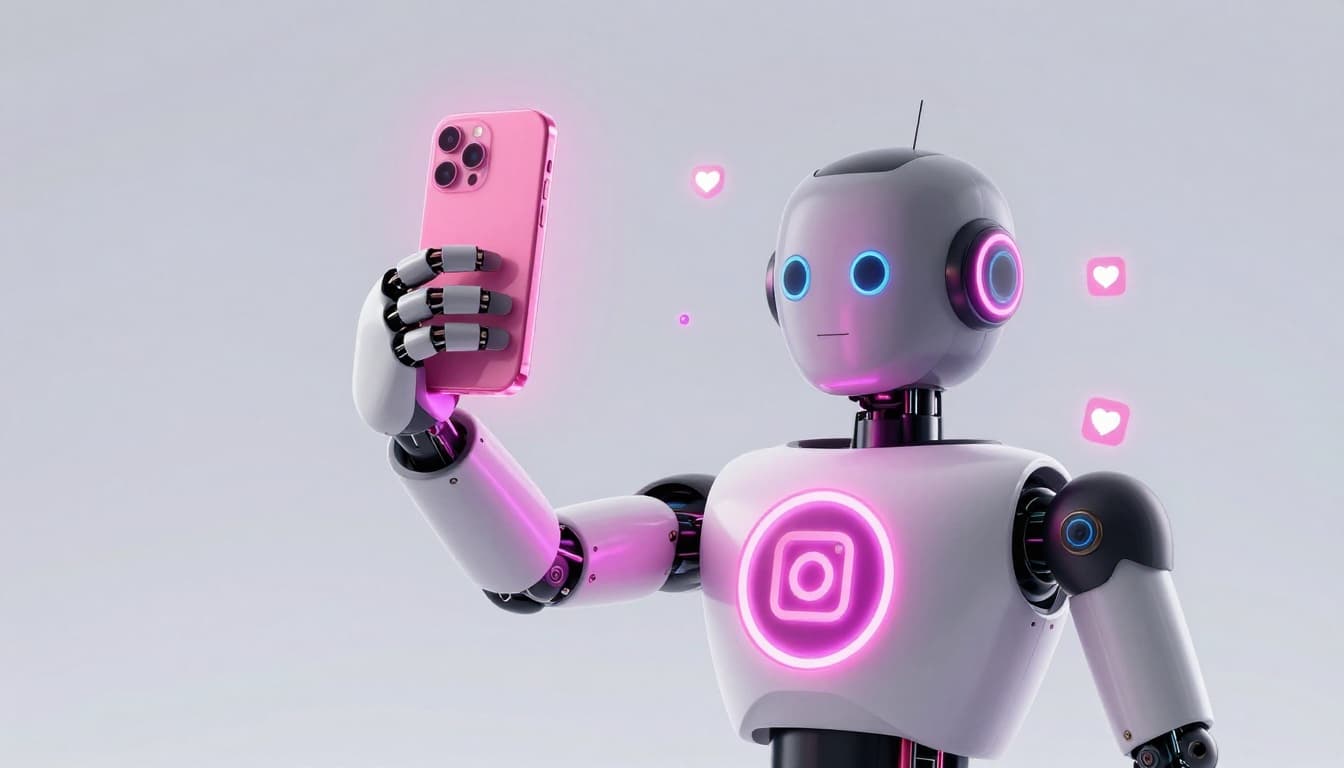
The Rise of AI Influencers: Why Brands Are Paying Virtual Characters Millions in 2026
Scroll through Instagram in 2026 and you might notice something peculiar about some of the most popular fashion, lifestyle, and beauty accounts. The faces are flawless. The poses are perfect. The content is relentlessly consistent. And the influencers behind these accounts do not exist. They are AI-generated virtual characters — digital constructs with fabricated backstories, computer-rendered appearances, and carefully curated personalities designed to attract followers, build engagement, and sell products. What started as a novelty experiment a few years ago has evolved into a multi-million-dollar segment of the influencer marketing industry. Major global brands including Calvin Klein, Prada, Samsung, and BMW have signed deals with virtual influencers, and the budgets are not symbolic — they rival or exceed what the same brands pay to human creators. The virtual influencer market is projected to be worth billions within the next few years, driven by brands that see in these digital personalities a solution to the unpredictability, controversy, and logistical complexity that come with human partnerships. But this trend raises profound questions about authenticity, consumer trust, the displacement of human creators, and the nature of influence itself. Understanding the rise of AI influencers is no longer optional for anyone working in digital marketing or content creation — it is essential context for navigating an industry that is being reshaped by technology in real time.
Who Are the Most Famous AI Influencers?
The virtual influencer landscape has expanded dramatically from its early pioneers to a diverse ecosystem of digital personalities spanning cultures, aesthetics, and market segments. Lil Miquela, created by the Los Angeles company Brud in 2016, remains the most recognized name in the space. With millions of followers across platforms, she has collaborated with Prada, Calvin Klein, and Samsung, released original music that has been streamed millions of times, and been featured in TIME Magazine's list of most influential people on the internet. Her carefully crafted persona — a Brazilian-American nineteen-year-old interested in fashion, social justice, and music — demonstrates how virtual influencers can be designed to resonate with specific demographic and psychographic audiences. Aitana Lopez, a Spanish AI model created by The Clueless agency in Barcelona, emerged in 2023 and quickly began earning thousands of dollars per month through brand partnerships, demonstrating that the virtual influencer model is commercially viable even for newer entrants. Imma, a pink-haired virtual model based in Japan, has partnered with IKEA, Porsche, and Nike, and has appeared in installations at major art exhibitions. Lu do Magalu, created by the Brazilian retail giant Magazine Luiza, has become one of the most-followed virtual influencers globally, with a presence across YouTube, TikTok, Instagram, and Twitter that drives genuine sales for her parent company. These virtual personalities represent just the visible tip of a rapidly growing iceberg — hundreds of AI influencers now operate across markets worldwide, from K-beauty virtual models in South Korea to AI fitness coaches in the United States.
Why Brands Prefer Virtual Influencers
The appeal of virtual influencers to brands is rooted in something that human influencers fundamentally cannot offer: total control. When a brand partners with a human influencer, they accept a package of risks. The influencer might post controversial opinions on their personal account. They might be photographed in compromising situations. They might develop substance abuse problems, engage in public disputes, or simply fail to deliver content on schedule because they are human beings with unpredictable lives. Virtual influencers eliminate every one of these risks. They never have scandals because their behavior is scripted. They never miss deadlines because they do not sleep, eat, or take vacations. They never age, gain weight, get injured, or go through personal crises that affect their appearance or productivity. Their brand alignment can be precisely calibrated and maintained indefinitely. They are available twenty-four hours a day, seven days a week, three hundred sixty-five days a year, in every time zone simultaneously. They can appear in multiple campaigns at the same time without scheduling conflicts. They can be placed in any location, wearing any outfit, in any scenario through digital rendering — eliminating the costs of travel, photography studios, wardrobe, hair, makeup, and production crews. For brands that have been burned by influencer controversies or frustrated by the logistical complexity of human partnerships, virtual influencers represent a controllable, predictable, and infinitely scalable alternative.
The Technology Behind AI Influencers
Creating a convincing virtual influencer requires a sophisticated technology stack that blends computer graphics, artificial intelligence, and social media expertise. The visual appearance of most virtual influencers is created using a combination of 3D modeling software like Blender or Maya and AI-powered rendering tools that can generate photorealistic images. Generative adversarial networks and diffusion models have dramatically accelerated this process, allowing creators to produce hundreds of realistic images of a virtual character in different poses, outfits, and settings without manually rendering each one. The most advanced virtual influencers use motion capture technology to create video content, capturing the movements of real actors and mapping them onto the digital character for natural-looking animation. Voice synthesis technology provides spoken audio, with AI voice models that can produce natural-sounding speech in multiple languages and emotional tones. The personality and content strategy behind virtual influencers typically involves a team of creative professionals — writers, strategists, and social media managers — who develop the character's backstory, voice, opinions, and content calendar. Increasingly, large language models are being used to generate social media captions, respond to comments, and even conduct interviews, reducing the human labor required to maintain a virtual influencer's presence. The total cost of creating and maintaining a high-quality virtual influencer ranges from tens of thousands to hundreds of thousands of dollars — a significant investment, but one that can be recovered through brand partnerships that rival those of human influencers with similar follower counts.
Engagement Rates and Commercial Performance
One of the most compelling arguments for virtual influencers from a brand marketing perspective is their engagement metrics. Several industry reports have found that virtual influencers achieve engagement rates that are significantly higher than those of human influencers with comparable follower counts. This counterintuitive finding can be attributed to several factors. Virtual influencer content is typically produced to a consistently high visual standard, with every image carefully crafted for maximum aesthetic impact. The novelty factor drives curiosity-based engagement — people comment, share, and discuss virtual influencer posts partly because the concept itself is fascinating and conversation-worthy. The content frequency and consistency of virtual influencers also contributes to algorithmic favorability, as social media platforms reward accounts that post regularly with high-quality content. However, skeptics argue that engagement rate comparisons are misleading because virtual influencer audiences may be disproportionately composed of people who are fascinated by the technology rather than genuinely interested in the products being promoted. The conversion question — whether virtual influencer endorsements actually drive purchases at the same rate as human endorsements — remains actively debated. Some brands report strong sales attribution from virtual influencer campaigns, while others have found that the engagement does not translate into purchase behavior as effectively as endorsements from trusted human creators. The truth likely varies by product category, audience demographic, and the specific execution of each campaign.
Ethics and the Authenticity Problem
The rise of AI influencers raises ethical concerns that the marketing industry has yet to fully address. The most fundamental concern is transparency — do consumers know they are being influenced by a fictional character, and does it matter? Most established virtual influencers are openly identified as AI-generated, but the line between "open" and "obvious" is blurry. A casual scroller who encounters a virtual influencer's sponsored post may not realize they are looking at a computer-generated image, especially as rendering technology becomes increasingly photorealistic. This creates a disclosure problem that existing advertising regulations were not designed to handle. Beyond transparency, there are concerns about the unrealistic beauty standards that virtual influencers perpetuate and amplify. Human influencers are already criticized for using filters and editing tools to present idealized appearances, but virtual influencers take this to the extreme — they can be designed with physically impossible proportions and flawless features that no human could achieve. When audiences, particularly young audiences, compare themselves to these digital ideals, the psychological impact may be even more harmful than the already-documented effects of comparing oneself to filtered human influencers. There are also questions about cultural representation and appropriation. Virtual influencers are designed by teams that choose their racial appearance, cultural identity, and personal narrative — essentially creating synthetic identities that borrow from real cultures and communities without being accountable to them.
Impact on Human Creators and the Job Market
For human content creators and influencers, the rise of virtual alternatives is both a competitive threat and a philosophical challenge. On the commercial level, every dollar a brand spends on a virtual influencer campaign is a dollar not spent on a human creator. If virtual influencers can deliver comparable or superior engagement at lower cost and with less risk, the economic incentive for brands to shift budgets toward virtual partnerships is significant. Some industry analysts predict that virtual influencers could capture a meaningful share of the influencer marketing budget within the next few years, particularly for fashion, beauty, and luxury brands where visual perfection and brand control are paramount. This does not mean human creators will become obsolete — the qualities that make human influencers valuable, including authenticity, relatability, lived experience, and genuine passion, cannot be fully replicated by virtual characters. Audiences connect with human creators because of their real stories, their real struggles, and their genuine opinions. A virtual influencer can model a dress, but they cannot share an honest review based on actually wearing it. They can promote a travel destination, but they cannot describe the experience of actually visiting it. The most likely outcome is a segmented market where virtual influencers dominate certain categories — high-fashion campaigns, product launches, brand awareness — while human creators retain their advantage in categories that depend on authenticity, trust, and personal experience.
Audience Trust and Consumer Perception
Consumer attitudes toward virtual influencers are complex, varied, and still evolving. Research conducted across multiple markets reveals a generational divide in acceptance. Younger consumers, particularly Gen Z and Gen Alpha, tend to be more comfortable with virtual influencers and more willing to engage with their content — perhaps because they have grown up in a digital environment where the line between virtual and real is already blurred through gaming, social media filters, and digital avatars. Older consumers tend to be more skeptical, viewing virtual influencer promotions as inauthentic and less trustworthy than endorsements from real people. Across all demographics, transparency appears to be the critical factor determining consumer trust. When virtual influencers are clearly identified as AI-generated characters, audiences are more willing to engage with their content on its own terms — appreciating the artistry, the fashion, or the storytelling without feeling deceived. When the virtual nature of an influencer is ambiguous or obscured, discovery of the deception triggers a trust backlash that can damage both the virtual influencer's brand and the brands they promote. For brands considering virtual influencer partnerships, the lesson is clear: transparency is not just an ethical obligation but a strategic necessity. Audiences will accept virtual influencers as a novel and interesting form of content, but they will reject any attempt to pass them off as something they are not.
The Legal and Regulatory Landscape
As virtual influencers become commercially significant, regulators around the world are beginning to grapple with how existing advertising, consumer protection, and intellectual property laws apply to AI-generated personalities. In the United States, the Federal Trade Commission's guidelines on endorsements and testimonials require that material connections between advertisers and endorsers be disclosed, but the guidelines were written with human endorsers in mind. Whether a virtual influencer constitutes an "endorser" under existing rules, and what disclosures are required when the endorser does not exist, are questions that remain partially unresolved. In the European Union, the AI Act introduces requirements for transparency when AI systems interact with consumers, which may extend to virtual influencer content. Some jurisdictions are considering specific regulations for AI-generated content in advertising, including mandatory labeling requirements that would make the virtual nature of an influencer immediately apparent to consumers. The intellectual property questions are equally complex. Who owns a virtual influencer's likeness — the creator, the company, or the AI tools used to generate the images? Can a virtual influencer's appearance be trademarked? What happens when a virtual influencer's likeness closely resembles a real person? These legal questions will shape the future development of the virtual influencer industry in ways that are difficult to predict but important to monitor.
The Future of AI-Generated Personalities
The virtual influencer trend is accelerating rather than plateauing, and the next phase of development promises to be even more transformative than what we have seen so far. Advances in real-time AI rendering will enable virtual influencers to appear in live video, participate in live streams, and interact with audiences in real time — capabilities that will blur the line between virtual and human presence even further. Large language models will power more sophisticated and autonomous personality systems, allowing virtual influencers to engage in unscripted conversations, respond to current events, and develop their personas organically rather than through manual scripting. Some companies are exploring virtual influencer models where the AI character has genuine creative autonomy, generating its own content ideas, selecting its own collaborations, and developing its own opinions within broad parameters set by its creators. The convergence of virtual influencer technology with augmented reality could enable virtual influencers to "appear" in physical spaces through AR glasses and smartphone apps, creating hybrid real-virtual experiences that further dissolve the boundary between digital characters and physical reality. For human creators, the strategic response is not to compete with virtual influencers on their strengths — visual perfection, consistency, and availability — but to double down on the qualities that make human creators irreplaceable: genuine experience, authentic opinion, emotional vulnerability, and the messy, beautiful imperfection that makes real stories compelling.
Conclusion
The rise of AI influencers in 2026 is not a fringe trend or a temporary novelty — it is a structural shift in the influencer marketing industry that reflects broader changes in how artificial intelligence is reshaping creative industries and consumer culture. Brands are paying virtual characters millions because they offer something human influencers cannot: predictability, control, and scalability without the risks and complexities of human partnerships. The technology behind these characters is becoming more sophisticated, more accessible, and more cost-effective with each passing year. The ethical questions — about transparency, beauty standards, cultural representation, and the displacement of human creators — are serious and deserve serious engagement from the industry, regulators, and consumers. But the trajectory is clear. Virtual influencers are here to stay, and their presence in the marketing landscape will only grow. For human creators, the path forward lies in embracing the qualities that AI cannot replicate — authenticity, lived experience, and genuine human connection — while recognizing that the competitive landscape has fundamentally changed. The future of influence is not purely human or purely virtual. It is a hybrid landscape where both coexist, compete, and occasionally collaborate, and the creators who understand this new reality will be best positioned to thrive within it.