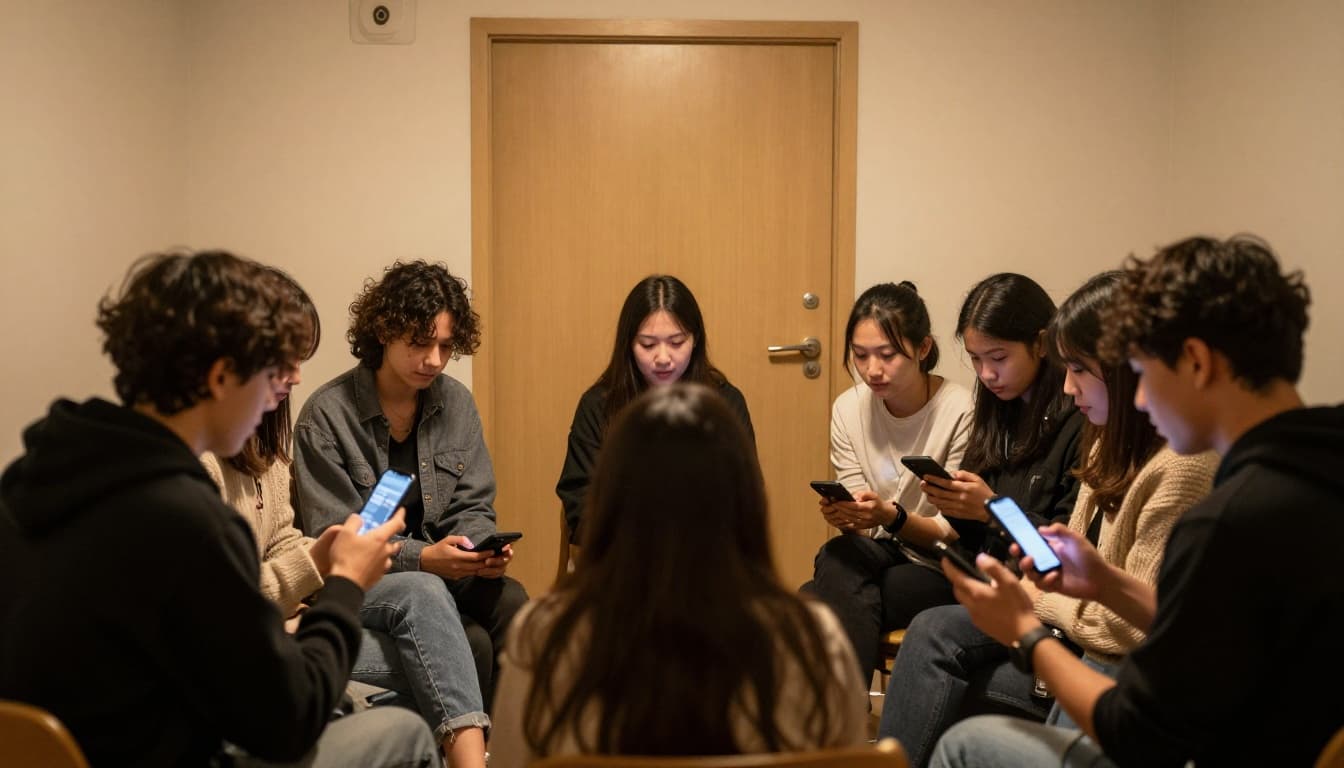
The Rise of Private Social Media: Why Smaller, Closed Communities Are Outperforming Public Feeds
Something fundamental has shifted in how people use social media. After a decade of chasing followers, likes, and viral moments on public platforms, a growing number of creators and audiences are quietly migrating to smaller, private spaces. Discord servers with a few hundred members. Paid Telegram groups. Patreon communities hidden behind a monthly subscription. Close Friends lists on Instagram. Private Substack chat threads. These intimate digital spaces are generating engagement rates that make public feeds look abandoned by comparison. The shift is not a rejection of social media itself but a rejection of what public social media has become — algorithmic noise, performative content, and an endless scroll of strangers competing for attention. For creators who understand this trend, private communities represent not just a better way to connect with their audience but a more sustainable and profitable business model.
The Decline of Public Feed Engagement
Public social media engagement has been declining steadily for years, and the numbers tell a stark story. Average organic reach on Facebook pages has dropped below two percent. Instagram feed post engagement rates have fallen to roughly 0.5 percent for accounts with over 100,000 followers. Twitter, now X, has seen interaction rates plummet as the platform has shifted toward algorithmic recommendations from accounts users do not follow. Even TikTok, which once offered extraordinary organic reach, has become increasingly pay-to-play as the platform matures. The core problem is saturation. There are simply too many creators, too many brands, and too many posts competing for a finite amount of attention. Algorithms respond by showing users content from strangers that is optimized for watch time rather than content from people they actually care about. The result is a public feed experience that feels increasingly impersonal and irrelevant.
Why People Are Choosing Intimacy Over Scale
The migration to private communities is driven by a basic human need that public social media has failed to satisfy: genuine connection. In a Discord server with 200 members, people know each other by name. Conversations develop over days and weeks, building real relationships rather than generating disposable interactions. Members feel safe sharing honest thoughts, asking vulnerable questions, and engaging in nuanced discussions that would be impossible in a public comment section where strangers and trolls lurk. Research from the Global Web Index shows that 48 percent of internet users say they prefer smaller online communities to large social networks, and that number has been climbing year over year. The appeal is not just emotional — it is practical. When you post a question in a private community of engaged members, you get thoughtful, relevant answers within minutes. When you post the same question on a public platform, it often disappears into the void entirely.
Discord: The Community Platform That Ate Social Media
Discord has evolved from a gaming voice chat tool into arguably the most important community platform on the internet. Creators across every niche — from fitness coaches to digital artists to finance educators — are building thriving communities on Discord servers that function as private social networks. The platform's channel structure allows creators to organize discussions by topic, create exclusive spaces for paying members, host live audio and video events, and build automated systems using bots. Engagement rates inside active Discord servers regularly exceed 30 percent daily active participation, a number that would be unthinkable on any public social platform. The key to Discord's success is its flexibility. A creator can run a free community with thousands of members, a paid premium tier with exclusive channels, live office hours, direct access, and everything in between. The platform takes no cut of membership fees when creators use third-party payment tools, making it one of the most creator-friendly options available.
Telegram Groups and Channels: The Underrated Powerhouse
While Discord dominates the conversation around community building, Telegram has quietly become one of the most effective platforms for creator-audience relationships, particularly outside North America. Telegram channels function like broadcast newsletters delivered directly to a subscriber's phone, with open rates that dwarf email marketing. Private Telegram groups offer real-time chat with features like polls, quizzes, pinned messages, and file sharing up to two gigabytes. The platform's lack of algorithmic filtering means every message reaches every member — a concept that feels almost revolutionary in 2026. Creators in niches like cryptocurrency, trading, tech news, and international markets have built Telegram communities with tens of thousands of highly engaged members. The monetization model typically involves a free public channel that provides value and funnels subscribers into a paid private group with premium content, signals, or direct access to the creator. Telegram's bot API also allows sophisticated automation for onboarding, content delivery, and member management.
Patreon and Subscription Communities
Patreon pioneered the paid community model and remains one of the strongest platforms for creators who want to monetize their audience directly. The platform allows creators to offer tiered memberships with different levels of access, from basic supporter tiers that unlock a private feed to premium tiers that include one-on-one interactions, exclusive content, and community access. What makes Patreon particularly effective for community building is the self-selection filter of payment. When someone pays five, ten, or twenty dollars a month to join a community, they are signaling a level of commitment that translates directly into engagement. Paid communities consistently show participation rates five to ten times higher than free alternatives. The members who pay are the members who care, and that concentration of invested participants creates a qualitatively different experience. Patreon has also added features like community posts, polls, and direct messaging that make it function increasingly like a private social network rather than just a payment platform.
Instagram Close Friends and Platform-Native Private Features
Mainstream social platforms have noticed the migration to private spaces and responded by building their own intimate features. Instagram's Close Friends feature, originally designed for sharing Stories with a select group, has evolved into a powerful tool for creators who want to offer exclusive content without leaving the platform. Creators use Close Friends lists as a de facto paid tier, granting access to subscribers who pay through Instagram's subscription feature. The content shared through Close Friends feels inherently more valuable because it is exclusive — followers know they are seeing something the general audience does not have access to. YouTube has introduced similar membership-only features including exclusive posts, custom emojis, and members-only live chats. These platform-native solutions have the advantage of keeping everything in one ecosystem, but they come with significant downsides: the platform controls the relationship, takes a substantial revenue cut, and can change the rules at any time.
| Platform | Best For | Monthly Cost to Creators | Revenue Cut | Engagement Rate | Key Features |
|---|---|---|---|---|---|
| Discord | Multi-format communities | Free | 0% (with external payments) | 25-40% DAU | Channels, voice, bots, roles |
| Telegram | Broadcast + chat groups | Free | 0% | 30-50% open rate | Channels, groups, bots, files |
| Patreon | Paid membership tiers | Free (platform takes %) | 5-12% | 15-25% DAU | Tiers, posts, messaging |
| Instagram Close Friends | Exclusive Stories/Reels | Free | Up to 30% | Varies widely | Stories, Reels, Lives |
| Substack | Newsletter + community | Free (platform takes %) | 10% | 40-60% open rate | Posts, threads, chat |
Monetization: Why Private Communities Are More Profitable
The economics of private communities are fundamentally different from public social media, and they overwhelmingly favor creators. On public platforms, monetization typically depends on advertising revenue, which means creators are paid fractions of a penny per view and have no control over rates. A creator with a million followers on Instagram might earn a few thousand dollars per month from the platform itself. That same creator with a private community of 500 paying members at fifteen dollars per month earns $7,500 with far less content output and far deeper audience relationships. The math gets even more compelling when you factor in the stability of subscription revenue versus the volatility of ad-based income. A viral video might generate a spike in ad revenue one month and nothing the next. A community of paying members generates predictable, recurring income that allows creators to plan, invest, and build their business with confidence. Private communities also create natural upsell opportunities for courses, coaching, events, and merchandise.
Community Management: The Skills That Matter
Running a successful private community requires a different skill set than creating content for public feeds. On public platforms, the primary skill is content creation — making posts, videos, and stories that capture attention. In a private community, the primary skill is facilitation. You need to create an environment where members feel comfortable contributing, establish norms that encourage positive interaction, moderate discussions without being heavy-handed, and consistently deliver enough value that members feel their time or money is well spent. The most successful community managers develop a cadence of recurring events and content drops that give the community rhythm. This might include weekly live sessions, monthly challenges, daily discussion prompts, or exclusive content drops on specific days. The goal is to make the community feel alive and active without requiring the creator to be present every moment. Empowering trusted members as moderators and community leaders is essential for scaling beyond a few hundred participants.
Building Your First Private Community: A Practical Roadmap
If you are ready to build your own private community, start by choosing the platform that best matches your content format and audience behavior. If your audience is young and tech-savvy, Discord is likely the best fit. If your audience skews older or is primarily mobile, Telegram or a Substack community might work better. If you already have a strong presence on Instagram or YouTube, consider starting with their native membership features to reduce friction. Once you have chosen a platform, define the value proposition clearly. Why should someone join your community instead of just following you for free? The answer should be specific: exclusive content, direct access to you, a network of like-minded people, actionable resources, or early access to your projects. Launch with a small founding group of your most engaged followers and let them help shape the culture before opening to a wider audience. Price your community based on the value you deliver, not on what you think people will pay. A community priced too low attracts uncommitted members who drag down engagement.
The Hybrid Model: Public Content Fuels Private Communities
The most effective creator businesses in 2026 do not choose between public and private — they use both strategically. Public content on platforms like YouTube, TikTok, and Instagram serves as a discovery engine, attracting new audiences and demonstrating expertise. The best public content is designed not just to entertain or inform but to make viewers think, "I want more of this, and I want to go deeper." That desire to go deeper is the bridge to a private community. Creators who master this funnel treat public content as marketing for their private community, which is where the real value exchange and revenue generation happen. The public content is free, broad, and optimized for reach. The private content is exclusive, specific, and optimized for depth. This hybrid model protects creators from algorithm changes, platform declines, and the constant anxiety of chasing views, because their core business runs on direct relationships rather than platform-dependent metrics.
Challenges and Risks of Private Communities
Private communities are not without their challenges. The biggest risk is burnout. When members are paying for access, they have expectations, and meeting those expectations consistently requires sustained effort. Unlike a YouTube video that generates views passively for years, a community demands ongoing engagement. Creators who launch communities without realistic expectations about the time investment often find themselves overwhelmed within months. Another challenge is churn. Even the best communities experience member turnover, and maintaining net growth requires continuous effort to attract new members while retaining existing ones. Content leaks are also a concern — paying members sometimes share exclusive content publicly, undermining the value proposition for others. Finally, there is the risk of choosing the wrong platform and having to migrate an entire community, which can result in significant member loss. Despite these challenges, the trend toward private communities shows no signs of reversing, and creators who develop strong community management skills will have a durable competitive advantage.
Conclusion
The era of measuring success purely by follower counts and public engagement metrics is fading. The creators who are building the most sustainable, profitable, and fulfilling businesses are the ones who are investing in private communities where genuine relationships can form and where value flows directly between creator and audience without an algorithm standing in the middle. Whether you choose Discord, Telegram, Patreon, or a platform-native solution, the principles are the same: offer clear, exclusive value; foster genuine connection; maintain consistent engagement; and treat your community members as partners in your creative journey rather than passive consumers of your content. The public feed is not dead, but its role has changed. It is no longer the destination — it is the doorway to something deeper, more personal, and far more valuable for everyone involved.