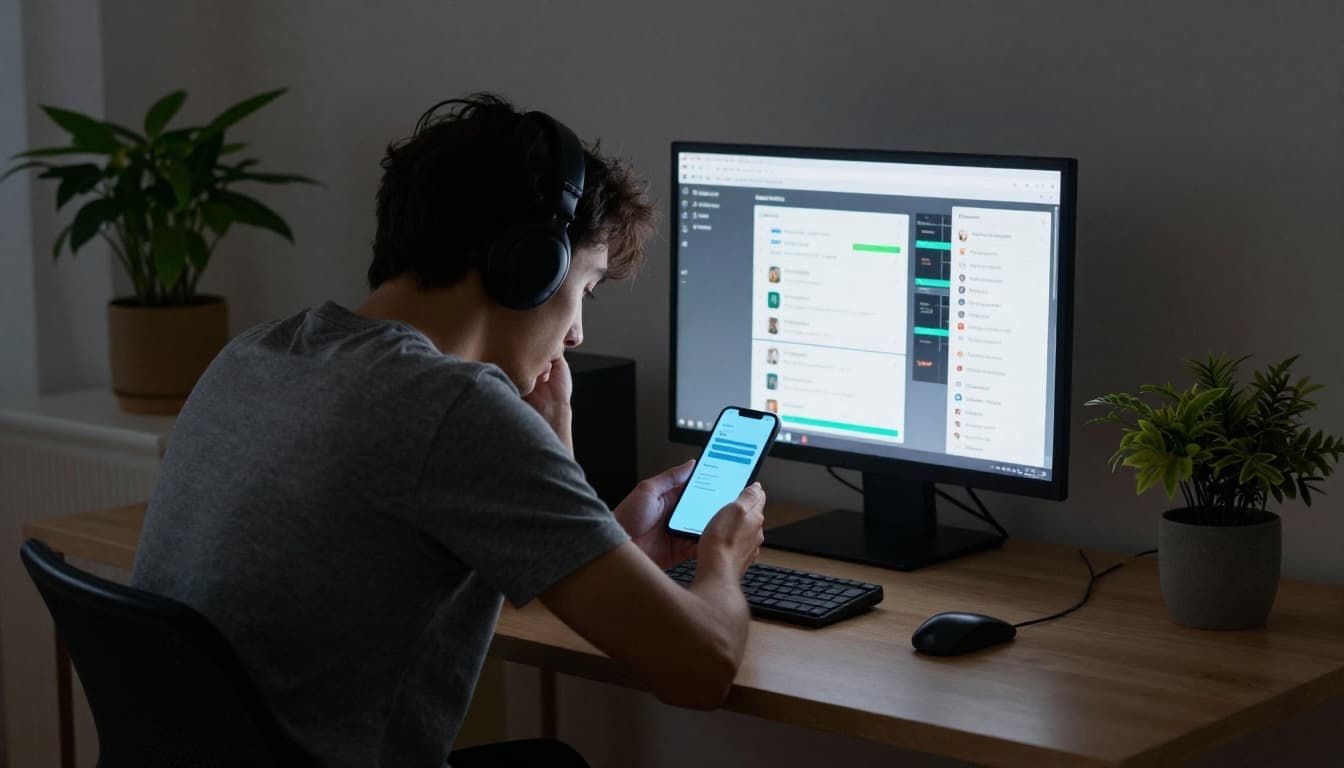
Social Media Burnout: How Creators Can Sustain Growth Without Sacrificing Mental Health
The creator economy has never been more lucrative or more accessible than it is in 2026. Millions of people around the world are earning a living — or at least a meaningful side income — by producing content on platforms like Instagram, TikTok, YouTube, and countless others. But behind the curated feeds and aspirational lifestyles lies a crisis that the industry is only beginning to take seriously: creator burnout. The relentless pressure to post consistently, stay relevant, chase algorithms, respond to comments, negotiate brand deals, and constantly reinvent your content takes an enormous psychological toll. Surveys consistently show that the majority of full-time creators report experiencing burnout at some point in their career, with many describing feelings of exhaustion, anxiety, and a loss of passion for the work that once excited them. The conversation around sustainable growth is no longer a luxury — it is an urgent necessity for anyone who wants to build a creator career that lasts longer than a few years.
Understanding What Creator Burnout Actually Looks Like
Burnout is more than just feeling tired after a long week of content creation. It is a state of chronic physical and emotional exhaustion that develops when the demands of your work consistently exceed your capacity to cope with them. For creators, burnout often manifests as a deep sense of dread around creating content that you used to enjoy making. You might find yourself staring at a blank screen for hours, unable to generate ideas that once came effortlessly. The thought of opening your analytics dashboard fills you with anxiety instead of curiosity. You start resenting your audience for expecting content from you, even though their engagement is what sustains your career. Physical symptoms are common too — disrupted sleep, headaches, difficulty concentrating, and a persistent feeling of being overwhelmed. The dangerous part of creator burnout is that it builds gradually. Most creators do not recognize it until they are already deep in it, because the hustle culture that permeates the industry normalizes overwork as a badge of honor.
The Unique Pressures of the Creator Lifestyle
Traditional employment comes with built-in boundaries that creators simply do not have. There are set working hours, weekends off, paid vacations, and a clear separation between work and personal life. Creators operate in a fundamentally different reality. The algorithm does not care that it is Sunday morning or that you are on vacation with your family. It rewards consistency and frequency, which means that taking a break can feel like a direct threat to your livelihood. Beyond the posting schedule, creators face a unique form of emotional labor. Every piece of content you publish is an extension of yourself, and putting your personality, opinions, and creative work in front of thousands or millions of people invites constant judgment. Negative comments, unfair criticism, and comparison to other creators compound the stress. The blurring of personal and professional identity means that a drop in engagement can feel like a personal rejection rather than a simple metric fluctuation.
The Algorithm Trap and the Myth of Consistency
One of the biggest drivers of creator burnout is the widespread belief that you must post every single day or risk losing everything you have built. This belief is not entirely unfounded — platforms do reward consistency, and gaps in posting can lead to decreased visibility. But the creator community has inflated this reality into an absolute rule that leaves no room for rest. The truth is more nuanced. Algorithms prioritize engagement quality over posting frequency. A creator who posts three times per week with highly engaging, well-crafted content will consistently outperform a creator who posts daily with rushed, mediocre content. The obsession with daily posting creates a quantity-over-quality cycle that accelerates burnout while actually delivering diminishing returns. Smart creators in 2026 are recognizing that strategic consistency — maintaining a reliable but sustainable schedule — is far more effective than grinding out content every day at the expense of their health and creative energy.
The Comparison Spiral
Social media is inherently designed to surface the most successful, most engaging, and most impressive content. As a creator, you are not just consuming this content as entertainment — you are processing it as competitive intelligence. Every viral post from a peer in your niche becomes a data point that your brain uses to evaluate your own performance. This constant comparison creates a toxic feedback loop. You see another creator land a massive brand deal and wonder why brands are not approaching you. You watch a competitor's video hit a million views while yours stagnates at ten thousand. You notice someone who started their account after you already surpassing your follower count. Over time, this comparison spiral erodes your confidence, diminishes your enjoyment of the creative process, and distorts your perception of your own success. The reality is that you are comparing your behind-the-scenes struggles to everyone else's highlight reel — a comparison that is inherently unfair and profoundly damaging to your mental health.
Setting Boundaries With Your Audience
One of the most powerful things a creator can do to protect their mental health is to establish clear boundaries with their audience. This means defining when and how you are available, and communicating those boundaries openly. You do not owe your followers 24/7 access to your life. You are not obligated to respond to every direct message, comment on every post, or share every detail of your personal experiences. Creators who set boundaries often fear that their audience will feel neglected or abandon them, but the opposite tends to be true. Audiences respect creators who model healthy behavior and set clear expectations. Turning off notifications outside of designated working hours, batching your community engagement into specific time blocks, and being transparent with your audience when you need a break are all strategies that protect your energy without damaging your relationship with your followers. The creators who last the longest are those who treat audience interaction as a scheduled part of their work rather than a constant obligation.
Content Batching as a Burnout Prevention Tool
Content batching — the practice of creating multiple pieces of content in a single focused session — is one of the most effective strategies for reducing the daily pressure that fuels burnout. Instead of waking up every morning with the stress of figuring out what to post that day, batching allows you to dedicate one or two days per week to content creation and spend the remaining days on other aspects of your business or simply resting. A creator who batches effectively might spend Monday filming five TikTok videos, Tuesday editing and scheduling them, and then have the rest of the week free from content production entirely. This approach not only reduces stress but also tends to produce better content because you are creating in a focused, energized state rather than scrambling under daily pressure. The key to successful batching is having a content calendar and a bank of ideas ready before your creation day so that you can move through production efficiently without wasting creative energy on decision-making.
The Importance of Taking Real Breaks
Taking a break as a creator feels counterintuitive in a world that constantly tells you to keep pushing. But the evidence is overwhelming that regular breaks improve creativity, productivity, and overall content quality. Many of the most successful creators build planned breaks into their annual schedule — a week off every quarter, or a two-week hiatus in the summer. The key word is planned. When you communicate a break to your audience in advance, frame it positively, and return with fresh energy and new content, the impact on your metrics is almost always temporary and quickly recoverable. Some creators use their break periods to batch a backlog of evergreen content that can be scheduled to publish while they are away, maintaining a presence without requiring active effort. Others go fully dark and find that their audience actually welcomes them back with increased enthusiasm. The fear of losing momentum during a break is almost always worse than the reality. What is genuinely damaging is never taking a break until burnout forces you into an unplanned, indefinite hiatus that is far more harmful to your career.
Building a Team or Outsourcing Strategically
As your creator business grows, one of the smartest investments you can make for your mental health is delegating tasks that drain your energy without directly requiring your personal touch. Editing is often the first task creators outsource, because it is time-consuming and technically demanding but does not require the creator's on-camera presence. Community management — responding to comments and direct messages — is another common delegation point, especially for creators whose audiences have grown beyond what one person can reasonably manage. Virtual assistants can handle email correspondence with brands, schedule content, and manage administrative tasks. The financial investment in help often pays for itself through increased productivity and the ability to focus your energy on the creative work that only you can do. You do not need to hire a full team overnight. Start with the single task that causes you the most stress or consumes the most time, and outsource that one thing. The mental relief of removing even one burden from your plate can be transformative.
Diversifying Your Income to Reduce Platform Anxiety
A significant source of creator stress comes from financial dependence on a single platform or income stream. When all of your revenue comes from Instagram brand deals, every algorithm change or engagement dip feels like a direct threat to your financial security. Diversifying your income across multiple streams — digital products, online courses, memberships, affiliate marketing, merchandise, consulting, and email newsletter sponsorships — creates a financial safety net that dramatically reduces anxiety. When you know that a bad month on one platform will not sink your entire business, you can approach content creation with a lighter, more creative mindset rather than a desperate, fear-driven one. Diversification also gives you the freedom to experiment with your content without worrying that every post needs to directly generate revenue. This creative freedom is essential for long-term sustainability because it keeps the work interesting and prevents the feeling that you are just a content factory optimizing for brand deals.
Redefining Success Beyond the Numbers
Much of creator burnout stems from an unhealthy relationship with metrics. When your self-worth becomes tied to follower counts, view numbers, and engagement rates, every fluctuation becomes an emotional event. The path to sustainable creation requires redefining what success means to you personally. For some creators, success might mean earning enough to work on their own terms without needing a traditional job. For others, it might mean building a tight-knit community of a few thousand deeply engaged followers rather than chasing millions. Some creators find fulfillment in the creative process itself — the satisfaction of producing work they are proud of regardless of how it performs algorithmically. Whatever your definition, anchoring your sense of success to internal values rather than external metrics creates a much more stable psychological foundation. Numbers will always fluctuate. Algorithms will always change. But if your motivation comes from a place of genuine passion and clearly defined personal goals, those fluctuations become data points rather than emotional crises.
Protecting Your Creative Identity
One subtle but devastating aspect of burnout is the loss of creative identity. When you start creating content primarily to satisfy the algorithm rather than to express your genuine ideas and perspective, you slowly disconnect from the passion that drew you to content creation in the first place. Over time, your content starts to feel formulaic, your creative instincts atrophy, and you begin to feel like a machine producing content rather than an artist sharing your vision. Protecting your creative identity requires intentionally making space for content that excites you, even if it does not align perfectly with what the algorithm rewards. Dedicate a portion of your content calendar to passion projects — pieces that you create purely because you want to, without any concern for metrics or monetization. These projects often end up being your best-performing content anyway because authentic enthusiasm is magnetic. But even when they do not perform well numerically, they serve a critical purpose: they remind you why you started creating in the first place.
Building a Support Network
Creator life can be profoundly isolating. You often work alone, your non-creator friends and family may not fully understand the pressures you face, and the competitive nature of the industry can make it difficult to form genuine connections with peers. Building a support network of fellow creators who understand your experience is one of the most valuable things you can do for your mental health. This might take the form of a small mastermind group that meets weekly to share challenges and wins, a private online community of creators in your niche, or simply a few trusted creator friends you can call when you are struggling. Beyond peer support, working with a therapist or coach who understands the unique pressures of the creator economy can provide tools and perspectives that are difficult to access on your own. Investing in your mental health infrastructure is not an indulgence — it is a business expense that directly impacts the quality and longevity of your work.
Conclusion
Social media burnout is not a sign of weakness or a failure of discipline. It is the predictable outcome of a system that demands constant output, rewards overwork, and offers no built-in mechanisms for rest and recovery. The creators who will still be thriving five and ten years from now are not the ones grinding themselves into the ground today. They are the ones who recognized early that sustainability is a competitive advantage. They set boundaries, batched their content, diversified their income, outsourced what drained them, took real breaks, and built support systems that kept them grounded. They redefined success on their own terms and protected the creative passion that made their content worth following in the first place. If you are feeling the weight of burnout right now, know that the solution is not to push harder. The solution is to build smarter — to design a creator career that serves your life rather than consuming it. Your audience does not need you to be online every hour of every day. They need you to show up with energy, authenticity, and joy. That is only possible when you take care of yourself first.