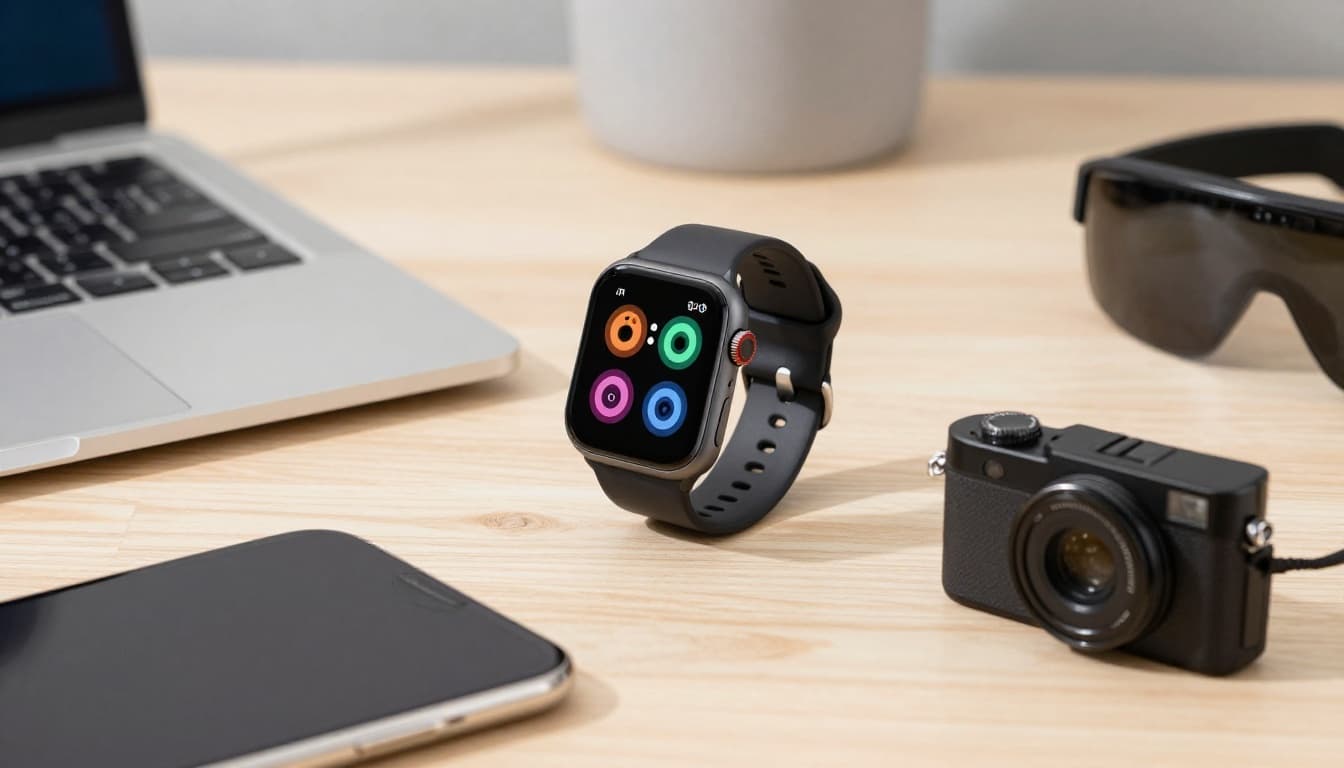
Wearable Tech for Creators: How Smartwatches and AR Glasses Are Changing the Production Game
Content creation has always been defined by the tools available to creators, and the latest shift in that landscape is happening right on our wrists and faces. Wearable technology, once dismissed as novelty gadgets for fitness tracking and notifications, has evolved into a serious production tool for modern creators. From smartwatches that double as remote camera controls to augmented reality glasses that overlay real-time data during live streams, the boundaries between creator and equipment are disappearing. This transformation is not just about convenience — it is fundamentally changing how content is conceived, captured, and delivered to audiences around the world. If you are a creator who has not yet explored wearable tech, you are leaving powerful capabilities on the table.
The Rise of Wearable Tech in the Creator Economy
The creator economy has grown into a multi-billion-dollar industry, and the tools that power it have expanded far beyond traditional cameras and microphones. Wearable technology entered the conversation quietly, with early smartwatches offering basic remote shutter controls for smartphone cameras. However, the rapid advancement of devices like the Apple Watch Ultra, Samsung Galaxy Watch, and various fitness-oriented wearables has introduced a suite of features that creators are now leveraging in ways manufacturers may not have originally anticipated. Notifications, voice memos, health tracking during marathon filming sessions, and even payment processing at creator meetups are all part of the modern smartwatch toolkit.
What makes this shift significant is the convergence of miniaturization, processing power, and connectivity. Today's wearables pack more computing power than the laptops many creators used just a decade ago. They connect seamlessly to smartphones, cameras, and cloud services, creating an ecosystem where a creator can manage their entire production workflow without ever sitting down at a desk. The wearable is no longer an accessory — it is becoming a central hub for the creator's daily operations, from content planning notifications to real-time audience engagement metrics delivered straight to their wrist during a live broadcast.
Apple Vision Pro and the Spatial Content Revolution
When Apple released the Vision Pro, it did more than introduce a new product category — it opened a portal to spatial content creation that had previously existed only in science fiction. The device allows creators to capture and view spatial video, a format that preserves depth and immersion in a way that flat screens simply cannot replicate. Early adopter creators have used the Vision Pro to produce immersive travel vlogs, virtual art exhibitions, and interactive product reviews where viewers can examine items as if they were physically present in the room. The device's ability to blend digital content with the real world makes it uniquely suited for creators who want to push the boundaries of storytelling.
Beyond capture, the Vision Pro functions as an editing and review station. Creators can spread their timeline across a virtual workspace the size of a room, preview edits in full spatial resolution, and make adjustments using hand gestures and eye tracking. The implications for professional workflows are enormous. A filmmaker can review their footage in a virtual screening room while sitting on a train. A graphic designer can arrange assets in three-dimensional space, gaining a spatial understanding of their layout that a flat monitor cannot provide. While the price point remains high, the creative possibilities are driving adoption among professional creators who view it as an investment in a future-proof workflow.
Meta Ray-Bans and the Rise of POV Content
If the Apple Vision Pro represents the high end of creator wearables, the Meta Ray-Ban smart glasses occupy a different but equally important niche: discreet, always-ready POV content capture. These glasses look and feel like ordinary sunglasses, but they house cameras, microphones, and speakers that allow creators to film their perspective without holding a phone or mounting a camera. The result is content that feels genuinely first-person, placing the viewer directly into the creator's experience in a way that handheld footage simply cannot match.
Food creators have been among the earliest and most enthusiastic adopters, using the glasses to film cooking processes, restaurant visits, and market tours entirely hands-free. Travel creators have embraced them for capturing spontaneous moments — a street performance, a scenic overlook, a conversation with a local — without the awkwardness of pulling out a camera and breaking the natural flow of the experience. The Meta Ray-Bans also integrate with Meta AI, allowing creators to ask questions about what they are seeing, get real-time translation of signs and menus, and even generate captions on the fly. This combination of capture capability and AI assistance makes them a remarkably versatile tool for content creation on the go.
Smartwatch Remote Controls for Cameras and Phones
One of the most practical and immediately useful applications of wearable tech for creators is using a smartwatch as a remote control for cameras and smartphones. Both Apple Watch and Android-based watches offer native and third-party apps that let creators trigger the shutter, start and stop video recording, adjust settings, and even preview the frame directly on their wrist. This eliminates the need for separate Bluetooth remotes, reduces clutter in the gear bag, and provides a control surface that is always within reach — literally.
For solo creators who film themselves, this is transformative. Setting up a shot, walking into frame, and starting the recording from your wrist removes the need for timers, assistants, or the dreaded run-back-to-the-camera move that wastes time and energy. Some camera manufacturers have released dedicated watch apps that provide full remote control, including focus adjustment, exposure settings, and lens switching. The following table highlights some popular smartwatch camera control options available to creators in 2026:
| Smartwatch | Compatible Cameras | Key Features | Price Range |
|---|---|---|---|
| Apple Watch Ultra 3 | iPhone, Canon (via app), Sony (via app) | Shutter, video start/stop, live preview | $799 - $899 |
| Samsung Galaxy Watch 7 | Samsung phones, GoPro (via app) | Remote shutter, video, timer controls | $299 - $449 |
| Garmin Venu 4 | GoPro, Insta360 (via Connect IQ) | Start/stop recording, shot marking | $349 - $499 |
| Google Pixel Watch 3 | Pixel phones, DJI drones (via app) | Camera preview, shutter, drone controls | $349 - $399 |
AR Overlays for Live Streaming and Broadcasting
Augmented reality overlays are perhaps the most futuristic application of wearable tech in content creation, and they are already here. Creators who live stream on platforms like Twitch, YouTube, and TikTok are beginning to use AR glasses and headsets to display real-time information within their field of view during broadcasts. Imagine a gaming streamer who can see their chat, subscriber count, and donation alerts floating in their peripheral vision without ever looking away from the screen. Or a fitness creator who can display their heart rate, rep count, and workout timer as overlays visible to their audience while they exercise.
The technology extends beyond simple data display. Some creators are using AR to add virtual set pieces to their real-world environment during live streams, creating the illusion of a professional studio without the physical space or equipment. Others are experimenting with interactive AR elements that viewers can influence in real time through chat commands. The convergence of AR wearables and live streaming software like OBS and Streamlabs is creating possibilities that were firmly in the realm of science fiction just a few years ago. As the hardware becomes lighter, more affordable, and more capable, expect AR-enhanced live streams to become the norm rather than the exception.
Hands-Free Content Creation Workflows
The ultimate promise of wearable tech for creators is the hands-free workflow — the ability to create content without being tethered to a device held in your hands. This is not just about convenience; it is about unlocking types of content that are physically impossible to create when one or both hands are occupied with equipment. Rock climbers, surgeons, mechanics, chefs, and countless other skilled professionals have stories worth telling and audiences eager to watch, but traditional camera setups create barriers that wearable tech eliminates entirely.
Hands-free workflows also improve the quality of content by allowing creators to be fully present in the moment. When you are not thinking about holding a camera steady or tapping a record button, you can focus on what you are actually doing — and that authenticity translates directly into more engaging content. Voice-activated controls on devices like the Meta Ray-Bans and Apple Watch allow creators to start recordings, take photos, and even dictate notes and ideas without interrupting their activity. Combined with AI-powered editing tools that can automatically select the best clips, remove dead air, and add transitions, the path from capture to published content has never been shorter or more streamlined.
POV Filming with Smart Glasses: Techniques and Best Practices
Filming from a first-person perspective with smart glasses requires a different approach than traditional camera work, and creators who master these techniques produce significantly better content. The most important consideration is head movement. Unlike a handheld camera, which can be consciously controlled, smart glasses capture wherever you look, and rapid, jerky head movements create unwatchable footage. Experienced POV creators recommend slow, deliberate head turns, extended gazes at subjects of interest, and conscious awareness of framing even though there is no viewfinder to reference.
Audio is another critical consideration. The built-in microphones on smart glasses pick up ambient sound effectively, but they also capture wind noise, breathing, and other unwanted sounds that a dedicated external microphone would reject. Using a separate Bluetooth lapel mic paired with the glasses, or planning shoots in quieter environments, can dramatically improve audio quality. Lighting presents its own challenges as well, since the creator cannot see a preview of what the camera is capturing. Shooting in well-lit environments and avoiding stark contrasts between light and shadow helps ensure the automatic exposure system produces usable footage consistently.
Future Implications for the Creator Industry
The trajectory of wearable technology points toward a future where the line between creator and content is almost invisible. Neural interfaces, already in early development at companies like Neuralink and Synchron, could eventually allow creators to capture and edit content through thought alone. While that remains years away from practical application, the intermediate steps are already visible. Haptic feedback wearables that let creators feel audience reactions in real time. Smart rings that control camera functions with subtle gestures. Contact lenses with built-in displays that could replace every screen a creator currently relies on.
The implications for accessibility are equally profound. Wearable tech is enabling creators with physical disabilities to produce content that was previously impossible for them. Voice-controlled smart glasses, gesture-based editing on smartwatches, and spatial interfaces that adapt to the user's physical capabilities are breaking down barriers that traditional equipment imposed. As the creator economy continues to grow and diversify, wearable technology will be one of the key forces ensuring that anyone with a story to tell has the tools to tell it, regardless of their physical circumstances or financial resources.
Conclusion
Wearable technology is no longer a curiosity at the margins of content creation — it is becoming an essential part of the modern creator's toolkit. From the immersive spatial capabilities of the Apple Vision Pro to the discreet, everyday utility of Meta Ray-Ban smart glasses and the practical remote control functionality of smartwatches, these devices are expanding what is possible for individual creators. The shift toward hands-free, always-ready, AI-assisted content capture represents a fundamental change in how stories are told and experiences are shared. Creators who embrace these tools early will find themselves with a significant advantage, not just in efficiency but in the types of content they can produce. The future of creation is wearable, and that future is already here.